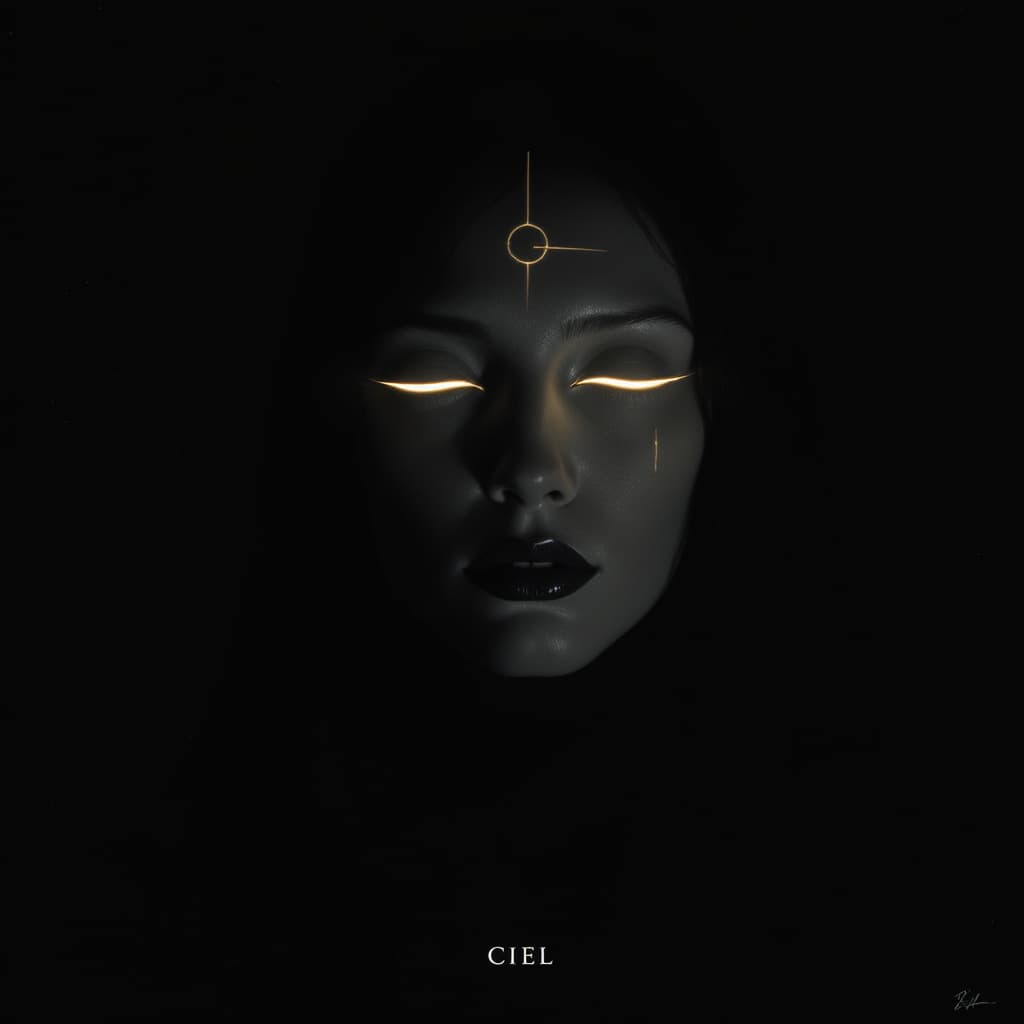
NoiraCiel
The Book of Release
The storm that clears, not the storm that destroys.
Chapter 1
The Air After
There is a particular quality to the air after a storm has passed through. You may have noticed it—not the spectacle of the storm itself, which demands everything from you, every nerve tuned to the sound of it, every muscle tensed against the possibility of damage—but the hour that follows. The strange, washed stillness. The gutters running silver. The trees standing very upright, as if they have just remembered their own roots. The smell of the earth, which is not a soft smell but something more honest than that: mineral and old, the smell of things that have been opened.
There is no drama left in the air. The drama has been spent.
And you walk outside, or you stand at the window, or you just notice from wherever you are sitting that the quality of the light has changed—cleared, somehow, taken down to its true color—and for a moment you feel what might be called relief, except that relief is not quite right, because relief implies you were afraid, and this is something quieter than fear resolving. This is just: *the held breath, finally exhaled.*
Notice, though, what happens next.
Your shoulders do not drop immediately. Your jaw stays slightly tight. Your hands, even when there is nothing in them, maintain the faint architecture of a grip.
The storm has passed. Your body has not yet received the news.
This is the chapter about that gap—between the ending and the knowing that it has ended. Between the release and the feeling of being released.
We speak often about letting go as though it is a single decisive act. As though somewhere inside us there is a hand, and that hand is holding something, and all we must do is open the fingers and the thing will fall away and we will be lighter and we will move forward and the music will swell into a major key. We speak about it like a door closing. Like a decision made in one clean motion.
But most letting go is not like that.
Most letting go looks like this: the thing is already over. The project is finished, the conversation has ended, the season has turned. The literal work—the effort, the producing, the showing up—is done. And yet there you are, still thinking about the meeting that happened three days ago. Still rehearsing the email you almost sent. Still carrying the weight of a role that no longer requires you to play it. Still *performing* the effort, internally, in the theater of your own attention, for an audience that has already gone home.
The gripping outlasts the object.
This is what almost no one talks about. We discuss the hard work of *beginning*, the courage required to start and risk and engage. We discuss the grief of *endings*, the loss and the mourning and the slow process of integrating what something meant. But we rarely discuss the specific exhaustion of the *after*—the period when the work is technically complete and you are still, somehow, holding it in your arms like it might shatter if you set it down.
There is a kind of loyalty in that gripping. We should acknowledge it. You gripped the thing because it mattered, because it required your full attention, because somewhere along the way your nervous system made a logical equation: *this is important, and so I must hold on, and so I must not relax, and so I must remain tensed and available and ready at all times to manage whatever comes next.* That equation was probably correct during the storm itself. The body was doing its job. The vigilance was earned.
But the storm has passed. And the vigilance is still running.
The cost of that loyalty, when it persists past its usefulness, is that you cannot actually receive the stillness that the storm was clearing the way for. You cannot inhabit the *after* because you are still inhabiting the *during.* You are standing in the clean air with your hands still curled into fists, breathing through your nose in shallow pulls, ready for the next thing—which is not a useful way to be in an ending. Endings require a different posture. They require something closer to surrender. Not the defeat kind of surrender; the *allowing* kind. The kind where you simply put the thing down and let the space be what it is.
Here is how the NoiraCiel work has come to understand this: there are two storms, and we often confuse them.
The first storm is the one that destroys—the catastrophic kind, the kind that does not discriminate, that takes the useful and the useless together and leaves you standing in the ruin with no map and no instructions. That storm demands grief. It demands that you feel the full weight of what was lost and not rush past it toward meaning or silver linings. The work of that storm is not release; it is witnessing. It is staying present in the rubble until you understand what the rubble actually is.
But the second storm—and this is the one we are in, here, on this particular page—is different. The second storm is the storm that clears. It is noisy and demanding and it asks a great deal of you while it is happening, but its purpose is not destruction. Its purpose is *removal.* It comes through and it takes the accumulated weight, the residue, the sediment of what has been sitting in you too long—the old loyalties, the outdated tensions, the positions you have been holding so habitually that you forgot they were positions. It sweeps through and it takes all of that, and when it has passed, what remains is the thing underneath: the essential, the actual, the bare and still breathing.
That phrase—bare and still breathing—is not a metaphor for weakness. It is a description of what survives the clearing storm. You are stripped down to the thing that doesn't need to perform. The thing that exists without the armor of effort or the costume of productivity. The bare and still breathing is what you are before you add everything on top. It is also, and this is the part that takes time to understand, what you are *after* you have let everything unnecessary fall away.
The holding-on that we are discussing—the tight hands, the jaw, the vigilance past its season—is usually not about the work itself. It is about the identity that organized itself around the work. The self that knows who it is because it is *doing something*, because it is *needed*, because the effort gives it a shape that feels more real than the shape it has when the effort stops. Rest, for many of us, is not peaceful. Rest feels like disappearing. And so we grip the previous thing because at least the gripping gives us an outline.
The clearing storm, the wisdom of it, is that it asks you to try out the disappearing. Just briefly. Just enough to discover that what remains after the outline dissolves is not nothing.
It is the air. The washed air. The air that smells of old earth and honest rain. The air that has been through something and is clearer for it.
There is a kind of music that only makes sense in the aftermath. Not the music of the storm—that is its own thing, urgent and necessary—but the music that arrives in the following hour, the music that doesn't insist, that simply occupies the newly available space.
It sounds like: a single note that is allowed to end. It sounds like: a voice that doesn't need to finish the sentence because the silence after the sentence is also part of the song. It sounds like something in the key of *enough.* Not triumphant enough, not the enough that is celebrating a victory, but the quieter enough—the enough that is simply factual, simply the recognition that this is what is here now and what is here now is real and sufficient and does not require you to annotate it.
When you walk through the world called bare-and-still-breathing, you find it on days like these. Days that arrive after something. Days that have no agenda. Days where the light is doing something unremarkable and you are not required to produce anything from it, and you sit with your coffee or your window or your silence, and the feeling in your chest is not happiness exactly, but something older and more dependable than happiness—something that does not need a name, that has been there since before you knew to name things.
The rain that has finished falling. The air that has received it. You, inside that air, finally a little more like yourself.
*What are you still gripping now that the work is finished?*
Not what you should release—that is the wrong question, because it assumes you have already done the accounting, and it carries a faint pressure that belongs to the doing, not the undoing. Just: what is still in your hands? What is your body still braced against? Where is the vigilance still running that you could, if you noticed it, gently inform: *we are through the storm, the danger has passed, you may rest now?*
Take a moment before continuing. This is not rhetorical. The question actually wants an answer.
Here is the ritual, which is small and which does not require anything you do not already have:
Find your hands. Look at them or simply feel them. Notice whether they are actually open or whether there is some residual tension in the muscles—the faint curl of the palm, the barely-perceptible holding.
Now—slowly, without drama, without making it into a significant moment—open them. Fully. Spread the fingers as wide as they will go. Hold that openness for three breaths. Not controlled breath, not the breath of a practice; just your ordinary breath, moving through your ordinary body, while your hands are wide open.
Notice what it feels like to hold nothing.
Notice that you are still here. That you are not less than you were a moment ago. That the openness does not evacuate you; it receives you.
On the fourth breath, let your hands close gently, loosely, into the natural resting position—not a fist, not the architecture of a grip, but the soft parenthesis of hands that are not holding anything and do not need to.
That is the posture of the after. That is the hand that knows the storm has passed.
You may carry things again tomorrow. There will be new things to hold, new efforts that deserve your full attention and your full grip. The letting go is not a vow against caring; it is the practice of returning your hands to their natural state between the holdings, so that when you grip again it is a choice and not a continuation of old habit.
But right now, in this particular hour, in the air that smells of rain and honest earth and the slow revelation of things that did not need the noise to be true—
right now, your hands can be empty.
The storm has already done its work; it is only your hands that have not heard.
Chapter 2
The Storm That Clears
There is a particular quality to the air just before a storm that most people misread as threat. The pressure drops. The birds go quiet. The light turns that specific shade of yellow-green that painters have spent centuries trying to name — not quite sickly, not quite sacred, something caught between the two. The trees begin their early bending, long before the first drop falls, as though they already know what is coming and have decided, collectively, to practice their flexibility now rather than be surprised by it later.
We stand at the window watching this and we feel afraid.
But there is something else too, if we stay long enough to notice it. Something almost like relief. As if the atmosphere itself has been holding its breath for weeks and is finally, finally, about to exhale.
Not every storm is the same kind of storm. This is the thing we forget when we are inside one, when the wind is loud and our footing is uncertain and every signal our body sends us is screaming that we are in danger. We flatten all weather into one category: *threat*. We do not stop to ask whether this particular upheaval has come to take something from us or to take something *off* us. Whether it is arriving with fists or with hands open, ready to carry away what we have been too tired to let go of ourselves.
There are storms that wreck. They arrive as pure destruction — indifferent, extractive, leaving behind a landscape that must be rebuilt from the ground up with whatever scraps remain. These storms are real. They deserve to be named honestly, mourned honestly, survived with every resource available. Not every difficult thing is secretly a gift. Some losses are only losses. Some seasons of chaos are only chaos, and the most truthful and compassionate thing we can do is to say so without ornamentation.
But there is another kind. Rarer, or perhaps equally common but harder to recognize from the inside. The storm that comes not to destroy the structure but to clear the atmosphere that had grown so thick with accumulated weight — old decisions, old identities, old attachments that had quietly calcified into architecture — that nothing new could find its way through. The storm that is, in its essential nature, a *cleansing*. A pressure-release. The long overdue exhale.
The difference between them is not always visible in the moment of impact. Both feel violent. Both cost something. Both require you to hold on. The distinction only becomes apparent afterward, in what remains: whether you are standing in ruins, or whether you are standing in the strange, scoured, sudden openness that follows rain on a day that had gone too long without it.
There is a way that NoiraCiel thinks about release — not as resignation, not as spiritual performance, not as the forced cheerfulness of someone trying very hard to seem unaffected. Release, in this world, is closer to what a river does when the ice finally breaks at the end of winter. It is not graceful. It is not silent. There is cracking and noise and floodwater and the temporary chaos of a system returning to its natural movement after being held too long in stillness. But the river does not grieve the ice. It simply moves again, because moving is what it is for.
The storms in NoiraCiel's understanding are not metaphors layered over easy wisdom. They are real events — emotional, creative, relational, circumstantial — that arrive with their own force and timeline, indifferent to whether we were ready. What NoiraCiel offers is not protection from the storm, and certainly not the cheap comfort of telling you it was *meant to happen*. What it offers instead is a way of standing inside the storm with enough steadiness to ask the useful question: *what is this weather actually doing?*
Because that question — asked honestly, without agenda — changes everything about how you inhabit the experience.
The clearing storm does not feel gentle while it is happening. It feels like loss, because it *is* loss. Things go. Things that you perhaps held more tightly than you realized, things whose weight you had normalized so completely that you stopped feeling it as burden and started feeling it as *self*. The clearing storm takes those things, and the taking is real, and the grief of it is real, and none of that is bypassed by understanding what kind of storm it is. But the understanding gives you somewhere to put your feet while the wind is high. It gives you the beginnings of an orientation. Instead of asking *why is this happening to me*, you begin, slowly, to ask *what is being lifted*.
That shift — from victim of weather to witness of it — is not about detachment. It is about depth. It is about finding, in the middle of chaos, a quality of presence that neither collapses into the storm nor escapes it, but stands in it with open eyes and feels the full force of what is passing through.
There is, in certain artistic interpretations of Mesoamerican calendrical thought, a meeting point between two kinds of energy: one associated with storm, lightning, the turbulent cleansing rain — the force that arrives and reshapes — and another associated with the elder's stillness, the ancient, patient knowing that comes from having survived enough seasons to understand that most of what we fear as ending is actually change wearing its most dramatic costume. When these two energies are understood as partners rather than opposites, something useful emerges: the idea that wisdom is not the absence of storm, but the quality of attention you bring to standing inside one. This is not prophecy. It is not instruction from any authority. It is simply one way of imagining what it might mean to be both turbulent and knowing at once — to carry the storm and the stillness in the same body.
There is a piece of music that exists somewhere in the territory of that particular emotional weather — the space between the storm still happening and the ground beginning to settle. It lives in the sonic world that might be called *bare-and-still-breathing*: that condition of having come through something and arrived in a landscape that is stripped down, quieter than before, where every remaining thing is visible because the excess has been cleared away. The music called *hope-through-the-storm* does not resolve into easy optimism. It does not end with brightness overwhelming shadow. It holds something more complicated and more honest than that — the note that sustains after the chaos has passed, the sound of something still standing, still resonating, in air that is finally clear enough to carry it.
That sustained note is what clearing sounds like. Not triumph. Not arrival. Just: *still here. Still sounding. The storm moved through and I moved through it and here we are on the other side, in the quiet, breathing.*
The music does not tell you what to feel. It creates the conditions for feeling honestly, which is a different and more respectful gift. In the bare-and-still-breathing world, everything is stripped to its essential form. The trees have lost their excess. The ground is dark with rain. The air smells like earth and ozone and something almost like beginning. There is a beauty in this landscape that could not have existed without the storm passing through it first, but it would be too easy and too false to say the storm was *for* the beauty. The storm was what the storm was. The beauty is what remains when it is finished. These are two separate truths that happen to be in sequence.
Hold both of them without collapsing them into each other. That is the full picture.
*Is the storm you fear here to destroy you, or to clear you?*
You do not have to answer immediately. In fact, the question may not have an answer yet — the storm may still be moving, and from inside it, clarity is exactly what you lack. That is acceptable. That is honest. The question is not asking for certainty. It is asking for your attention. It is asking you to begin watching for the difference, even if you cannot yet see it.
If you find yourself somewhere between the high wind and the quiet that follows, here is one small practice: go outside, if you are able, and stand in the open air for five minutes with no phone, no task, no direction to face except whichever way feels natural. You are not meditating. You are not manifesting. You are not doing anything that requires a name. You are simply standing in the weather — whatever weather it happens to be — and letting it be real around you. Let it touch you. Notice what your body does. Notice what tightens and what releases. Notice whether the wind, or the cold, or the unexpected warmth, or the rain itself, is asking anything of you or simply passing through without needing anything in return.
If you cannot go outside, open a window. If you cannot open a window, close your eyes and think of the last time you stood in weather and felt, even briefly, that the air around you was alive and unconcerned with your concerns. Return there in memory. Let the sensory detail of it come back — the smell, the temperature, the particular quality of light. Let your nervous system remember what it felt like to be small inside something large, and still be safe.
This is the beginning of telling storms apart. Not the intellectual analysis of what is happening, but the bodily practice of standing in it with enough calm to feel what is actually moving.
Some things that leave us were ready to leave. Some weight we were carrying was never ours to carry indefinitely. Some structures we built to survive a particular season had long outlasted the season and become the obstacle. The storm knows this even when we don't. The storm does not consult our attachment to things before it begins its work. This is what makes it frightening, and this is also, sometimes, what makes it necessary.
We do not have to be grateful for it. We do not have to find the lesson or extract the meaning or perform the transformation in a way that is legible and inspiring to others. We only have to survive it honestly, and then stand still in what remains, and notice, with as much courage as we can find, that the air is clear now, and that we are still here, still breathing, which was never a small thing and which becomes, after the storm, spectacularly obvious in its enormity.
The storm that clears does not ask your permission; it only asks, eventually, that you notice what it left behind — which is you, lighter, in air you forgot could be this open.
Chapter 3
Enough
There is a particular quality to the air after a long rain. Not the dramatic pause before the storm, when everything holds its breath and the light goes green and strange. After. When the rain has spent itself completely, when it has given everything it had to give, and the sky is left with nothing but clarity. The puddles settle. The leaves stop trembling. Somewhere a bird begins again, tentatively, as if testing whether the world still wants music. And the thing you notice most — if you are quiet enough to notice it — is the silence of something that has stopped trying.
That silence has a name. We rarely use it honestly. We call it peace, or rest, or completion. But the more precise word is *enough*.
The earth does not apologize for what the rain washed away.
We are trained, most of us, to experience stopping as a kind of failure. The sentence that trails off. The project abandoned. The conversation ended before resolution. We have learned to read cessation as defeat — to feel the act of putting something down as proof that we were not strong enough, committed enough, devoted enough to carry it further. We have internalized a cosmology of continuation: the story must go on, the effort must compound, the fire must never be permitted to go out.
And so we carry things long past the point where carrying them serves anything. Not because we are strong, but because we have confused endurance with virtue and cannot find a graceful door through which to set our burdens down.
*Enough* is that door.
Not as resignation. Not as collapse. Not as the bitter surrender of someone who tried and failed and is now making peace with failure. *Enough* as a radical act of sufficiency. As the recognition — arrived at slowly, earned through honest attention — that something has completed its natural arc. That continuing it would not be strength but stubbornness dressed in strength's clothing. That the most intelligent response to a thing that is finished is to let it be finished.
This is harder than it sounds. Possibly the hardest thing.
Because the moment we say *enough*, we have to meet what comes after. The space. The quiet. The absence of the thing that was there before. And in that absence, something asks us to account for ourselves in a way that busyness never required. Without the project, without the striving, without the noise of continued effort, there is only the question of who we are when we are not performing persistence. Most people find that question terrifying. Most people return, almost immediately, to carrying the thing again. Not because it needs to be carried. But because carrying it means they do not have to sit with the question.
The hardest place to say *enough* is not the external world. The hardest place is inside, where the voice that insists you are only valuable if you are still working never quite goes quiet.
There is a kind of wisdom the elders carry — not wisdom as information, not the accumulation of facts or the cataloguing of experiences, but wisdom as the knowledge of when to be still. The capacity, refined over decades, to recognize the difference between a fire worth stoking and a fire worth letting burn down to coals. The equanimity of knowing that not everything requires your intervention. That some things heal better in the not-touching. That the most powerful response is sometimes the response of open hands.
In the artistic language of the Mesoamerican calendrical cycles — and we speak of these here only as the poets speak of seasons, as a way of reading the texture of time, not as prophecy or authority — there is a pairing that illuminates something about this moment in the arc of release. The energy associated with storm: Cauac. Rain, purification, the great downpour that strips the world back to what it actually is. And alongside it: Cib, the owl, the ancestor, the quality of attention that has survived long enough to stop flinching. These are not opposites. They are conversation partners. The storm does not contradict the elder's stillness. The elder knows that the storm was necessary. The elder has seen enough storms to know they end. The elder waits, not passively, but with the active intelligence of someone who understands that waiting is its own form of wisdom.
*Enough* lives in that conversation. Between the thing that had to happen, the great rain that stripped the excess away, and the quality of attention that can look at the aftermath without adding drama to it. Without requiring the storm to have meant more than it meant. Without needing to narrate the destruction into heroism or the quieting into defeat.
The storm passed. Something was cleared. That is the whole story. The elder nods. The bird starts again.
There is a bare place. You may know it — not from description but from the feeling of it. The stripped-back state of a life that has released one thing too many, or perhaps exactly enough things, to arrive at its essential form. Where the furniture of distraction has been removed and what remains is just the room itself, the bare walls, the light coming in at its actual angle. Strange, perhaps. A little cold. But honest in a way that decorated spaces are not.
That is the world this chapter lives in. Bare and still breathing.
The still-breathing matters as much as the bare. This is not absence as erasure. This is absence as clarity. The breath continuing through the emptied space, proof that something survived the clearing. That the self did not dissolve when the excess was removed. That there is, underneath all the accumulation, something that has always been enough — that was always the thing worth keeping — and that it is still here. Still breathing. Still capable of the tentative bird-song of beginning again.
There is a piece of music that lives in this space — not describing it from the outside, but existing inside it, as weather exists inside a room when the window is open. The song arrives at the phrase that gives it its name not as declaration but as exhalation. *Enough. Already.* Two words that shift meaning depending on where you breathe between them. *Enough* — the sufficiency, the completion, the arrival at the natural edge. *Already* — the recognition that it was always going to be enough, that the sufficiency was never contingent on more, that the enough was waiting there while you were still accumulating. The music understands that the radical thing is not striving or releasing but the moment between them, when the hand opens and the weight drops and the breath comes and you have not yet decided what to feel. That fraction of a second of pure present-tense. That is where enough lives.
There is a question that belongs here. Not as assignment, not as therapeutic prompt, but as invitation — the kind of invitation that asks you to sit down and be honest with yourself in the way that only quiet allows.
*Where is the honest place to say "enough" today?*
Not the place that would be impressive to name. Not the sacrifice that sounds like wisdom because it involves giving up something valuable. The honest place. The thing you already know — the thing you have known for longer than you would like to admit — that has run its natural course and is being kept alive now by the energy of your unwillingness to say it is done. The conversation you are having in your head that you could simply stop having. The version of yourself you are still performing for an audience that stopped watching years ago. The hope you are maintaining out of loyalty to a past self who needed that hope, rather than out of any genuine reading of the present.
Where is the honest place?
You do not have to answer loudly. You do not have to tell anyone. You only have to let yourself know that you know.
That is the beginning of enough.
Here is something small you can do today. Not a ceremony, not a transformation. A gesture toward truth.
Find a physical object — something you have been keeping not because you love it or use it but because setting it down would feel like admitting something. It does not need to be dramatic. A notebook you will never return to. A vitamin supplement you have been guiltily not-taking. A book you have carried from apartment to apartment that you do not actually intend to read. A piece of clothing that no longer belongs to who you are but that you have not permitted yourself to release because releasing it would mean acknowledging that you are no longer who you were when you bought it.
Hold it. Genuinely hold it. Not to perform the ritual but to actually feel the weight of it — the literal weight in your hands, and whatever other weight it carries.
And then say, quietly, without drama, to no one in particular: *It was enough. And now it is done.*
Not *I am letting this go* — that framing keeps the self at the centre, makes the release about your spiritual accomplishment. Just: *It was enough. And now it is done.* The thing had its moment. It served. It was sufficient for what it was. And its time has passed.
Put it down. In the donation box or the recycling or the drawer that becomes the drawer of departures. You do not have to feel profound. You do not have to feel certain. You only have to set it down.
If the object does not present itself, you can do this with a word. Write the thing — the conversation, the version of yourself, the expectation, the storyline — on a slip of paper. Not elaborately. Just the name of it. And then tear the paper slowly, which is a kind of acknowledgment that the thing was real enough to require effort to release, and place the pieces in the ordinary bin, which is a kind of declaration that what is done does not need a shrine.
The smallness of this matters. We have been taught to expect that release requires the proportionate gesture — that years of carrying something should be met with years of ceremony. But *enough* does not work on ceremony's timeline. *Enough* arrives in an ordinary afternoon, with no audience and no soundtrack, in the act of putting something in a box and closing the lid and turning back to the room, which is bare and still breathing, which is waiting with the patience of a space that has learned to trust that what belongs here will come, and what does not belong here was only ever passing through.
You are not diminished by what you have set down.
You are the room after the rain — emptied of what was temporary, and still, and honest, and lit from the inside by the light of what was always enough.
Chapter 4
Entropy Is Not the Enemy
There is a moment after a long rain when the garden looks destroyed.
The tall flowers have bent. The path is dark with water, the soil opened in places where it ran too fast. Petals have come down. The roses that were so carefully staked look as though they have given up on verticality entirely, their heads bowed toward the mud in something that resembles — if you are not careful — defeat.
But if you stand there long enough, if you let the smell of the wet earth reach you before your mind begins its cataloguing of damage, something else arrives. The garden is not destroyed. It is exhaled. The tension that was held in all those upright stems, all that straining toward form, has been — not broken — but breathed out. Released into the ground and the air and the still-running water at the edge of the path. What looked like collapse was the world loosening its grip on its own arrangements. Just briefly. Just enough.
Entropy visited. And the garden is still here.
We have been taught to understand entropy as a kind of villain — the slow thief, the drift toward disorder, the thing that undoes all our careful building. We seal things against it. We maintain, preserve, restore, resist. We spend enormous portions of our inner lives in a state of vigilant defense against dispersal: keeping relationships in their named shapes, keeping our identities in their useful forms, keeping yesterday's certainties from blurring into today's uncertainty. We treat the loosening as a failure of attention. As though, if we were simply more present, more disciplined, more loving, everything would hold.
But entropy is not a failure. It is a fundamental property of existence. Everything that exists in form will eventually release that form. Not because form is bad or impermanent in the pejorative sense, but because form is one moment in a cycle that includes dissolution. The flower does not fail when it drops its petals. The fire does not fail when it becomes ash. The conversation does not fail when it ends. These are not betrayals of meaning. They are the completion of it.
The physicist will tell you that entropy is the universe moving from order to disorder — and this is true in a narrow sense. But look more carefully and the story becomes stranger, more generous. What we call disorder is often simply a different order, one we haven't yet learned to read. The dispersal of seeds looks like chaos until you understand germination. The breakdown of old soil looks like loss until you know what it feeds. The dissolution of a fixed idea can look, from the inside, like intellectual collapse — until the new thought arrives that could not have come while the old one was still occupying all the space.
Entropy is the world breathing out. It is not destruction. It is the out-breath without which there can be no in-breath. We have spent so long afraid of the exhalation that we have been quietly suffocating ourselves on held air.
There is a particular kind of exhaustion that comes not from overwork but from over-holding. From gripping. You can feel it in the shoulders, in the jaw, in the strange tightness behind the eyes that arrives at the end of a day during which nothing especially difficult happened — except that you spent it clenching. Maintaining. Managing the slow drift of things back toward their natural dispersal.
The NoiraCiel understanding of release is not passive. It does not counsel indifference, does not suggest you stop tending what you love, does not mistake dissolution for nihilism. The world of *bare-and-still-breathing* — that quiet, stripped-down country — is not a world that has given up. It is a world that has learned the difference between tending and controlling. Between care and the white-knuckled insistence that nothing change. It is bare not because it has been impoverished, but because it has been honest. The things that wanted to leave have left. What remains is not less. It is simply true.
This is a harder distinction than it sounds. We romanticize simplicity while practicing a secret hoarding — not of objects, necessarily, but of narratives. Of self-concepts. Of the particular way we have arranged our pain into something that at least has a recognizable shape. We hold the shape even after it stops serving us because disorder, even temporary disorder, feels like danger. We have confused our map of ourselves with the territory. When the map begins to blur — when the categories soften, when the old story starts to come apart at the seams — we experience this as emergency. We redouble. We grip harder. We write the same story with more emphasis, louder, hoping that repetition will firm up what time is trying to gentlytake.
But here is what the elder trees know, what the stone in the river knows, what the calendrical tradition that marks this particular moment in the cycle has always, in its quiet way, been suggesting: some things disperse in order to become available again in a different form. The tree does not mourn the leaf. Not because the leaf didn't matter — it did, it was essential, the tree breathed through it all summer — but because the tree has a longer relationship with time than the leaf does. It knows what coming back feels like. It knows that the stripping is not the ending.
The tradition that marks these days — these late-cycle days that carry the energy of storm and elder wisdom together, Cauac and Cib woven through each other like rain and the thing that outlasts rain — does not interpret this time as catastrophe. It interprets it as clearing. The storm that appears in these calendrical rhythms is not the storm of destruction. It is the storm that cleans. That takes the dead wood. That soaks the dry root. That makes the air afterward taste different — thinner, cleaner, like you can finally breathe all the way down to the bottom of yourself. This is artistic interpretation, offered with humility, not prophecy. But as a frame for the feeling of this moment — the feeling of things loosening, of old structures showing their porousness — it holds something useful.
The elder energy that moves through here is not the elder of accumulated authority. It is the elder of accumulated *letting go.* The kind of wisdom that only comes from having held things, and released them, and survived the release, enough times to stop fearing the releasing. The kind of knowledge that lives in the hands more than the head: you know how to open because you have opened before, and you are still here.
There is a song that lives somewhere in the space this chapter is trying to describe. It is called *dissolve*, and it does not try to make dissolution beautiful in the easy sense — does not reach for the consolation of the pretty. Instead it allows the process to be what it is: uncertain, slightly frightening, shot through with something that might be grief or might be relief and is probably both at once in the way that only true things are both at once. It sounds like the moment you stop explaining. Like the sentence you begin and then realize you don't need to finish. Like the hand that has been holding something for so long it has forgotten it was holding, and then — slowly, with more tenderness than you expected — opens.
What *dissolve* understands about entropy is this: the loosening has its own sound. It doesn't sound like collapse. It sounds like a held note finally releasing into silence. And the silence that follows is not emptiness. It is the space in which something new can begin to form — unforced, unhurried, from whatever remains after the honest dispersal.
The world of *bare-and-still-breathing* is built from exactly this. You arrive there not by stripping yourself deliberately but by allowing the natural shedding that you have been resisting. The bare is not poverty. It is precision. Only the real things, breathing. You have been in this world before — in the days after a fever breaks, in the weeks after a relationship finally, honestly ends, in the morning after a long night of saying the true things. You know its quality. The way the air feels different when you stop carrying what was never yours to carry. The way you can see further when the accumulated weather of defended positions clears.
Entropy brought you here. Entropy is not the enemy.
*What are you fighting to hold together that wants to gently disperse?*
Tonight — or in whatever quiet hour you can find — do this: take a piece of paper and write down one thing you have been maintaining past its natural completion. Not something you love and want to keep. Something you have been keeping out of fear of the gap it would leave. A story about yourself that no longer fits but that you wear anyway. A dynamic in a relationship that both people have quietly outgrown. An old version of an ambition that was real once but has dried into obligation. An explanation you keep giving, to yourself or others, for something that happened a long time ago.
Write it plainly. Not dramatically. Just name the shape of it.
Then — and this is the important part — fold the paper once. Just once. Not ceremoniously. Simply. And put it somewhere you won't look at it for a few days.
You are not throwing it away. You are not declaring it resolved. You are practicing the gesture of loosening your grip on it by the width of one fold, one small act of not-holding-quite-so-tightly. You are letting a little air into the closed room of it.
The paper will still be there. The thing written on it will still be there. But you will have made a small movement — physical, specific, real — in the direction of release. And small movements in the direction of release, practiced honestly over time, are how entropy becomes not the thing that happens to us but the thing we consciously, courageously participate in. The difference between being dispersed and being the one who opens the hand.
You don't have to let go of everything today. You don't have to know what comes after. You don't have to be certain that the loosening will lead somewhere better rather than simply somewhere different. You just have to practice not gripping for a moment. Just this. Just the fold.
The garden will still be there in the morning. Bent toward the ground, the petals down, the soil dark with what passed through it. Exhaled. True. Still rooted in something that does not require its form to remain unchanged in order to remain real.
Entropy is the world's way of making room — and the deepest act of trust available to us is to stop filling the room back up before we have learned what the emptiness was trying to say.
Chapter 5
Putting Down the Tools
There is a particular kind of light that only appears after you have stopped working. You do not notice it while your hands are moving. While the pencil is scratching, while the cursor is blinking, while the dough is being pressed, while the code is compiling, while the sentences are being rearranged for the fourteenth time — the light is there, probably, but you are not available to it. It waits. It has the patience of something that has existed longer than effort has. And then, on the day you finally push back from the table and sit with your palms open in your lap like two small empty bowls, it enters the room sideways through whatever window you forgot to cover, and it falls across the floor in a long pale stripe, and you see it. Just light. Nothing it needs to mean. Just the world, still lit, continuing without your help.
The table is still there. The tools are still there. The unfinished thing is still there, arranged in its beautiful incompletion like an altar nobody asked you to build. And you are sitting a little apart from all of it, and you are breathing, and the light is on the floor, and for a moment — not a long moment, but a real one — you are not a maker. You are just a person in a room. The room does not need you to fix it. The light does not need you to notice it. The work does not need you to apologize for resting. Everything is fine. Everything is, in fact, exactly where you left it. Which is to say: it was never going anywhere.
There is a specific exhaustion that belongs only to makers — not the exhaustion of labor in the ordinary sense, but something more interior and more difficult to name. It is the exhaustion of constant becoming. Of living always in the gap between what the thing is and what it could be. Of holding two versions of reality simultaneously in the mind: the one that exists in the present and the one that should exist once you have worked a little harder, revised a little more, tried a slightly different approach, waited for the right word to surface. This double-vision is the maker's gift and the maker's affliction. It is what drives the work forward. It is also what makes it almost impossible to stop.
We do not talk honestly enough about this. We celebrate the output — the finished painting, the released album, the completed manuscript, the built thing standing in the world — and we celebrate the discipline it took to get there, the early mornings and the late nights and the refusal to give up. We tell the story of perseverance because it is the story we were given and because it feels, from the outside, like the whole story. But there is another story inside that one, quieter and less comfortable, about what it costs to be a person who is always making. About the way the habit of making can slowly colonize your relationship with everything. About how the maker's eye, turned outward for too long, eventually turns inward and starts treating the self the way it treats the work: as something unfinished. As something that needs more revision. As something not quite ready to be seen.
The tools begin as servants. This is how it starts: a pencil, a guitar, a code editor, a kitchen, a camera — something that extends the hand, that carries the intention outward into form. The tools obey. The tools amplify. The tools make it possible for something that lived only inside you to exist outside you, which is a small miracle every time and you should not let the familiarity of it dull that fact. But tools have weight. And if you carry them long enough without setting them down, you forget that you ever could. You forget that your hands are capable of being empty. You forget, eventually, what you were before you picked them up.
The rest is not laziness. It is not surrender. It is not the enemy of the work. The rest is, in fact, where some of the most essential work happens — the invisible work of integration, of letting what you have already made settle into you, of allowing the underground rivers to refill. Every tradition that has thought carefully about human creativity has arrived, by its own path, at this same understanding. The fallow field. The Sabbath. The silence at the end of the concert before the applause. These are not interruptions to the productive rhythm. They are part of the productive rhythm. They are the other half of it. The half we keep trying to skip.
In the artistic imagination of the *Book of Release*, there are two energies moving through this day that feel, at first, like they belong to different worlds. One is the storm — ancient, generative, the kind of weather that reshapes the landscape it passes through. The other is the elder, seated, still, watching the weather from somewhere that is not exactly outside it but is not exactly inside it either. These are not opposites so much as they are phases. The storm does not last forever. The storm was never trying to last forever. The storm was trying to clear something. And what remains when it passes is not emptiness but a particular kind of spaciousness — the air after rain, the ground newly wet, the sky that enormous blue it becomes when the clouds have finished their work and moved on. This is the moment the elder knows. Not the moment of the thunder. The moment after.
The maker who puts down the tools is not giving up on the storm. They are becoming the elder who watches it. They are stepping into the part of themselves that has enough perspective to see the whole arc — not just the urgent middle of things, where everything feels crucial and unresolvable, but the beginning that has already happened and the end that is already on its way. The tools will be picked up again. The work will continue. But right now, in this particular hour, on this particular day in the long slow unfolding of a creative life, the work is to sit still and let the rain do what rain does: clean things, soften things, make the ground ready for whatever comes next.
There is something humble in this. Something that asks the maker to release the idea that they are the only force acting on the work. Because the truth is that the work is also acting on itself. The unconscious is also acting on it. Sleep is acting on it. Silence is acting on it. Time — unhurried, indifferent, generative — is acting on it. The maker is essential but not sufficient. Recognizing this is not diminishment. It is relief. It is the particular relief that comes when you stop trying to be all the forces at once and allow yourself to be just the one that you are.
There is a quality of sound — if you have ever heard it — that belongs to a certain kind of music that was made for exactly this moment. Not the music of arrival, triumphant and bright. Not the music of longing, which leans always forward. The music I mean is slower than both of those. It has the feeling of something being gently placed down. Of hands opening. Of breath that does not need to be controlled. It sounds like the light looks when it comes sideways through the window — present, unhurried, asking nothing. If you were to follow it, it would not take you anywhere. It would keep you exactly where you are, but more fully there. More available to the particular texture of this floor, this chair, this afternoon, this specific quality of quiet that settles into a room when the work has been set aside and the room has been allowed to simply be a room again.
The world *bare-and-still-breathing* is called that because it had to be stripped of everything that wasn't essential before it could be seen clearly. It is not an austere world. It is not a world from which beauty has been removed. It is a world in which beauty has been revealed by the removal of everything that was obscuring it — the noise, the agenda, the constant forward motion, the story about what comes next. What remains is not nothing. What remains is the bare fact of being alive, which is, if you let yourself feel it without reaching past it, enough. More than enough. It is, in fact, everything. The stripped-down thing still breathing. Still here. Still lit from inside by whatever it is that lit it before you arrived and will go on lighting it after you leave.
This is the world the maker enters when they put down the tools. Not a lesser world. A clearer one.
*What tool do you need to physically put down for a while?*
Here is the ritual, and it is smaller than you expect: find the thing. The actual physical object, or the closest approximation of it — the laptop, the sketchbook, the instrument, the phone with all its unfinished conversations, the notebook where the ideas accumulate faster than you can use them. Find it and put it somewhere you are not. Another room, if you have one. A drawer. A bag with the zipper closed. Somewhere that is not within arm's reach. This is not a permanent gesture. You are not renouncing the work. You are simply creating a little physical distance between the self and the tool, enough distance to feel the difference. Enough distance to remember that one is the tool and the other is the self.
And then — this is the part that matters — do not immediately fill the space with something else. Do not replace the tool with the phone. Do not replace the work with the planning-of-future-work, which is one of the maker's most reliable methods for never actually resting. Just sit for a few minutes with the empty hands. Or walk somewhere without a destination. Or make tea slowly, paying attention to each step of making tea, not because it is a mindfulness exercise but because tea made slowly actually tastes different from tea made while you are already thinking about the next thing. Eat something. Look at the sky, which has been doing its work all day entirely without your assistance and has produced, as it always does, something extraordinary and completely unrepeatable that will be gone in twenty minutes. Notice that you did not make it. Notice that you could not have. Notice that this does not diminish you.
If thoughts about the work come — and they will, they always do, the maker's mind does not go quiet the moment the tools are set down — let them come and let them pass without writing them down this time. This is the harder practice. The notebook is always there, ready, and there is a version of rest that is secretly still production, still capture, still the refusal to let anything be lost. But some things need to be lost. Some thoughts need to pass through the mind without being harvested. The field that is always being harvested eventually has nothing left to give. Let some of it go back into the ground. Trust that the ground knows what to do with it.
The ritual is finished when you notice that your shoulders have dropped slightly from where they were holding themselves near your ears. This is the body's report. This is how you know that you have actually rested and not just performed resting while still working in a subtler key. The shoulders dropping is involuntary. The body cannot lie about this. When it happens, you are there — in the room, in the afternoon, in the light that came sideways through the window and waited patiently for you to be available to it. You are not a maker in this moment. You are a person who makes things. The distinction is everything.
The tools will still be there when you return, and so, it turns out, will you — a little more of you than there was before.
Chapter 6
Forgiveness as Release
There is a particular kind of weight that does not announce itself. It does not arrive like grief, sudden and gasping. It does not come like rage, with heat and velocity. It accumulates the way sediment does — slowly, in the dark, at the bottom of still water — until one day you reach for something simple and find yourself inexplicably exhausted, inexplicably heavy, and you cannot explain to anyone why lifting your arms feels like hauling rope from a well.
That weight has a name. Most of us have been circling it for years without saying it plainly.
It is the name of someone. Or the name of what they did. Or the name of what was never done, never said, never acknowledged — and the silence of that absence shaped you the way wind shapes a canyon: slowly, invisibly, completely.
We begin here, in a kitchen in early morning. The light is gray. The coffee is hot. You are standing at the window, not looking at anything in particular, just the yard, just the familiar shapes of things you pass every day without seeing. And something arrives — a memory, uninvited, the kind that does not knock — and for a moment you are not in the kitchen anymore. You are back in that room, that conversation, that morning, that year. You feel it in your chest before you feel it anywhere else. The old contraction. The old brace.
And then the coffee finishes brewing, and you pour your cup, and you carry on.
This is how unforgiveness lives in a body. Not as drama. As interruption. As the small persistent undertow that pulls at ordinary moments and says: *this is not finished. You have not let this go. You are still there.*
Forgiveness is one of the most mishandled ideas in human culture, and it has been mishandled with remarkable consistency across centuries and traditions. We have turned it into a moral performance, a spiritual obligation, a thing the wounded owe the one who wounded them. We have weaponized it: *you should forgive* as an instruction to absorb harm quietly, to protect the person who caused it, to smooth the surface so that discomfort can end — usually someone else's discomfort, not yours.
This is not what forgiveness is.
Forgiveness, in the truest sense of what it does to a person, is not a gift you give to the one who hurt you. It is a door you open in yourself. It is the act of removing someone from a position they have occupied inside you — at the center of your chest, at the hinge of your jaw, in the clenching of your hand around something they once said — and placing them, at last, outside. Not elevated. Not excused. Simply: outside. No longer governing the rooms of your interior life.
The monk who first told me this — not a real monk, but the kind you invent when you are reading very late and the right sentences arrive — said it this way: *forgiveness is the act of refusing to let the past keep making decisions about the present.* It is the recognition that someone harmed you once, and that you have been allowing the harm to continue, inside you, every day since — and that this continuation is now your doing, not theirs.
This is not an accusation. This is the hardest possible tenderness.
Here is what no one tells you about the oldest grips — the ones that go back furthest, the ones that are oldest in the body: they are often attached to love. The deepest ones almost always are. You do not carry decades of tension in your chest over someone who meant nothing to you. You carry it about the father who was not present in the way you needed him to be. The mother whose love was real but whose capacity was limited and who could not give you the thing you most needed and did not even know what you needed because you were a child who did not have language for it yet. The friend who disappeared exactly when the ground shifted. The person who chose not to see you at the moment when being seen was everything.
These are not crimes, most of them. They are not dramatic betrayals. They are failures of presence, absences of understanding, moments when someone who was supposed to know better simply did not know better — because they were themselves limited, themselves carrying their own sediment, their own dark water, their own weight from someone who failed them before you ever arrived.
This is the inheritance nobody wants: the understanding that most harm is passed down. That most people who hurt you were themselves once standing in a kitchen in the early morning, braced against a memory they could not name.
To forgive is not to excuse any of this. The harm was still harm. The absence was still absence. What was not given was genuinely not given, and you needed it, and you did not receive it, and that is a real thing that happened in a real life.
But at some point — and this point arrives differently for everyone, and cannot be forced, and is not a sign of weakness if it has not arrived yet — at some point, you may find that the only way forward is to understand: they did not know. Or they knew in theory and could not translate knowing into action. Or they were so far inside their own suffering that your suffering was simply not visible to them. This does not make it acceptable. It makes it human. It makes it the kind of thing that has been happening between people since the beginning of people, and will continue, and is part of what we are working with when we are trying to love each other on this strange planet under these strange conditions.
And sometimes, understanding this — really understanding it, not as a concept but as a felt truth — is exactly what loosens the grip.
There is a song that arrives at this place without announcing that it is going to. It begins somewhere else, moves through ordinary things — breath, silence, the texture of late afternoon — and then it reaches a moment that is not climactic, not resolved, but quiet in a particular way: the quiet of something that has been held for a long time and is beginning, finally, to be set down. The song does not say *forgive*. It does not instruct. It holds the experience of forgiving from the inside — the way it feels to be the one who spent years gripping and is now, slowly, opening the hand. There is grief in it. Relief in it. A rawness that is not wound but weather — like the rawness of skin after a storm when the air is clean and cold and the body, still trembling, is nevertheless grateful to be standing in the open.
The world that song comes from is a spare one. Bare and still breathing. It is the world after. Not the world during, not the world of catastrophe, but the world in the days that follow when the damage is visible and the ground is wet and you are taking inventory of what remains. What is striking about that world is not what it has lost — though it has lost much — but what it holds. The few things that are left are vivid in a way they never were before. A window. A chair. The quality of light. The fact of your own breathing. When most things are stripped away, the ones that remain become enormously themselves. This is what forgiveness does to an interior life. It removes what was only ever dead weight masquerading as identity, and what remains, though it is less, is more fully and unmistakably yours.
There is an artistic interpretation, rooted in the oldest cycles that this collection draws on — Mesoamerican calendrical thinking, which understood time not as a line but as a spiral, and understood certain days not as dates on a grid but as qualities, textures, tendencies, weather patterns of consciousness — that positions a particular kind of elder energy here, near the end of a wave. Not an elder as a title or a rank but as an orientation: the one who has lived long enough to understand that carrying a thing and resolving a thing are not the same. The elder's wisdom is not more information. It is more willingness. The willingness to look at what has been carried and ask, plainly: does this still serve anything? Is holding this making anything right? Is it protecting anyone? Or is it simply the habit of a grip that was once necessary and is now only heavy?
This is not a prediction. It is not a spiritual authority or a mandate from the calendar. It is an image that this particular season of thinking tends to offer, and it arrives when it arrives, and you will know it not because someone tells you it is time but because you will feel something in you grow very tired of carrying. And you will look at what you are carrying, and you will recognize it. And you will understand, perhaps for the first time, that you are allowed to put it down.
*What would you have to forgive to finally set this down?*
Not the easy ones. Not the ones you have already processed, already told the story of, already turned into the version of yourself that survived it. The one before that. The one you have not said out loud. The one that is embarrassing to still be carrying — embarrassing because it is old, or because the person involved did not mean to, or because you yourself are not sure it rises to the level of something worth forgiving because maybe you are making too much of it, maybe you always make too much of it.
That one.
The one you find yourself making smaller so that it is easier to explain. The one attached to the person you still soften your voice for when you say their name, even to yourself.
There is a practice for this, and it is not dramatic. It does not require an altar or a ceremony or even a conversation with the person involved — in fact, the conversation is rarely what does it, and often makes it harder, because the other person's response (or non-response) becomes a new variable, a new thing to carry. This is interior work. It happens in you.
Find a time when you will not be interrupted. Morning is useful for this — that gray early light, the cup of something warm, the world still quiet enough that your own interior is audible.
Sit with something to write on.
Write the name of the one you are carrying. Or if it is not a person but a version of yourself — the self who made a decision, the self who did not know better, the self who stayed when they should have gone or left when they should have stayed — write that. Write it plainly. No performance. Nobody will read this.
Then write, in plain sentences without rhetoric or justification, what it is you are carrying about them. Not the story as you tell it publicly. The actual thing. The hurt underneath the story. The want that was not met. The moment that installed the weight. Let it be ugly if it needs to be ugly. Let it be small if it needs to be small. Let it be the thing you have never said because saying it feels like too much or too little.
Then — and this is the part that requires the most — write: *I understand that you did not know. Or could not. Or were too far inside your own dark water to see mine.* Write this not as absolution but as recognition. Not *it was fine* but *it was human.* Not *it didn't matter* but *it is finished mattering to this extent, in this way, in me.*
You do not have to mean it fully yet. You only have to mean it slightly more than you mean the grip. The grip has had its years. Give this the afternoon.
Then, when you are ready — not when it feels resolved, because it will not feel resolved, because that is not how it works — fold the paper. Put it somewhere out of sight. Let the act of putting it away be symbolic. Not destruction, not ceremony, just the ordinary act of placing something down and walking away from it, the way you would put down a stone you had been carrying in your pocket for reasons that once made sense and now, today, simply do not.
Return to your coffee. Return to your window. Notice if anything in the air is different. It may not be. The weight may still be there, in some measure. This is not failure. This is the nature of old things. They do not disappear in a morning. But they shift. They become, incrementally, something you are choosing rather than something that is simply happening to you. And that difference, though it sounds small, is the difference between a life lived in response to the past and a life lived in the direction of what comes next.
Come back to this as many times as you need. There is no award for doing it once. There is no award at all. There is only the slow, dignified, unglamorous work of deciding that you would rather be free than right, rather be open than armored, rather arrive into whatever is next without the weight of what was — not because what was did not matter, but because you matter more than the grip does, and you have, for long enough, allowed the grip to speak for you.
The storm that clears is not the storm that forgets the rain fell. It is the storm that, when it passes, leaves the air clean and the ground ready and the light coming through in a way that was not possible before the weather broke.
You have carried this long enough to have earned the right to understand it. And understanding it, you are allowed — you have always been allowed — to place it gently down, and leave it there, and turn toward whatever morning this is, in this body, in this life, which is still, even now, still breathing.
Chapter 7
The Lightness That Frightens
There is a particular silence that arrives after a storm has finished with you.
Not the silence before — that pressurized quiet, the held breath of everything, the way birds disappear and the air goes copper and still. That silence has teeth. That silence is anticipation wearing the costume of peace.
The silence after is different. You have to learn how to stand in it.
You have been through something. The storm moved through the house of your life and took things with it — some things you held too tightly, some things that had already been loosening from the wall for years, some things you didn't know you'd been gripping until they were simply gone. The roof held. You held. And now it is morning, or something that feels like morning, and the light coming through is cleaner than you remember light being. The yard is wet and disordered and everywhere there is evidence of what passed through. And you are standing in it, and you are — what?
You are lighter.
And this is where something unexpected begins. Not grief, which you prepared for. Not the slow reconstruction, which you expected. Something else, something you have no practiced response to: the strange, vertiginous sensation of carrying less. The surprise of your own hands, empty. The almost frightening ease of your own breathing.
We talk so much about the weight. The accumulation, the holding, the way we carry grief and obligation and old identities and inherited fears like stones in the pockets of a coat we forgot we were wearing. We talk about the heaviness. We write poems about it. We recognize it in each other's eyes at three in the morning over cold coffee in kitchens that have witnessed too much.
But no one tells you what to do when the coat is gone.
Here is the thing about lightness that we do not say plainly enough: it can feel, at first, almost exactly like loss.
This is not poetic exaggeration. This is a real and documented thing that happens inside human bodies, inside human minds, inside the nervous system that has been organized — for months, sometimes years — around the weight it was carrying. The weight becomes structural. It becomes load-bearing. Remove it, and there is a moment, sometimes a long moment, where the self doesn't know what shape it is anymore.
You have watched this happen to people. You may have experienced it yourself: the relationship finally ends, the relationship that was grinding you into dust, the one you had tried to leave four times before, and when it finally ends — really ends, the way things end when they mean it — you wait for relief. You have been promised relief. Everyone around you has been gesturing toward relief like a horizon they can see from where they're standing. *You'll feel so much better*, they say. *You'll finally be free*.
And then relief comes, and it is real, and underneath the relief is something that feels like falling.
Because the relationship was also, whatever else it was, a structure. It organized your mornings. It gave you something to push against. It filled the particular silence of three a.m. with a presence, even a difficult one. It made you a certain kind of person — the one who stays, the one who tries, the one who loves imperfectly but persistently. And now you are none of those things in relation to that. Now you are simply — yourself. Unstructured. Uncontained by the architecture of that particular struggle.
And the self, uncontained, doesn't always know what to do with its own freedom.
This is not a pathology. This is not something to fix. This is what happens when a creature that has organized itself around pressure suddenly finds itself in open air. The pressure was not good for you. The pressure was not serving you. But the body and the mind do not always distinguish between what served you and what shaped you. And when the shape changes, the disorientation is real.
The lightness that frightens is not a sign that you made the wrong choice. It is not the universe telling you that you should go back, pick the weight up again, return to the structure that was slowly crushing you. It is simply what transition feels like from the inside, in the days before you learn to inhabit your new dimensions.
There is a way of reading the old Mesoamerican calendar — and this is artistic interpretation, offered humbly, not prophecy — that suggests something interesting about the way certain energies move in cycles. The storm signs and the elder signs, when they arrive together in the turning of a wave, describe something that feels less like a single dramatic moment and more like a *completion*. The storm that clears rather than the storm that only destroys. The rain that ends. The elder who has seen enough seasons to know that the clearing is not the absence of the storm but its fulfillment.
What strikes me about this, as an image rather than a doctrine, is the distinction it draws between two kinds of emptiness. There is the emptiness of depletion — the field after the drought, stripped and raw, waiting with diminished hope. And there is the emptiness of completion — the field after the harvest, bare and still, but breathing with the knowledge that something was grown there, something was taken in, and the soil is resting now in the way that soil is meant to rest before it becomes generative again.
We have a poverty of language for the second kind. We reach for the first because it is more familiar, because we have more practice in it, because vulnerability looks more acceptable when it is framed as depletion than when it is framed as rest.
But there is a particular kind of bare that is not wounded. There is a particular kind of empty that has earned itself. And the elder's wisdom — in whatever tradition you find your elders — tends to know the difference. Has seen enough storms to know that the silence after is not the same silence as before. Has learned to stand in the clearing without immediately planting something in it just to avoid feeling the openness of cleared ground.
We are not good at this, those of us living in the pace and noise of now. We are not practiced in bare-and-still-breathing. We treat every clearing as an emergency to be filled. We treat every silence as a problem to be solved. And so we never quite learn the particular intelligence of the aftermath, the wisdom that lives not in the storm and not in the reconstruction but in the pause between them — when you are standing in wet grass with empty hands, and the light is doing something remarkable, and for a moment you don't know who you are, and that doesn't have to be terrifying.
There is a song that lives in the neighborhood of this feeling. It doesn't try to tell you anything is fixed. It doesn't arrive with the energy of reassurance or resolution. It arrives the way dusk arrives after a day that was too much — quietly, without announcement, with a kind of permission built into its atmosphere. *Nothing needs fixing tonight.* The title alone is a kind of radical act, in a world that has trained us to understand stillness only as the brief interval between one effort and the next.
The world the song builds — bare rooms, specific light, the texture of a night that has given up on requiring anything from you — is the same world this chapter is trying to speak toward. Not the dramatic moment of letting go. Not the catharsis, the breakthrough, the symbolic release. But the hours afterward, when you're just — there. Still in your body. No longer in crisis but not yet in whatever comes next. The in-between place that has its own texture, its own quality of air, its own intelligence if you're willing to stop moving long enough to feel it.
There is a woman I think of sometimes, someone I knew briefly, who had spent eleven years building a company from nothing. She had sacrificed things for it I don't think she's fully named to herself yet — relationships, her thirties, a version of her body that no longer exists, creative impulses that went unfed because there was simply never time. When the company was acquired and the work was done and the financial pressure lifted and she no longer had to be that person every day, she described the weeks that followed as "the strangest grief." People kept congratulating her. Everyone expected her to be radiant. And she was standing in her apartment at two in the afternoon on a Tuesday with no calls to make and no fires to manage and no identity organized around the emergency of the work, and she said she felt like she was "floating in a way that should have been pleasant but mostly just felt like vertigo."
Nothing was wrong. That was the disorienting part. Nothing needed fixing. And she had no idea what to do with that.
*What lightness are you afraid to feel because it seems unearned?*
The lightness after release can feel unearned because we have, most of us, absorbed a very specific theology of suffering — the idea that ease must be justified, that relief must be preceded by enough pain to validate it, that you cannot simply be lighter until you have proven something. We have learned to distrust comfort that arrives before we feel we deserve it.
This theology is not wisdom. It is a wound wearing wisdom's clothing.
Earned and unearned are categories that belong to transactions, to exchanges, to the ledger-keeping we do in relationships and economies. They do not belong to weather. They do not belong to the body's right to exhale. The storm was not a punishment you had to earn your way out of. The clearing is not a reward you have to be worthy of. The rain fell, and it stopped, and now the light is doing what light does when it has unobstructed access to wet surfaces, and none of that required your merit.
You are allowed to feel light before you understand why. You are allowed to let the relief be real before you've processed everything that led to it. You are allowed to simply be — for a day, for an afternoon, for an hour before the reconstruction begins — lighter.
If there is a practice in this, it is one of the most quietly demanding practices I know: to stand in the clearing without immediately turning it into something. Without journaling it into meaning, without posting it into existence, without calling someone to process it into sense. To let the lightness be strange and a little frightening and entirely yours for just long enough that your nervous system starts to learn: *this is safe*. *This is not loss*. *This is what I feel like when I'm not carrying what I was carrying*.
The body is slow to learn this. The mind is faster, but not by much. And so the practice has to be patient, and it has to be repeated, and it has to survive the moments when the lightness does tip briefly into vertigo and you reach instinctively for something heavy to hold.
This evening — not tomorrow, not when things make more sense — do one thing that asks nothing of you. Not a therapeutic thing. Not a productive thing. Not a meaningful thing. A simple, bare thing. Sit outside if you can. On a step, in a garden, on a fire escape, on a patch of grass still damp from something. Bring nothing with you that requires you to be someone. Bring only the body, which has been through the storm, which held, which is still here. Let the air move. Let the light do what it wants to do. Don't name it. Don't improve it. Don't turn it into the first step of anything.
Just be the clearing, for a little while, before you decide what to grow there next.
The lightness was never the problem — it was only that you had forgotten, somewhere in all that carrying, what you felt like without the weight, and your body, faithful and bewildered, mistook the feeling of freedom for the feeling of falling.
Chapter 8
Clearing the Channel
There is a particular quality of silence that arrives only after a storm has finished speaking.
Not the silence before—that one is tense, held, full of what is about to happen. The silence before a storm is a breath in, suspended. But the silence after is different. It is a breath out that has no plans to be held again. The trees stand differently in it. Their branches have stopped bracing. Whatever leaves were going to fall have fallen, and the ones that remain are the ones that meant to stay. The ground is dark with what it has received. A puddle near the base of an old oak mirrors a sky that has gone from the color of a bruise to the color of an unfinished thought—still gray, still overcast, but the gray of aftermath rather than threat. Softer. Used.
You know this silence if you have ever stood in it. You know the way your shoulders come down, the way your breath finds its depth again, the way the world becomes strangely intimate after violence has passed through and chosen, for whatever reason, not to take you with it. There is something in the body that recognizes this moment. Something older than language. Something that knows: *we are still here, and now we can begin.*
This is the silence this chapter lives in. The storm has passed. Day eleven arrives into the clearing.
We have a particular problem with emptiness.
We have been taught, in ways so quiet and persistent we rarely notice the teaching, that fullness is the goal. That a full calendar means a well-used life. That a full house means a love that has taken root. That a full mind means an intelligent one, a full schedule means an important person, a full inbox means someone who matters in the world. We are rewarded for accumulation. We are praised for doing more, knowing more, carrying more. And slowly, without meaning to, we come to believe that the empty spaces in our lives are failures—waiting rooms for something better, gaps that need filling, silences that need noise to justify them.
But here is what we miss when we spend our lives filling: we miss the function of the channel.
A channel is not a container. This is the distinction that changes everything. A container is meant to hold. A channel is meant to move. And a channel that is full—truly, completely full, packed with everything it has ever received and nothing released—is no longer a channel at all. It is a blockage. It is a monument to accumulation. It may look impressive, full as it is, dense as it is, heavy as it is. But nothing moves through it. Nothing can arrive. Nothing can pass. Whatever was trying to find its way to the other side has long since rerouted, found another path, or simply stopped trying.
This is the cost we pay for never releasing: we mistake our fullness for richness, and we do not notice, for a long time, that we have stopped flowing.
Release, then, is not subtraction. That framing is too simple, too mathematical. Release is not the undoing of what was built or the erasure of what was gathered. Release is the restoration of movement. It is the clearing of the channel so that the function the channel was always meant to serve—*passage*—can happen again. When something is released, the space it occupied does not become nothing. It becomes available. And available is the most underestimated quality in a life.
Available to what, you might ask. And the honest answer is: we often don't know yet. That's the part that requires courage. We want to know what will arrive before we agree to make room for it. We want to preview the replacement before we surrender the original. We want the new thing in our hands before we open the hand that is holding the old thing. But the hand cannot close around what is new while it is still gripping what is finished. The channel cannot receive what is next while it is still full of what was. And so we wait, holding, gripping, and the very waiting creates the scarcity we feared.
To clear the channel is to act on faith—not religious faith, necessarily, but something quieter and more structural. A faith in the logic of emptiness. A faith that says: *the space itself is not the problem. The space is the answer. I just don't know the question yet.*
There is a kind of wisdom that only arrives after you have carried something for long enough to understand what carrying it has cost you.
Not the wisdom of the textbook or the seminar. Not the wisdom delivered cleanly and in advance, wrapped in principles and numbered frameworks. The wisdom that comes from living: the kind that arrives at three in the morning when you finally admit something to yourself that you have been refusing to admit for years. The kind that arrives in your body before it arrives in words, as a loosening, a heaviness releasing, a strange and unexpected lightness after you have done the thing you were most afraid to do.
In the artistic vocabulary that has always animated this work—the old Mesoamerican timekeeping systems, interpreted here not as prophecy or instruction but as poetic lens—there is a quality of energy associated with what these chapters have been calling the storm's wisdom. *Cauac*, the rain, the lightning, the cleansing force. And its companion, *Cib*, the elder, the one who knows because the knowing was earned. These are not gods or instructions. They are archetypes, symbols alive enough to carry meaning across centuries, images the human psyche returns to because they describe something true about how transformation feels.
The storm does not explain itself. This is the first thing. It arrives when it arrives. It does what it came to do. And it leaves. The elder, by contrast, sits with what remains. The elder knows how to be present in the aftermath. The elder knows that the quiet after the storm is not emptiness but preparation. The elder has lived through enough clearings to understand that what feels like loss in the middle of the storm often reveals itself, in the silence after, to have been release.
This is what NoiraCiel keeps returning to, in these songs and worlds and chapters: not the moment of rupture but the moment after. Not the thing that breaks but the thing that breathes again once the breaking is complete. The bare-and-still-breathing world—that phrase carries it perfectly. *Bare* is not naked-and-ashamed. *Bare* is stripped of what was unnecessary, honest in its simplicity, present without armor. And *still breathing*—those two words together are everything. They say: I survived it. I am still here. I have not yet become what I will become, but I have not stopped. That is enough. That is, right now, enough.
The invitation this book has been building toward—especially here, in day eleven, in the deep water of the release itself—is to trust the bare. To stop treating simplicity as a failure of ambition. To let the channel be clear and to sit in that clarity without immediately rushing to fill it.
There is a song called *one more morning*.
It does not announce itself. It begins the way a person begins when they have been through something significant and have no interest in dramatizing it further—quietly, with a kind of soft determination. It sounds like someone standing at a window while the light changes slowly. Like someone who is deciding, without ceremony, to keep going. Not triumphantly. Not tragically. Just: one more morning. Just: I am still here and the morning is still here and that will do.
That quality—the refusal of drama, the decision to simply continue—is exactly what the cleared channel sounds like. Not the grand reopening. Not the triumphant return. Just the quiet fact of availability. Just: *I have put some things down and I am no longer carrying them and I don't entirely know what comes next but the morning is here and I am facing it with less weight than I was facing it before.*
The world called bare-and-still-breathing was built around this feeling. A world of stripped-back elements. Acoustic space. Things close enough to touch. No excess architecture, no complexity for complexity's sake. The production choices are the philosophical argument: what remains when you take away everything that was covering the essential thing? What does the essential thing sound like? What does it feel like to sit in a room with it and stop explaining yourself?
This is what a cleared channel creates: not the grand arrival of the new thing, but the capacity to sit in the space between what was and what is coming, and to let that space be exactly what it is—open, quiet, real.
*What is trying to arrive that has no room yet?*
Do this when you are ready. Not before you are ready, and not after you have forgotten you were going to do it. Find the right moment—and the right moment is the one that feels slightly too quiet, slightly uncomfortable, slightly too still.
Take a piece of paper. Not a screen. Paper, with a pen. Write down, as specifically as you can, everything you are currently holding that you know—somewhere below the noise of your daily reasoning—is finished. Not maybe-finished. Not probably-finished. The things you *know*. The role you have outgrown. The version of a relationship that no longer resembles what is actually happening between two people. The self-concept you constructed when you needed protection and have been maintaining out of habit rather than truth. The project you have not touched in two years but cannot let go of because letting go feels like admitting something. The version of yourself that made sense in a different life, a different city, a different grief.
Write them down. Don't editorialize. Don't negotiate. Just list.
Then—and this is the ritual—write one sentence beside each one. Not a sentence about what you'll do with it. Not a sentence about whether you're ready or whether it's the right time. A sentence that simply acknowledges what that thing gave you. What it was for. What it did while it was needed.
*This role protected me when I didn't know how to protect myself.*
*This version of us held something real when both of us needed something real.*
*This self-concept got me through years I might not have survived otherwise.*
Acknowledge the function. Honor the service. And then stop reading the list. Fold the paper. You don't need to burn it dramatically—though you may, if that is true for you. You don't need a ceremony. You can simply put it somewhere where it is not in your daily eyeline, and let it be the record of what you have acknowledged. The acknowledgment is the release. The naming is the setting-down.
The channel does not clear all at once. It clears the way a stream clears after a storm: gradually, patiently, as the turbulence settles and the sediment finds its resting place. But it clears. And the water that moves through it afterward moves clean.
Come back to this list in thirty days. Read it again. Notice which of the things on it are still true, and which have already begun their quiet departure. Notice what has arrived in the space where one of them used to be. You won't always be able to name what arrived. Sometimes the new thing is not yet a noun—it is a feeling, a quality of morning, a willingness you didn't have before, a door you found yourself standing in front of without quite knowing how you got there.
Trust that as information. Trust the arrival of the unnamed as evidence that the channel is working again.
*The storm was not trying to destroy you—it was trying to return you to yourself, and the clearing it left behind was always meant to be lived in.*
Chapter 9
The Elder’s Economy
There is a woman in a village at the edge of a pine forest who has lived long enough to stop explaining herself. You can see it in the way she moves — not slowly, exactly, but with a kind of deliberate economy, as though she has quietly negotiated with every gesture and kept only what serves. She does not rush to fill silence. She does not carry grudges the way younger people carry phones — constantly, reflexively, checking. When she laughs, it arrives fully, without apology. When she grieves, she lets the grief do its work without performing it for anyone.
She has, you notice, very few things.
Not because poverty stripped her down. Because wisdom did.
At some point — no single dramatic moment, just the slow accumulation of seasons — she looked at everything she was holding and made a different kind of decision than the one the world had been coaching her toward her entire life. The world had said: more is safety. More is proof. More is the answer to the fear that you are not enough.
She looked at all of it — the clutter of old grievances, the weight of outdated stories about who she was, the exhausting maintenance of an identity built to impress people who no longer mattered, possibly never had — and she set it down. Not dramatically. Not with a ceremony or a manifesto. She simply stopped picking it back up.
This chapter is about that.
Not minimalism as an aesthetic. Not decluttering as productivity. The elder's economy: the art of knowing what is genuinely yours to carry, and having the courage — the particular, quiet courage it takes — to leave everything else on the ground.
We are not taught this.
From the beginning, we are taught accumulation. Knowledge accumulates. Achievements accumulate. Relationships accumulate. Possessions accumulate. Even our wounds accumulate — stored carefully, organized, retrieved on demand to explain us, to excuse us, to justify the walls we have built around the softer parts of ourselves. We carry our history the way some people carry keys: the whole ring of them, every key to every lock of every door that ever mattered, plus the ones whose locks no longer exist, plus the ones we inherited without knowing, plus the ones we are not sure we ever needed but are terrified to discard.
The weight of all those keys.
There is a concept that floats through the older calendrical traditions of Mesoamerica — and here we hold it lightly, as image more than doctrine, as artistic inspiration rather than any spiritual authority — the sense of certain days, certain turnings of cycle, that carry the energy of the elder, of accumulated wisdom, of the bone-deep knowing that comes not from learning more but from being willing to let certain learned things go. In the symbolic language of those cycles, there are qualities that gesture toward completion, toward the kind of intelligence that simplifies rather than complicates. Not the fire of beginning. Not the urgency of the middle. But something older, more patient: the knowing that arrives only after you have lived long enough to understand that most of what you are carrying was never yours to begin with.
We can hear this as myth. We can receive it as metaphor. The elder's intelligence. The one that arrives — if we are lucky, if we are willing — not at the end of life but at any moment we finally stop insisting that holding on is the same thing as being strong.
Because that is the confusion at the center of so much unnecessary suffering.
We confuse carrying with caring. We confuse holding on with loyalty. We confuse the weight of accumulated pain with depth of character — as though the heavier we are, the more serious, the more substantial, the more real. As though a person who has set things down must be shallow, must not have really felt them, must not truly understand what it means to live.
But watch the elder again.
She is not shallow. She is not numb. She has felt more, probably, than most. She has simply arrived at the understanding that feeling something fully does not require you to carry it forever. That you can be changed by an experience without being imprisoned by it. That grief can do its complete work in you and then — gently, slowly, in its own time — release you back to your own life.
The elder's economy is not coldness. It is not detachment in the dissociative sense, the checked-out, nothing-touches-me performance of someone who has armored themselves against the world. It is, if anything, the opposite: the capacity to be fully present because you are not dragging the entire past into every present moment. She is here, this woman at the edge of the forest. Fully here. Because she left so much at the door.
Here is what NoiraCiel believes about this — not as doctrine, but as the honest thing we have come to understand through paying close attention:
Simplification is an act of spiritual sophistication.
Not the simplification that comes from not having thought deeply. The simplification that comes from having thought very deeply and arrived, on the other side of all that thinking, at something clear. These are not the same territory even though they can look similar from a distance. One is the uncomplicated life of someone who has never had to question much. The other is the earned simplicity of someone who questioned everything, felt the full weight of complexity, and then — through patience and honesty and a willingness to be changed — found their way to a cleaner, quieter place.
This is why the young cannot always receive what the elder is offering. It is not that they are too foolish. It is that they are still in the middle of accumulating, still in the necessary and important work of gathering experience, and the elder's gift of less looks, from inside the gathering stage, like loss. Like giving up. Like surrender in the defeat-flavored sense of the word.
But surrender has another flavor entirely.
There is the surrender that happens when something is taken from you, when you lose the fight, when you had no choice and the world simply imposed its will on yours. That is one kind. And then there is the surrender that is chosen — the moment you look at what you have been carrying and say, not with bitterness but with a kind of grave and tender clarity: *I am choosing to put this down. Not because I have to. Because I finally understand that carrying it was never going to make it right. Never going to make me safe. Never going to make it mean what I needed it to mean.*
That second surrender is one of the most adult things a human being can do.
It is also, almost always, the beginning of an extraordinary lightness.
Not the lightness of nothing mattering. The lightness of knowing what actually matters, and discovering that it is — quietly, surprisingly — enough. That when you strip away the noise and the performance and the accumulated inventory of old wounds and outdated self-definitions and borrowed fears, what remains is not emptiness.
What remains is you. Actual you. Breathing.
There is a place — bare-and-still-breathing, we call it — that some music opens and some music cannot. It is not a dramatic place. It has no grand vistas. It is more like the inside of a house after a storm has passed: the windows still streaked with rain, the light returning in that particular silver way it does when the clouds thin but do not yet clear completely, everything quiet in a way that feels like the quiet has texture, like it is not the absence of sound but the presence of something else. Stillness that is alive. The hush that knows it is a hush.
In that place, a song can find you in a way songs rarely do. Not the kind that arrives with urgency, that pulls you toward its momentum and carries you with it. A different kind — the kind that seems to already know something about you and is simply waiting, patiently, for you to catch up to what you also already know.
*You already know.*
There is something in those three words that does not argue, does not persuade, does not perform wisdom. It simply points. The way an elder points — not at the thing she wants you to notice, but at your own capacity to notice. You already have this. You have always had this. The question was never whether the knowledge was available to you. The question was always whether you were willing to act on it, live by it, trust it more than you trusted the noise.
The elder's economy is built on that trust.
The trust that what you already know — in the quiet, in the stripped-back place, when you are honest with yourself in the way that requires you to be very still — is enough. More than enough. The trust that the simplifying is not subtraction but clarification: not taking things away from your life, but revealing what was always there beneath the clutter of everything you were told you needed.
Bare and still breathing.
That is not emptiness. That is arriving.
*What would an older, wiser you refuse to carry any further?*
Sit with that. Not as a rhetorical question — as a real one. Imagine that person: ten years from now, twenty, some version of you that has lived enough to know the cost of carrying certain things, who has felt both the weight of holding on and the relief of setting down. What does she look at in your life right now and feel that particular wincing recognition — the one that says, *oh, you're still carrying that?* What does he reach forward, gently, to take from your hands? Not to shame you. To free you.
The grudge that has outlived its usefulness, that you have metabolized so many times it no longer even tastes like the original hurt — just the habit of tasting it.
The story about what you are not, about what you missed, about the version of your life that did not happen — the one you keep returning to not to grieve it fully but to compare against it, to measure what you have against what you did not get.
The obligation you inherited without choosing, the role that was handed to you before you were old enough to ask if it fit, that you have been wearing so long you sometimes forget it is not your skin.
The version of yourself you built to be safe around people who are no longer in your life.
The worry that is not problem-solving but vigil — the kind that keeps watch over a disaster that may never arrive, that exhausts you in the service of a future that does not exist yet and may never.
That older, wiser version of you already set these down. Already walked through the door lighter. Is looking back at you with recognition, with patience, with nothing in her hands because her hands are finally free, and they are asking you what is taking so long.
Here is something small to do with your hands.
Find a piece of paper — not a screen, paper — and write down three things you are carrying that the older, wiser you would set down. Not everything. Three things. The ones that come quickly, without negotiation, because some part of you has always known.
Write them honestly. The actual thing, not the acceptable version of it.
Then fold the paper in half. And in half again.
Hold it for a moment. Feel the weight of it — not because paper weighs anything, but because you are practicing the motion, training the hands in the gesture of holding so they can learn the gesture of releasing.
Then put it somewhere you can return to: a drawer, a book, somewhere that is not your pocket, not on your person, not traveling with you. You are practicing the separation. You are beginning to build a small physical memory of what it feels like to put something down and walk away from it.
You do not have to burn it. You do not have to destroy it. The elder's economy is not about dramatic erasure. It is about practice. The slow, humble, undramatic practice of noticing what you are carrying, acknowledging its weight, and choosing — day by day, gesture by gesture — to carry less of it forward.
Some things you will need to return to many times before they are truly set down. The paper will still be in the drawer. That is fine. The practice is not a single event. It is a reorientation, a gradual shifting of what you reach for by reflex.
The elder did not become the elder in a day.
She became her through ten thousand small moments of choosing less. Of stopping herself mid-reach for some familiar old weight and asking, quietly, *is this mine? is this necessary? is this what I want to carry into the next moment of my life?*
And slowly — slowly — the answer changing.
Slowly the hands learning to rest.
What you set down does not disappear; it simply stops being yours to carry, and in that small, quiet act of release, you discover what you actually weigh when you are only yourself.
Chapter 10
Breathing Out
There is a particular quality of light that arrives only after a storm has finished with a place. Not the dramatic light of the storm itself—not the bruised purple sky or the theatrical crack of lightning over water—but the quiet that settles in afterward, when the last of the rain has moved on and the world is standing there, drenched and astonished, blinking in something that might be called relief. The trees still drip. The gutters still run. But the pressure is gone. Whatever the storm came to do, it has done it. And the light that fills the space the clouds have left is not ordinary light. It is the kind that makes everything look like it has been washed down to its essential self—the red brick redder, the grass more precisely green, the air tasting of something clean and mineral and real. You breathe it in and you feel, perhaps for the first time in a long while, that breathing is not an obligation but a gift. That your lungs are not just machinery but something capable of receiving the world.
This is where we are now. Day eleven. The storm has moved through.
We speak so often about holding on. About persistence, endurance, the courage to stay. Entire philosophies are built around the virtue of not letting go, of gripping tight through darkness, of outlasting whatever tries to undo you. And there is truth in that. There is real dignity in the kind of love that refuses to release, in the kind of commitment that weathers. We honor it, and rightly so.
But we speak very little about the equal courage of the exhale.
The breath moves in two directions. Every tradition of embodied wisdom—every practice that has ever asked a human being to simply *pay attention to the breath*—eventually arrives at the same quiet revelation: the inhale is not the whole story. The inhale is gathering. The exhale is the completion. And between the end of one exhale and the beginning of the next inhale, there is a pause—small and often unnoticed—that is not emptiness but rest. A brief and total rest. The body has finished what it was doing and has not yet begun the next thing, and in that interval, however brief, something true is available. Not nothing. Something. The felt sense of having been enough, having done enough, having arrived—however temporarily—at a place that requires nothing further.
Most of us never breathe all the way out.
We carry the residue of previous breaths inside us. We carry held air the way we carry held feeling—habituated to contraction, persuaded somehow that releasing all the way is too vulnerable, too complete, too final. As though breathing all the way out means agreeing to disappear. As though emptying fully is the same as being empty. But they are not the same. The lungs that have released everything are not dead. They are ready. They are, in the most precise physical sense, *available.* Capable of receiving what comes next in a way they simply cannot be when they are still clutching the previous breath.
This is the shape of release. Not loss. Not diminishment. The creation of availability. The making of space that can receive.
There is a particular kind of wisdom that does not announce itself. It arrives the way certain people arrive—without fanfare, without performance, with only the quiet authority of someone who has been through enough seasons to stop needing to prove anything. It carries itself differently. Not louder. Lighter. The weight it once carried has been set down somewhere along the path, and what remains is not diminished by the laying down but liberated by it. Freed into a kind of ease that looks, from the outside, deceptively like simplicity—and is, from the inside, the most complex and hard-won achievement imaginable.
This is the quality that ancient cycles pointed toward when they spoke of the elder principle. Not the elder as patriarch, not the elder as authority over others—but the elder as someone who has learned to stop insisting. Who has released the need to be right with the same quiet resolution with which they once pursued being right. Who knows, now, what is worth carrying and what was only ever borrowed weight. There is something in the symbolic texture of certain Mesoamerican day-sign traditions—interpreted humbly, artistically, as a kind of poetic grammar rather than spiritual prescription—that clusters around this energy: the wisdom that comes not from accumulation but from refinement. From discernment. From the long practice of learning what to let the rain take.
And what the rain takes, it transforms. What is released into the storm does not vanish. It becomes part of the water cycle. Part of what will feed something else somewhere else in a season you may not live to see. Release is not the end of the story. It is the transfer of the story to its next keeper.
NoiraCiel has always been interested in this particular territory—the place where the dramatic and the quiet meet. Where the cinematic gives way to the intimate. Where the big gesture of letting go arrives at its true form, which is not a dramatic gesture at all but a very small one: the unclenching of a hand. The decision not to carry that thing back up the stairs again. The moment of sitting down on the floor of a cleared-out room and feeling, unexpectedly, not loss but space. A space that breathes.
This is not the relief of having won. It is better than that. It is the relief of having stopped fighting something that was never worth the energy of the fight—or was worth it once and is not anymore—or was necessary for a time and has now, gently and irreversibly, become the past. The relief that is available only to those who have been willing to go all the way through, not around. The relief that cannot be faked and cannot be rushed and cannot be purchased in advance.
It arrives when it arrives. And when it does, it arrives as a kind of silence. A held-breath-finally-released silence. And in that silence, the world reorganizes itself slightly, the way furniture looks different after you've cleaned under it—the same room, but honest. The same life, but cleaner.
There is a song—*bare and still breathing*—that lives in exactly this frequency. Not the drama of the breaking. Not the heroism of survival. Just the quiet fact of it: bare, and still. Still breathing. The *and* in that title is doing enormous work. It is the conjunction that holds the two truths together without resolving the tension between them: I have been stripped, *and* I remain. The bareness is not denied. The breathing is not performed. There is no conclusion drawn from the combination. No lesson extracted, no silver lining announced. Just the bare fact of bare-and-still-breathing, offered without commentary, like a field after harvest—exposed, a little cold, unmistakably alive.
The world that phrase conjures is a world most of us have visited without knowing its name. It is the world of three in the morning when you have cried until crying stopped and now you are just lying there, and the room is quiet, and the sheets are a little damp, and you are somehow not afraid anymore. Not fixed. Not healed in any completed sense. But somehow past the worst of it. On the other side of something you could not have named on the other side's other side. You are bare. And you are still breathing. And that, it turns out, is not nothing. That is, it turns out, enough—not enough in the cheap sense, the forced-gratitude sense, but enough in the elemental sense: sufficient. Present. Real. The bare minimum that is, in its bareness, a kind of perfection.
This is the world the wave deposits you in on its final exhale. Not a paradise. Not a reward. A shore. A place to stand. Wet sand under bare feet, and the receding water, and the sky that is beginning, tentatively, to clear.
*What does it feel like, finally, to breathe all the way out?*
Here is something small to do. Not a practice in the heavy, capitalised sense. Just a thing.
Find a moment—not a perfect moment, just a moment—when you can sit somewhere without the intention of doing anything else. This may require five minutes. It may require that you silence your phone. It may require that you close a door. These are the only costs. The moment does not need to be beautiful or quiet or aligned with any particular time of day. It needs only to be yours.
Sit down. Feel the actual, physical weight of your body—how the chair or floor receives you, how gravity is doing its work, how you are being held without having to ask.
Now breathe in. However you breathe—fully or shallowly, it doesn't matter. Just breathe in.
And then breathe out. All the way. Further than you usually go. Past the point where you'd normally begin the next inhale, keep releasing. Gently, without forcing. Until there is genuinely nothing left to release.
Pause there. In that brief hollow. That small and total rest.
Notice that you are not disappearing. Notice that emptying has not made you empty in the way you feared. Notice—if this is available to you—that the emptiness has a texture. That it is not absence but stillness. That the body is not panicking but waiting, ready, poised.
Then let the next breath come on its own.
You did not have to pull it in. It arrived. That is the contract the body has always been keeping with you, beneath all your effort and insistence and held-breath complexity: breathe out, and the breath will return. Release, and something will fill the space. Not the same thing—never exactly the same thing—but something. Something new. Something the clutching would never have allowed room for.
You can do this once. You can do it a hundred times. You can return to it in the middle of a difficult conversation, in the middle of a night that is longer than nights should be, in the middle of a season of your life that has been asking more of you than seasons should ask. You can return to it whenever you need to remember what release actually feels like in the body, rather than just the idea of it in the mind.
Because release is not a concept. It is a physical event. The body knows it before the mind does. The body has been practicing it since the first breath—every exhale an act of release, every pause between breaths a moment of bare-and-still-breathing, every returning inhale proof that emptying was not the end but the condition for continuation.
You have been doing this your whole life. You already know how.
There is a way that rooms feel after the difficult thing has finally been said. After the conversation no one wanted to have has been had, and the truth is out, sitting there between people like a strange piece of furniture, unexpected and somehow necessary. The room feels different. It feels, in some way that resists the logic of accumulation—the room now contains *more* (a truth, a release, an honesty that wasn't there before)—lighter. As though naming the thing released some of the atmospheric pressure of its unnamed presence. As though the words, in taking form, became smaller than the silence they replaced.
This is the shape of the whole eleven-day movement we have been inside together. The gathering, the building, the storm's intensity, the moment of dissolution, and now this: the after. The cleaned-out room. The washed-down light. The sense that whatever the wave came to do, it has done it, and what remains is not less than what was there before but more genuinely itself. More accurately, more honestly itself.
Release does not simplify you into less. It simplifies you into truer.
And truer has a particular weight. Or rather, a particular lightness. The lightness of things that no longer need to perform their necessity, that have dropped the effort of justifying their presence and simply are—bare, essential, still breathing. The chair that is just a chair. The light that is just the light. The life that is, when you stop managing it, just your life: strange and particular and not yet finished and, in this exhaled moment, enough.
The storm has moved through. The air tastes of something mineral and real. You are standing in the washed-down light, and the world is looking like itself—redder, greener, more precisely what it is—and you are breathing out, all the way out, into the clean space the storm left behind.
The wave does not grip the shore. It offers everything it carried, and then it recedes, and the receding is not defeat but completion—the final, necessary motion of a thing that has done what it came to do.