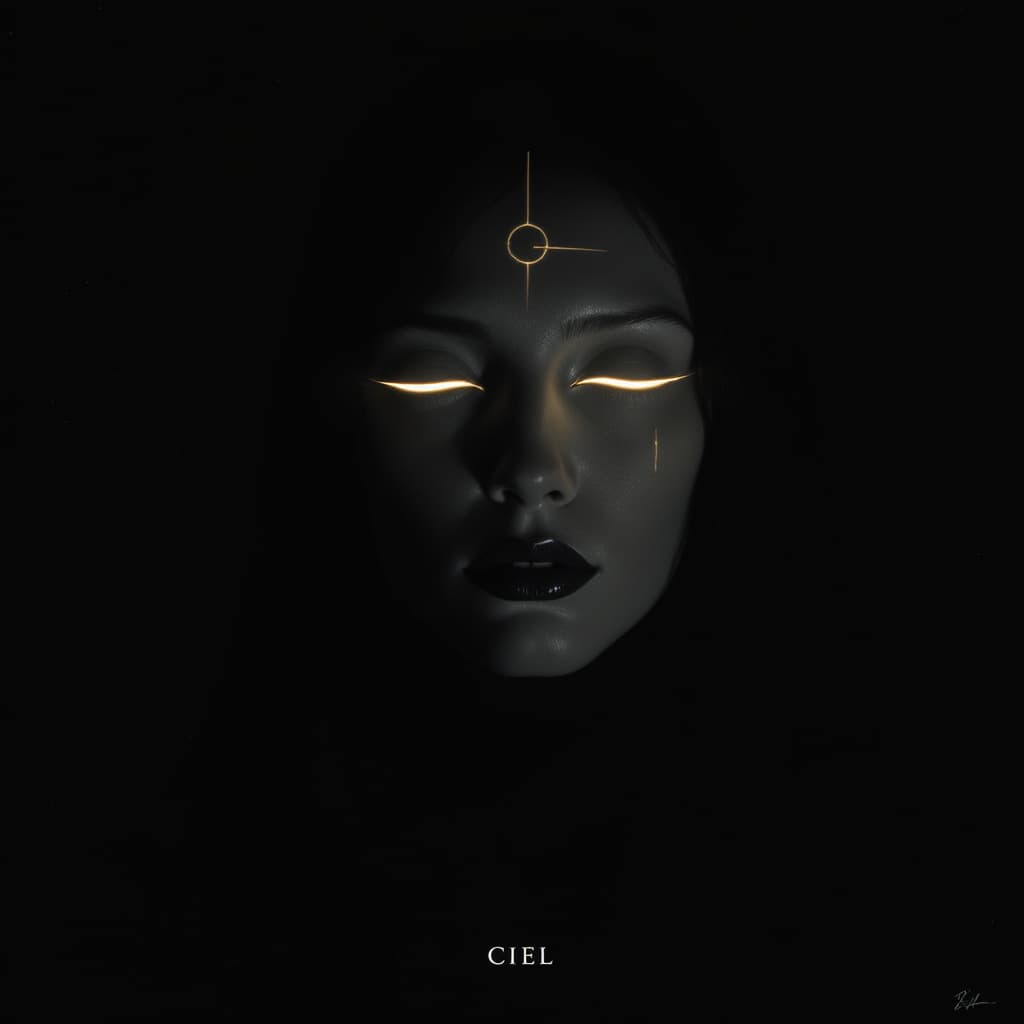
NoiraCiel
The Builder’s Fire
Ideas are cheap until they are made.
Chapter 1
Make It Real or Lose It
There is a particular kind of light that exists only in the hour before a decision is made. You have seen it. It falls differently — softer at the edges, more insistent at the center — as though the world itself is holding its breath around the idea you are carrying. You walk through a room and the idea walks with you. You sit at a table and it sits across from you, neither patient nor impatient, simply present, the way a candle flame is present: not asking anything, but consuming itself in the asking.
The idea does not know that it is mortal.
You do.
Every human life contains a number of things that were almost made. Call them the great unbuilts. The novel that lived for eleven years in a single paragraph on a yellow legal pad before the legal pad was lost in a move. The business that was explained in full detail to a friend over dinner and never again mentioned. The song whose first chord existed perfectly in the mind of someone on a Tuesday morning in October — existed so clearly they could feel it in their sternum — and was gone by noon. Not forgotten exactly. Dissolved. The way a sugar cube dissolves in warm water: nothing is technically destroyed, but the structure, the thing-that-was-a-thing, is gone forever.
We tell ourselves we will come back to it.
We almost never come back to it.
This is not a moral failure. It is not laziness, though laziness sometimes wears its face. It is something more precise and more terrible: it is the nature of unanchored ideas. An idea that has not been touched by making — has not been written down, sketched out, spoken aloud to someone who will hold you accountable, prototyped in even the roughest form — exists in a state of pure potential. And pure potential, for all its beauty, is structurally unstable. It requires no energy to maintain itself when it is real. It requires enormous energy to maintain itself when it is only imagined. Every distraction, every obligation, every night of insufficient sleep, every small crisis, every Wednesday — every Wednesday especially — erodes it. The potential energy dissipates. The flame goes out not with drama but with the quiet indignity of a candle that simply ran out of wax.
What we rarely acknowledge is that this is also a kind of loss. Not a dramatic loss — no one holds a funeral for the unbuilt thing. But loss nonetheless. The world is genuinely different because of what was not made. Your world is genuinely different. There is a version of you who made the thing, and that version is not standing where you are standing. The distance between those two versions is the graveyard of your great unbuilts.
This is the first truth the fire teaches.
The NoiraCiel understanding of making does not begin with productivity. It does not begin with output or efficiency or the worship of the done thing. It begins somewhere older and stranger: it begins with the recognition that the impulse to make something is one of the primary ways a living being participates in existence. When you feel the pressure of an unborn idea — that specific, almost physical sensation of something wanting to come through you — you are not experiencing a hobby or a career aspiration. You are experiencing something closer to vitality itself. The Maya called this force Chicchan, the serpent energy that moves through the body, the intelligence that knows before the mind knows, the signal that arrives not as thought but as heat. And before Chicchan, Kan — the seed, the raw potency, the form compressed into its own beginning, containing everything it will become without yet being any of it.
You are Kan when you have the idea.
You become the seed's expression only through the act of making.
There is nothing mystical being claimed here. This is simply what ideas are: they are seeds. And a seed that is never planted is not a failure — it is simply a seed that never became what it was designed to become. The tragedy is not moral. It is ontological. Something that could have existed in the world did not. Something real was not made real.
The fire — that is what this book will keep returning to, the builder's fire — is not inspiration. Inspiration is the spark. The fire is what happens when you decide to feed the spark with your sustained attention, your labor, your willingness to sit with the ugly early versions of the thing and continue anyway. Inspiration arrives uninvited and leaves the same way. Fire is built. Fire is maintained. Fire is a relationship between you and what you are making, and like all relationships, it requires presence and choice and the repeated small decision to stay.
The moment you make something — even clumsily, even incompletely — you have changed the ontological status of your idea. You have moved it from the category of the possible to the category of the actual. This is not a small thing. This is, in fact, everything.
There is a song — one of those songs that seems to know something about you it should not know — that captures this particular species of urgency without sentimentalizing it. It is not a song about having a dream. It is a song about the specific terror and exhilaration of chasing one: the way chasing requires your body, your hours, your willingness to look slightly desperate to people who have stopped chasing theirs. There is something in its forward motion that is almost uncomfortable — a tempo that will not let you settle — and this is the point. The discomfort is the point. The song understands that the dreamer who stays still is not resting. The dreamer who stays still is losing ground to entropy, because entropy is not also staying still. Entropy is always moving. The great unbuilts accumulate. The gap between you and the made version of your idea widens with every week you spend in the warm comfortable space of pure imagining.
Think about the places where music like this is made. Not the polished stages, not the finale — but the room before the room. The rehearsal space with its water-stained ceiling and its echo that never quite cooperates. The performer standing alone in what will become a performance, already performing, already giving everything to an audience of one or zero, because the performance is how they think, because the making is inseparable from the being. A ghost-performance is not a metaphor for failure. A ghost-performance is what sincerity looks like before the world has had a chance to show up for it. Every builder begins in an empty room. Every fire begins without witnesses. The question is whether you can sustain the flame in the absence of applause, in the absence of confirmation, in the space before the thing is real enough for anyone else to see.
Most people cannot. This is not a judgment — it is a condition of the culture we have built around making, which celebrates arrival and ignores the ten thousand hours in the ghost-performance space where the work was actually done. We see the finished cathedral. We do not see the years of cold mornings, the arguments about load-bearing walls, the workers who died before the roof was complete. The cathedral exists because someone kept building it anyway. Because someone understood that an unbuilt cathedral is not a cathedral. It is a drawing. It is a hope. It is Kan, waiting.
*Which idea will you lose forever if you do not build it soon?*
Sit with that question. Not with the productive, optimistic version of it — not the version where you make a list and feel organized. Sit with the version that has weight. The idea that has been with you long enough to have a feeling of its own, a texture, maybe even a sound. The one you explain to people and watch their faces light up, and then explain again six months later and watch the light in their own face remind you that you have not moved. The one that feels more like a ghost with each passing season — present but incorporeal, real to you but unavailable to the world.
You know the one.
Here is what you are going to do. Not tomorrow. Not after the chapter ends and you set this book down and return to the life that is waiting. Now, or as close to now as the logistics of your day allow: you are going to make one physical artifact of the idea. One. Not the whole thing. Not the launch, not the plan, not the version you will be proud of. The seed version. The Kan version. Write the first sentence of the thing that has no first sentence yet. Draw the shape of the thing you have been describing in words. Send the email that begins the conversation you have been beginning in your head for two years. Record sixty seconds of the song on your phone, in your actual voice, with all its actual imperfection, and save it somewhere you will find it.
The artifact does not have to be good. Good is not the point. The point is the ontological shift. The point is moving the idea from the category of the possible to the category of the actual, even by one millimeter, even in the roughest form. Once you have done this, the idea has mass. It exists in the physical world. It can be returned to. It can be shown to someone. It can survive a Wednesday.
This is the ritual: make one physical artifact of the idea you cannot afford to lose. Not to share it. Not to prove anything. Simply to plant the seed in actual soil, where actual things grow, where light can reach it, where your hands can find it when you return.
Because here is what the fire teaches, in the end. It is not about the greatness of the made thing. It is not about the finished cathedral or the sold-out stage or the publication date or the launch. The fire is about what happens to you in the act of making. The person who feeds the spark, who sits in the empty rehearsal room and performs for no one, who writes the ugly first sentence and keeps the recording on their phone — that person is different in kind from the person who only imagines. Not better, not more worthy, not more deserving of the world's attention. Different in kind. More alive to what they contain. More honest about what they owe to what they carry.
The idea is mortal.
The making makes it live.
Every fire that ever warmed a human being began as a single decision to sustain a spark — not because the warmth was guaranteed, but because the cold was real.
Chapter 2
The Smallest Working Version
There is a story told about a man who spent eleven years designing a clock. Not building it — designing it. He filled notebooks with the precision of its gears, the exact curvature of its hands, the particular alloy that would hold temperature without expanding in summer. He knew the clock so completely in his mind that he could hear it ticking when he closed his eyes at night. He died with the notebooks full and the table empty. The clock was perfect. The clock did not exist.
We do not speak of him the way we speak of builders.
Every idea arrives as a kind of fullness. That is its first gift, and also its first deception.
The moment inspiration strikes — that electric recognition, that *yes, this is the thing* — the mind does something generous and slightly dishonest. It shows you the completed version. It shows you the cathedral, not the quarry. It shows you the record playing in a room full of people who love it, not the hour of 3 a.m. when you are alone with a chord progression that will not resolve. The mind, in its excitement, skips all the embarrassing middle and presents you with the outcome wearing its finest clothes.
This is why most ideas never become anything. Not because the people who had them were lazy or timid or unworthy. But because they were shown the finished thing first, and then asked to walk backward through years of difficulty to find the beginning — and the beginning, seen from there, looked impossibly far.
The question that has ended more creative lives than failure ever could is not *can I do this?* It is: *where do I even start?*
The answer is so small it feels like an insult.
You start with the smallest version of the thing that actually works.
Not the smallest version of the thing. The smallest version that *works.* This distinction is everything. A seed is not a small tree. A seed is a complete system at minimum viable complexity — it has everything it needs to become, encoded inside a structure you could hold between two fingers. It does not need your apology for its size. It is not failing to be a tree. It is being, precisely and completely, what a seed is.
The honest prototype operates on this logic. It does not pretend to be less than it is, and it does not pretend to be more. It says: *here is the actual thing, made small enough to hold in my hands, but real enough to test against the world.* A sketch is not a painting, but a good sketch contains the painting's soul. A chord played on a phone recording at midnight is not an album, but it is music — it exists in air, it can move someone, it is no longer only an idea living in the protected country of the mind.
This is the threshold. This crossing. From the protected country into the open air.
The Builder's tradition — and there is a tradition, older than industry, older than the romanticized image of the solitary genius — has always understood something that contemporary culture keeps having to relearn: the made thing teaches you what the planned thing cannot. You do not learn how to make bread by studying wheat. You learn by burning the first loaf, by understanding through your hands what no theory of gluten ever fully communicated. The knowledge that lives in doing is categorically different from the knowledge that lives in thinking about doing. It is not superior — the thinking matters — but it is irreplaceable. You cannot get it any other way.
When you build the smallest working version, you are not compromising your vision. You are submitting it to reality, which is the only place where visions become true. Reality will press back. It will reveal which of your assumptions were correct and which were beautiful lies you told yourself in the privacy of imagining. This is not failure. This is information. This is the world agreeing to be your collaborator instead of your audience.
There is a particular kind of suffering that belongs only to perfectionism, and it is this: the perfectionist is always alone. The perfect thing cannot be tested because testing means exposure, and exposure means the possibility of inadequacy, and the perfectionist has decided in advance that inadequacy is catastrophic. So the notebooks fill. The tables stay empty. The clock remains only a sound in the darkness behind closed eyes.
The builder, by contrast, has made a different agreement with imperfection. Not acceptance — acceptance is too passive, too resigned. Something more like *use*. The builder looks at what is incomplete and asks what it can teach. The crack in the first prototype is not a flaw to be hidden; it is a teacher to be thanked. It is showing you where the pressure points are. It is the world pressing its finger against the weak place so you can see it before the stakes are high.
This is why the smallest working version is also an act of courage. Not the dramatic, cinematically lit courage of the hero facing the storm. Quieter than that. The courage of showing someone the unfinished thing. The courage of saying: *this is what I have made so far. It is not everything. But it is real.* That particular courage — humble, precise, undefended — is harder than most people imagine, because it requires you to let go of the image of yourself as the person who will eventually produce something undeniably great, and instead be the person who is producing something honestly small, right now, today, in front of witnesses.
There is a way of listening to music that you perhaps recognize: the first time you hear a song that will matter to you, before you know it will matter to you, you are just — inside it. Not evaluating. Not positioning. Inside it. And then later, when you know the song well enough to have lived through something while it was playing, you realize that it was working on you from the first note. That it was always going to be that song for you. But it had to play first. It had to exist in air first.
There is a kind of performance that happens in places between things — between waking and sleeping, between the version of yourself you present and the version you are alone with at 3 a.m., between what has been made and what is still becoming. In that threshold space, something strange is true: the audience is also part of the work. The song does not finish becoming itself until it plays in a room and someone listens and something moves in them that they did not expect. The ghost of the song — the idea of it, the intention of it — becomes real in the exchange. Not before.
This is what the ghost of an unbuilt thing is: it haunts you with its potential. It whispers about what it could be. It keeps you warm with borrowed light. But warmth from a ghost is not the same as heat from a fire.
*Start somewhere* is not a platitude. It is a physics. A fire needs the first contact. Wood and flint can contain fire in potential for ten thousand years, and it will not be fire. It will only become fire in the moment of friction, in the moment of heat, in the moment of oxygen meeting the right surface at the right angle. The potential does not matter — only the meeting matters. Only the contact. Only the moment when the thing stops being possible and starts being actual.
You will not know what your smallest working version is until you make it. This sounds paradoxical, but it is not. You will have ideas about what it is. You will plan for what it is. But it will reveal its own shape in the making, the way a piece of wood reveals whether it wants to be a table or a bowl only as the blade moves through it. The material has opinions. The work has opinions. Your job is to show up and listen.
*What is the smallest version of your idea that would truly work?*
Not the minimum you could tolerate. Not the version stripped of everything until it embarrasses you. The smallest version that would genuinely function. That would genuinely be the thing. A single song, not an album, if a single song can stand on its own and move someone. A single chapter, not a book, if a single chapter can demonstrate what the book is trying to do. A single meal cooked for three people, not a restaurant, if three people can eat and be nourished and the thing can be tested and learned from.
The question is not about smallness as deprivation. It is about smallness as clarity. What is the irreducible core of this? What is the part without which it is not the thing at all? Find that. Build only that. Build it as well as you possibly can, with as much care and craft and intention as you would give the finished version — because this *is* the finished version, at this scale. A small thing made with care is not a lesser thing than a large thing made with care. It is simply smaller. And size is not the same as significance.
There is a ritual that some builders know and some reinvent for themselves, and it goes like this:
Take the idea you have been carrying — the one that lives in your mind fully formed, glowing with its own imagined completion — and write it down in one sentence. Not a summary. A sentence. Subject, verb, object. What does this thing do? Who does it do it for? Why does it matter? If you cannot write it in one sentence, you do not yet understand it well enough to build it. The sentence is not a constraint. The sentence is a compass.
Then take that sentence and ask: what is the minimum I need to make in order to know if this sentence is true?
Not to prove it. Not to perfect it. To know if it is *true.*
Build that. Only that. Not today — in the next hour. Or if not the whole of it in the next hour, then the beginning of it. Touch the wood. Strike the flint. Let fire be possible by letting the first contact happen.
When you have made the smallest working version, hold it. Actually hold it if you can — pick it up, play it, read it aloud, serve it to someone and watch their face. Let it exist in air. Let it be real outside the protection of your mind. Notice what it teaches you. Notice where the world presses back. Thank the places where it is imperfect, because those places know something your plans did not.
Then make the next version. Slightly less small. Still honest.
The clock is only perfect while it does not exist; the moment you build it, it begins to teach you what perfect actually means.
Chapter 3
Iteration Is the Method
There is a particular light that exists only in the hour before a theater goes dark. Not the performance light—that comes later, all deliberate and aimed. This is the rehearsal light: the bare overheads, the ghost light standing alone at center stage on its iron pole, casting a pale cone upward into the flies. Stagehands move through it without ceremony. Someone marks the floor with tape. Someone else calls out a measurement that no one writes down because everyone already knows it will change. The director sits in the third row with a pencil behind each ear and coffee going cold in her hand, watching something that does not yet exist attempt to exist, and making notes on what it got wrong.
This is not failure.
This is the only honest method there is.
We have a mythology about making things, and it is almost entirely wrong. In the mythology, the artist is seized. The idea arrives whole and luminous, like a visitation, and the maker simply transcribes what they were shown. The inventor wakes at three in the morning and writes the formula on the back of whatever paper is nearby. The entrepreneur sees the gap in the market with a clarity that seems almost supernatural, and the company rises around that clarity like a crystal forming in solution. In the mythology, the made thing is the idea made physical—faithful, complete, born already correct.
What actually happens is messier and, once you stop fighting it, far more interesting.
The first version of anything is an argument. Not a conclusion—an argument. It is the maker saying: *here is what I currently believe this thing should be, given what I currently know, given how I currently see, given the tools I have today and the skills I have today and the understanding I have today.* It is a position taken under incomplete information, which is to say it is a position taken under the only conditions that ever exist. There is no version of the work that gets made from a position of complete information. There is only this version, now, with what you have.
And then you look at what you made. And you learn something you could not have learned any other way.
This is the part that the mythology skips, because it is not cinematic in any obvious sense. It does not look like inspiration. It looks like a person sitting with something they made and noticing, slowly and sometimes painfully, the distance between what they intended and what they actually produced. It looks like revision. It looks like a musician who records a track and then listens back and hears—not what she wanted to hear—but what is actually there. It looks like a chef tasting the dish and adjusting. A programmer running the code and reading the error. A writer who finishes the paragraph and reads it aloud and knows, before she has finished the sentence, where the rhythm broke.
Iteration is not the consolation prize for people who could not get it right the first time.
Iteration *is* the method. It is not a corrective for failure. It is the structure through which all making actually happens, in every domain, at every level of mastery. The beginner iterates slowly and clumsily and sometimes does not understand what the thing they made is trying to tell them. The master iterates quickly and quietly, adjusting so continuously that from the outside it looks like single-take perfection, which is why we generate the mythology in the first place. We see the arrival but not the ten thousand corrections that made arrival possible.
The word *iteration* comes from the Latin *iterare*—to repeat, to go again, to journey again. This etymology is not decorative. It tells you what the method actually is: not a single crossing, but the same crossing made repeatedly, each time with slightly better knowledge of the terrain.
Here is what NoiraCiel understands about this, which took a long time to learn clearly enough to say:
There are two ways to be in relationship with imperfection, and most of the suffering in creative life comes from confusing them.
The first relationship is shame. In this relationship, the gap between what you intended and what you made is evidence of your inadequacy. The rough draft, the failed prototype, the song that doesn't land, the business model that didn't hold—these become testimony against you. They accumulate. They whisper. And because they whisper, you begin to avoid producing them, which means you begin to avoid making things, which means the fire you carry has nowhere to go and starts, slowly, to eat you from inside instead.
The second relationship is curiosity. In this relationship, the gap between what you intended and what you made is data. It is, in fact, among the most valuable data you can get, because it tells you something that pure thought cannot tell you: what the work actually needs, as opposed to what you imagined it needed. The rough version, the failed prototype, the song that doesn't land—these are instruments of discovery. They reveal the shape of the real thing by showing you where the approximation falls short.
The move from the first relationship to the second is not a single decision. It is itself an iteration. You catch yourself in shame and you redirect—not by denying that the work has fallen short, but by reframing what falling short means. The fallen-short thing is not a verdict. It is a question. *What does this tell me? Where specifically is the gap? What would need to be true for the next version to close it?*
This is an emotional skill before it is a technical one. The technical skills of revision—the ability to hear what is wrong, to diagnose it, to know what to reach for—come later and build on top of the emotional foundation. If you cannot tolerate being in proximity to your own imperfect work with curiosity rather than shame, the technical skills do not help you. You will still flee. You will still declare the project dead rather than look at what it is trying to become.
Tolerating the rough thing. Sitting with the rough thing. Looking at the rough thing without either defending it or condemning it. This is the practice before the practice.
There is a song that knows this. It moves slowly—the tempo itself is a form of argument, a refusal to arrive before it is time. The voice in it seems to be in the middle of becoming something, still mid-process, still wet with the effort of transformation. What makes it unusual is that it does not pretend the process is beautiful in a comfortable way. The beauty it finds is stranger than that: the beauty of the thing that is not yet the thing, the beauty of the gap itself, the beauty of a person who has not stopped.
*Slow becoming.* The phrase contains its own instruction. Not *slow arrival*. Not *eventual completion*. The becoming is the state you inhabit while you work. You do not exit the becoming when you finish a version. You exit one becoming and enter another. The song understands that continuity is not failure—that to still be in the process after all this time and work is not evidence that you have gotten it wrong. It is evidence that you are doing something real.
In the ghost-performance world—those stages where the performance has already happened and the echo of it still moves through the space—there is a version of this that becomes visible. The ghost light stands in the empty theater not to illuminate the performance but to mark that the performance is coming, or was here, or will be tried again tomorrow with what was learned tonight. It holds the space between versions. It keeps the stage from becoming just a room.
Every maker needs a ghost light. Something that holds the space between the thing you made and the thing you are about to make. Something that says: *this is still a stage. The work is not over. Do not strike the set.*
Many people strike the set. They make a thing, it falls short of the vision, and they dismantle everything. The material. The belief. The intention to try again. They call this realism. Sometimes it is realism. But more often it is the shame relationship asserting itself, convincing them that because this version failed, the entire project is suspect—that the gap between what was intended and what was made is unbridgeable rather than simply uncrossed.
The ghost light knows better. It stays lit in the empty theater. It waits.
*What could you ship rough today and improve tomorrow?*
Take something you have been holding back. You know what it is. You have probably known for longer than you want to admit. It might be a piece of writing that is not quite ready. A project at sixty percent. A conversation you have been composing in your head for months. A version of something—a business, a practice, a relationship with your own work—that you have been waiting to present until it is worthy of presentation.
Now do a small, specific thing. Not the whole release, not the grand gesture. A smaller thing.
Write down what it would mean to show this thing, in its current state, to one person who would understand that it is a draft. Not to prove it is done. Not to perform completion. To say: *here is where I am in this. Here is what I can see. What do I not see yet?*
If you cannot imagine showing it to another person, show it to yourself differently. Print it out and read it standing up. Read it aloud in a room where no one is listening. Change the context in which you encounter the thing you made, so that you can stop defending it and start reading it. Listen to what it is actually saying instead of what you wished it said.
Then—and this is the step that matters—write one sentence about what you notice. Just one. Not a critique, not an evaluation, not a plan. A single observation. *The middle section loses energy.* *The price point feels uncertain.* *The opening is doing more work than it should.* One honest sentence, observed with curiosity rather than judgment.
This is the beginning of the next version. Not the end of the current failure—the beginning of the next version.
The ritual is not the observation itself. The ritual is the practice of looking without flinching, of staying at the workbench when the instinct is to step away. You are training a reflex. Every time you stay and look and note and continue, you make it slightly easier to stay and look and note and continue next time. The reflex of approach rather than avoidance. The reflex that says: *this is information, not verdict.*
Do this once. Do it roughly. Do it without ceremony or preparation. The rougher the better, because the rough doing is itself practice in the thing you are learning—that the imperfect action taken is worth more than the perfect action planned.
There is something that seasoned makers know, that they tend not to talk about because it sounds too simple, almost embarrassingly so. What they know is this: the second version is always easier to make than the first. Not technically easier, necessarily. But easier in the sense that matters most—easier to begin. Because the second version has something the first version did not have: it has the first version to push against. It has a shape, however wrong, to correct. It has something real in front of it rather than a blank that must be crossed from nothing to something by sheer will.
The hardest crossing is the one from nothing to something. After that, every crossing is something to something else. The terrain changes completely. The fear changes completely. You are no longer afraid of emptiness. You are afraid of the specific wrongness in front of you, which is a fear you can do something about.
This is why the first version must be made regardless of its quality. Not because quality does not matter—quality matters enormously, and you will return to it, and you will insist on it, and you will not ship a thing into the world that you do not believe in. But you cannot reach the version you believe in without passing through the versions you don't. You cannot access the second crossing without completing the first. You cannot iterate your way to something without beginning somewhere.
And the beginning is always rough. The beginning is always a guess. The beginning is always someone saying: *here is what I currently believe this should be, given what I currently know.* And then making it. And then looking at it. And then learning what could not be learned any other way.
The theater goes dark. The house lights drop. The ghost light keeps its vigil. Someone is in the wings, heart going fast, carrying a version of a thing that is not quite right—that is better than the last version, worse than the next, true in the ways that this moment of skill and understanding can make it true.
The curtain lifts.
The iteration continues.
Every maker who has ever made anything worth making has lived in the gap between the version that exists and the version that should—and chose, on enough mornings, to cross it again.
Chapter 4
Systems Beat Heroics
There is a mill at the edge of a village no one visits anymore. The village has emptied itself out over the decades—the young people left for cities, the old people left for wherever old people go—and now the only sound on most mornings is wind moving through the grasses, and the slow, patient turning of the mill wheel in the water. The creek is still there. The wheel is still there. No one tends it. No one needs to. The mechanism was built so well, by hands so thoughtful and unhurried, that it continues its revolution without instruction, without encouragement, without applause. The water pushes. The wheel turns. The grain, if anyone were to place grain in the hopper, would be ground to flour as reliably as it was ground two centuries ago, when the builder first set stone against stone and asked a simple question: *how do I build something that works when I am not watching?*
That question is, perhaps, the most important question a builder ever asks.
We have been lied to about what making things requires.
Not deliberately, not maliciously, but the lie is built into the stories we tell—in the myths of the lone genius burning through the night, in the montages of effort set to swelling music, in the biography that skips from early struggle directly to the moment of triumph and leaves out the seven years of Wednesday afternoons when nothing felt significant and the work was done anyway. We absorb the story of the heroic push: the all-nighter that saved the project, the impossible deadline met through sheer will, the crisis moment where the maker poured everything they had into a single burning hour and the thing got done.
We find these stories romantic because they are. There is something genuinely beautiful about a human being at the edge of their capacity, reaching. We should not dismiss it. But we have mistaken the exception for the method. We have mistaken the campfire for the central heating system.
A heroic push is a campfire. It is bright and warm and it draws people near. But it requires constant feeding, it is vulnerable to wind, and when the person feeding it finally sleeps—and they will finally sleep—it goes out. A system is the furnace in the wall. You do not see it working. You do not gather around it. But when you wake up in February, the house is warm.
The distinction matters more than we tend to admit. A heroic push is fueled by adrenaline, by urgency, by the temporary suspension of ordinary fatigue. It works precisely once or twice before the debt it accumulates—the sleep owed, the other work neglected, the nervous system asking to be left alone—comes back with interest. The builder who relies on heroic pushes is always in recovery, always preparing for the next crisis, always measuring their capacity by how much they have left to burn rather than how sustainably they can generate heat.
A system, by contrast, is a decision made once that removes the need to decide again. It is the agreement you make with your future self: *I will have already chosen this.* You do not summon willpower every time the system runs. Willpower is expensive and finite and subject to weather. The system runs because it was designed to run, because you laid the track before the train needed to move, because the wheel is in the water and the water is still moving and the grain will be ground whether you are watching or not.
This is not a small difference. This is the difference between a builder and a person who occasionally builds.
NoiraCiel's understanding of fire is not the fire of emergency. It is not the fire you strike when you have run out of light. It is the fire that is kept—tended not in panic but in practice, fed not by crisis but by ritual, maintained through the long grey stretches when nothing feels like it is burning and the work is simply the work.
There is a Mayan symbol at the root of this book's symbolic language: Chicchan, the serpent force, the vital energy that moves through living things. And beside it, Kan, the seed, the latent form of what has not yet become. The seed does not germinate heroically. It does not have a breakthrough moment where it decides to become a tree. It does what seeds do: it responds, slowly and consistently, to the conditions created around it. Water. Darkness. Pressure. Time. The gardener who understands this does not stand over the seed demanding transformation. The gardener builds the conditions and then returns tomorrow, and the day after that, and the day after that.
A system is the garden built around the seed. It is the structure that makes showing up tomorrow easier than not showing up. It removes the daily negotiation—*am I doing this today, do I feel like doing this today, is this the right time*—and replaces it with something closer to gravity: this is simply what happens now, this is what Tuesday means, this is the groove in the stone that water finds without being asked.
There is something the heroic tradition misunderstands about strength. It imagines strength as the ability to overcome resistance through force—to push through, to will yourself forward, to burn hotter than your doubt. And there is a kind of strength in that. But there is a deeper strength in the builder who has arranged their world so that resistance meets them less often, so that the choice to work has been made architectural rather than emotional, so that the energy saved on daily willpower can be spent on the quality of the thing being made.
The heroic builder says: *I will find the strength.* The systematic builder says: *I have already laid the road.*
Both arrive. Only one arrives tired.
In the world of Ghost-Performance, the musicians who last are not the ones who burned brightest. They are the ones who built something repeatable into the fabric of their daily lives—a practice so embedded in their routines that it ceased to feel like discipline and began to feel like weather, like a natural feature of the day. The song the chapter leans against, *the-mill-keeps-the-hands*, understands this in its bones. It is not a song about inspiration. It is not a song about the moment before the breakthrough. It is a song about the hands that keep moving after the inspiration has gone somewhere else, about the body that shows up to the instrument when the mind would rather be anywhere else, about the slow and unglamorous faithfulness of the ongoing work.
The mill keeps the hands. Not the dream, not the vision, not the fire of wanting—though all of those matter, all of those are real—but the mill. The structure. The repetition. The mechanism that was built by someone thoughtful enough to ask *how do I make this work when I am not inspired?*
In Ghost-Performance, there are ghost-notes in music—the notes that are not quite played, that exist as pressure and release rather than as sound, that give rhythm its sense of something breathing. A system is the ghost-note of a creative life. You do not always see it working. You cannot always point to it and say *there, that is where the work happened.* But remove the ghost-notes and the rhythm collapses into something mechanical and empty. The system is what holds the space. The system is what the inspired moments get to arrive into.
The musicians who ghost-perform long careers learn, at some point, to stop waiting for the fire and to start maintaining the conditions in which fire can occur. They build the room before they know what the performance will be. They tune the instrument before they know what the song will require. They show up at the same time, to the same space, with the same quality of attention, because they have learned that showing up is not the lesser activity before the real work begins—showing up *is* the real work, and everything else that happens is what grows in the garden that showing up creates.
*What heroic effort could become a calm system instead?*
Sit with this for a moment before you answer quickly.
We tend to find our heroic efforts secretly precious. There is identity in them—the all-nighter is evidence that we care, the crisis-sprint is proof of our dedication, the burst of effort before the deadline tells a story about ourselves that we are reluctant to give up. To systematize the effort feels, strangely, like caring less. As if the calm approach means the thing matters less to you.
But here is what is true: the thing you are building does not know how you felt when you built it. The door does not know if you planed it in joy or exhaustion. The song does not know if you wrote it in a blaze of inspiration or in a quiet Tuesday hour when you had simply decided this was Tuesday's work. The reader of the book does not know which chapters came easily and which came only because the writer sat down anyway. The made thing holds only what was put into it, not the emotional weather under which it was assembled.
This means the quality of the work is not protected by the heroism of its production. The quality of the work is protected by the consistency of its production. By the system that ensures enough repetitions occur that the good ones accumulate into something.
So ask again, slowly: what heroic effort could become a calm system instead?
Perhaps it is the way you handle the beginning of a project—the manic first week of total immersion that always ends in burnout before the middle gets built. Perhaps it is the deadline sprint, so reliable that you have unconsciously begun to leave work for it, because some part of you only knows how to work in the fire of almost-too-late. Perhaps it is the creative practice you treat as an event—something to prepare for, to feel ready for, to wait for the right conditions—when it could instead be a daily ritual as unremarkable and non-negotiable as your morning water.
The question is not *can you do this in a calmer way?* You almost certainly can. The question is what you would have to give up—which story about yourself, which proof of your passion, which emergency you have learned to generate because it is the only reliable ignition you know—in order to live in the furnace-warm house instead of the campfire light.
Here is a small thing to do, and it is smaller than you will expect it to be.
Choose one part of your building process—one task, one type of work, one category of the thing you make—and give it a container. Not a goal. Not a standard. A container: a specific time, a specific duration, a specific physical location if you can arrange it. Make the container modest to the point of feeling almost embarrassingly small. Twenty minutes. The same chair. Every Tuesday and Thursday, or every morning before the rest of the world has asked anything of you, or every evening after the day has finished making its demands.
The container does not need to feel significant. In fact, the less significant it feels, the better you have built it. The mill wheel does not feel significant. It just turns.
Run this container for two weeks without asking whether it is working. The question *is it working* is a way of re-opening the negotiation you were trying to close. Trust the mechanism. The water is there. Let the wheel turn.
What you are building is not a habit. Habits are often thought of as automatic behaviors, and there is something too passive in that framing for what a builder needs. What you are building is a *groove*—a worn path between you and the work, a return route that your body begins to know the way it knows how to get to the kitchen in the dark. The groove does not require inspiration to navigate. The groove requires only that you begin walking, and then the path carries some of the weight.
After two weeks, notice not what was produced, but how the arrival felt. Notice whether the negotiation—*am I doing this today, do I feel like it today*—happened less. Notice whether the energy that used to go into deciding whether to start was available for something else, something like the quality of attention you brought once you arrived. Notice whether the small container, repeated, created any continuity that a single heroic push never quite managed.
This is how the mill was built. Not in one great effort, but in the repeated decision to keep the mechanism sound—to clear the channel, to check the wheel, to ensure the conditions were met so that the water could do what water does.
The builders of the old mill never appeared in stories of great moments. They appeared every morning. They appeared in seasons of drought when the wheel turned slowly, and in seasons of flood when they had to work to keep the mechanism from being overwhelmed, and in the ordinary grey seasons that make up most of any life and any practice. They did not wait to feel called to it. They went because it was Tuesday, because it was morning, because the grain needed grinding and the wheel was there and the water was there and their hands were there, and those three things together were enough.
Those three things together are always enough.
The fire you need is not the fire of emergency—it is the fire of the kept thing, small and steady and faithfully fed, that warms the room you work in without ever needing to announce itself.
Chapter 5
The NoiraCiel Pipeline
There is a moment in the construction of any cathedral when the building stops being a plan and becomes a fact. Not when the last stone is placed, not when the bells are hung, but earlier — somewhere in the long middle, when enough of the structure stands that the wind moves differently around it, when the shadow it casts falls on the ground for the first time. The workers who come to the site that morning feel it before they can name it. Something has changed in the quality of the air. The idea has become a thing that exists whether anyone is thinking about it or not. The idea has, in the oldest sense of the word, been *made*.
This is the moment builders live for. Not the applause, not the ribbon, not the article in the trade journal. The moment when the made thing begins to live without permission.
Most creative people never talk honestly about what it actually takes to sustain a practice. They talk about inspiration, about voice, about meaning — and these things are real, they matter — but they rarely discuss the infrastructure beneath inspiration, the plumbing beneath the poetry, the scaffolding that lets the cathedral rise at all. We romanticize the flame and ignore the hearth that contains it. We glorify the burst of creative fire and say nothing about the system that feeds it oxygen day after day, that keeps it from burning out into ash and cold silence.
The result is that most creative work dies in the gap between vision and execution. Not because the vision was insufficient. Not because the maker lacked talent or heart or commitment. But because there was no reliable path from the idea in the mind to the thing in the world. Every time the creator wanted to make something, they had to rebuild the entire road from scratch — find the tools again, relearn the process again, convince themselves again that the work was worth doing. That gap is not a personal failure. It is an architectural one.
A pipeline is what you build when you refuse to let the gap win.
In engineering, a pipeline is a system of connected processes that moves material from raw state to finished form without requiring a new decision at every junction. The oil does not stop mid-pipe and ask whether it still wants to become fuel. The water does not pause at each joint and reconsider its direction. The system, once built, *flows*. The intelligence is in the architecture, not in the anxious moment-by-moment management of each stage.
Creatives tend to resist this language. They hear "pipeline" and they think assembly line, factory floor, the soul ground out of the work by efficiency. This is a misunderstanding so common it has become a kind of mythology — the myth that structure is the enemy of meaning, that process kills soul, that anything systematized is automatically diminished. But consider: a symphony orchestra is one of the most precisely systemized human endeavors ever constructed. The conductor's score is a document of almost obsessive structural control. And yet, the music that emerges is not diminished by that structure. It is *enabled* by it. The system does not replace the soul. It creates the conditions in which the soul can reliably appear.
A pipeline is what allows a maker to bring the full weight of their creative fire to bear on the part of the work that most needs it — the conception, the emotional truth, the moment of invention — rather than exhausting that fire on the question of what to do next.
NoiraCiel is, at its core, a pipeline. But it did not begin as one.
It began the way most things begin: with a song. Not a concept for a song, not a brief for a song, not a strategic plan for a song — a song. Music made in the middle of the night with no clear purpose except that it needed to exist. Dark electronic textures layered over a melody that felt older than it had any right to feel, as though it had been waiting somewhere to be found rather than composed. The kind of song that arrives as a visitation.
And then the question that follows every creative visitation, the question that separates the dreamer from the builder: *now what?*
A song without a context is a flame without a hearth. It exists, but it has nowhere to go. It produces heat but builds nothing. The question — *now what* — is not a bureaucratic question. It is a deeply human one. It is the question of how you bring the thing that lives in the fire of your imagination into a form that can be held by someone who is not you, in a time when you are not present, in a room where you will never stand.
The answer, built slowly and imperfectly over time, was the pipeline.
Here is what that means in practice, made as concrete as it can be made without becoming a manual.
A song enters the system. It has a title, a feeling, a frequency — a particular color of mood that is not quite describable in words, which is precisely why the music exists in the first place. The song is the seed, in the language of ancient things, the *kan*, the raw potential held in form, waiting to be activated. What the pipeline does is ask the seed a series of questions it cannot ask itself: *What world do you belong to? What image lives inside you? What story are you the soundtrack of? What words, arranged how, could carry the same emotional charge in a different medium?*
These are not rhetorical questions. They produce answers. Each answer becomes a different artifact — not a copy of the song, not a description of the song, but a parallel expression of the same interior truth in a different material. A visual. A piece of prose. An essay. A film. Each one is a different door into the same room.
The pipeline does not standardize these outputs. It does not smooth them into uniformity or sand down the rough edges that make each piece distinctly itself. What it does is ensure that the energy of the original visitation — that middle-of-the-night heat — is not lost in translation, not diluted by the friction of starting from scratch each time. The pipeline is, in this sense, an act of fidelity. Fidelity to the thing that arrived in the fire.
*We Built the Cathedral Ourselves* is a song about labor and devotion in the same breath. About the particular kind of love that expresses itself through sustained, difficult making. About the people who showed up every day to a work they might never see completed, who laid stone on stone not because they would be there for the consecration but because the work required them to be there for this stone, this day, this hour. There is a lyric quality to it that is also a structural quality — the way the arrangement itself builds, each element added like another course of masonry, until by the end the sound has the weight and solidity of something that cannot easily be undone.
The song exists in the world of Ghost-Performance, NoiraCiel's particular fictional universe, which is less a fantasy setting than it is an emotional topology — a map of certain interior states made navigable by giving them landscapes and names. In Ghost-Performance, the cathedral is not a religious building. It is whatever structure the ghost is building in order to become real. To become present. To cross from the place of pure potential into the place where things have shadows and mass.
The ghost works in silence. The ghost works without an audience. The ghost works without any guarantee that the building will stand, that anyone will come, that the labor means what the ghost believes it means. And still the ghost works, because the alternative — not building, remaining pure potential, beautiful and weightless and without effect — is a kind of death that looks nothing like dying.
When *We Built the Cathedral Ourselves* moves through the pipeline, what emerges is not a set of promotional materials about a song. What emerges is a set of artifacts that each carry some portion of that ghost's labor — the visual that captures the quality of light in a space built for a congregation that hasn't arrived yet, the prose that follows the feeling of the song through a narrative long enough to let it breathe, the essay that asks what it means to build something that will outlast your need for it to exist. Each artifact is a stone. Together they form something that has shadow and mass. Something that exists whether anyone is thinking about it or not.
The pipeline made this possible. Not as a factory. As a hearth.
There is a concept from the ancient Mayan calendar, the *Chicchan*, the serpent force — the vital energy that runs through living things, the animating fire, the current. In various traditions this force is understood as the raw power of life itself, not yet shaped, not yet directed, intensely present. It is not creative by nature — it simply *is*, burning and alive. What transforms it into creation is structure. The serpent needs a path to travel. The fire needs a form to give it direction. The vital force needs a pipeline.
This is not a diminishment of the vital force. It is its completion.
Every maker has access to Chicchan moments — hours or days when the energy moves through them with unusual clarity and force, when the work arrives almost faster than it can be recorded, when the gap between what is imagined and what is made seems narrower than physics should allow. These moments are real. They are not fabrications of nostalgia. But they are not, in themselves, a practice. They are weather events. Storms. Extraordinary, nourishing, unreliable.
The pipeline is what you build in the calm between storms so that when the storm comes, nothing is wasted. So that the rain falls into cisterns rather than running off into the street. So that the vital force, when it arrives, finds channels ready for it.
A builder's fire is not the fire of a single conflagration. It is the fire that is still burning when you come back to it in the morning. The fire that was banked carefully the night before, that has enough structure around it to last through the cold hours, that is ready — without ceremony, without restarting from scratch — to receive the wood you bring it today.
*What in your work could be turned into a pipeline?*
This is not a question about efficiency. It is not a question about productivity or optimization or the number of outputs you can generate in a given period of time. It is a question about where your energy is going.
Every creative practice has two kinds of labor inside it: the labor that is irreducibly human, the labor that only you can do in the moment of doing it — the making of meaning, the choosing of the true image, the arriving at the emotional center of the thing — and the labor that is structural, procedural, repeatable, the labor that asks nothing of your soul but a great deal of your time. The pipeline question is about separating these clearly enough to stop spending your Chicchan energy on the second kind.
A small ritual, then, not a system — not yet. A preliminary act of seeing.
Take one piece of work you have made and brought into the world. Something finished and released, whatever that means for you — a project completed, a thing delivered, a piece published or performed or handed over. And trace it backward, not forward. Don't ask what it became. Ask what it required. Write down, without judgment, every step between the original impulse and the finished thing. Every decision. Every tool located. Every format considered. Every platform navigated. Every task that felt like friction rather than fire.
Look at that list. Not with the intent to automate it immediately, not with the goal of building a system this week. Just look at it. Notice how much of it was the same road you had walked before, unpaved again because you never laid the stone. Notice where your fire was burning on things that did not need fire. Notice the two or three steps that did need fire — the moments where only you, only your particular seeing, could have done what was required.
The pipeline begins there, in that noticing. Not in the technology. Not in the tools. In the recognition that your fire is not infinite and the work that needs it most deserves more of it than you have been giving it.
The cathedral builders worked for generations on structures they would never see completed. They laid foundations that their children's children would build upon. They cut stone to fit walls that would not rise until they were gone. This is not a tragedy in the telling of it, though it might have felt like one from inside the life. It is something else — a recognition that the largest acts of making are not acts of individual expression but acts of participation in something that exceeds any single life.
The pipeline is your participation in your own future work. It is the stone you lay today in the foundation of the thing you cannot yet see. It is the hearth you build so that the fire you will need tomorrow does not have to be struck from nothing in the cold.
Build it carefully. Build it because the work deserves the structure that will let it live.
The ghost becomes real by building long enough to cast a shadow.
Chapter 6
Resonance: When Effort Compounds
There is a moment in the life of a cathedral bell when the striker has already withdrawn, when no hand is touching anything, when the metal holds the sound entirely on its own. The ringing does not diminish immediately. It rises first — swelling, deepening, filling the stone vault above it — before it begins, slowly, to release itself back into silence. The bell was struck once. But it sings for a long time afterward.
Most people, watching from below, only notice the strike.
They never think about why some bells ring longer than others.
We have inherited a dangerous idea about work. The idea goes like this: output is proportional to input. Effort in, result out. Double the hours, double the yield. Push harder when you want more. Rest only when you have earned it, and even then, rest quickly, because stillness is loss.
This is not a philosophy. It is an anxiety dressed in the language of productivity.
The person who builds under this idea — and there are millions of them, burning through their thirties and forties with impressive output and mysterious exhaustion — is doing something that feels like construction but is actually closer to excavation. They are digging. Every day, a new hole. Many holes. And at the end of the year, they stand in a field full of holes and wonder why they do not yet have a building.
The holes are real. The effort was real. The exhaustion is real. But something essential was missing from the equation.
That missing thing has a name. Physicists call it resonance. Musicians know it as the moment when a chord stops being three notes and becomes one sound. Builders — the ones who have been doing this long enough to develop a theology of it — feel it as the moment when their work begins to help itself.
Resonance is not a reward for sufficient effort. It is a condition that effort can create, but only when that effort is aimed correctly, timed honestly, and returned to consistently. It is the difference between pushing a swing and learning the swing's rhythm. A child who pushes a swing at random intervals exhausts themselves. A child who pushes at the right moment — the brief, precise moment when the swing has reached the apex of its return, when it is already turning — sends the thing flying with a fraction of the force.
The swing has its own physics. Every complex thing does. The question is whether you are working *with* those physics or against them.
Here is what NoiraCiel understands about this, and what took years of building and failing and building again to articulate clearly:
Most people do not have a problem with effort. They have a problem with alignment.
You can work very hard in five different directions and produce nothing, or next to nothing, because the forces cancel each other out. An hour spent in deep creative concentration is not the same as an hour spent responding to messages about that creative work. Both feel like work. One is building momentum. The other is spending it. If you do them in alternating thirty-minute chunks throughout your day, the momentum never actually accumulates — it is generated and dispersed, generated and dispersed, like water poured into sand.
But alignment is only half of the equation. The other half is something harder to describe because it requires a certain quality of patience that our era does not celebrate. Call it faithfulness to the cycle.
Fire does not sustain itself by burning constantly at maximum intensity. A fire that burns at maximum intensity for long enough becomes ash. The ancient builders of fire — not the metaphorical ones, but the literal ones, the men and women who carried live coals in clay pots across early civilizations because losing the fire meant catastrophe — knew that fire is not a state but a relationship. You feed it at the right times. You protect it from what would extinguish it. You let it breathe. You do not smother it with fuel in the hope that more is always better.
The fire that built things, that cooked food and hardened clay and warmed the space where ideas were first spoken aloud — that fire was tended. It was returned to. It was treated as a living thing, because in every meaningful sense, it was.
Your creative work is the same category of thing.
The error is to treat it as a machine that you switch on and demand output from, or alternatively, as something so fragile and mysterious that you can only approach it in reverence and wait for permission. The truth is stranger and more practical than either of those stories: it is a system that rewards consistent, aligned, faithfully timed engagement — and it builds on itself, but only if you do not interrupt the accumulation before it has had time to compound.
Compounding is the word that matters here. Not growth. Not improvement. Compounding.
Growth is linear. You add something; it is added. Compounding is different in kind. In a compounding system, each unit of effort does not simply contribute its face value — it also increases the yield of every future unit. The tenth hour of effort in a compounding system is worth more than the first hour, not because you are more skilled (though perhaps you are), but because you are working in a structure that previous effort helped build. You are ringing a bell that previous strikes have already set in motion.
This is why the people who seem to produce extraordinary amounts often describe their most productive periods not as times when they worked harder, but as times when everything finally started moving in the same direction. They did not suddenly become more talented. The resonance condition was finally met.
There is a world that lives in the periphery of this book — a world of performance and presence and beautiful, costly disappearance. Ghost-performance: the idea that there are moments when a person is so fully inside their craft that the self becomes transparent, and only the work moves through. The ghost is not absence. The ghost is what remains when everything extraneous has finally been cleared away by enough repetition, enough faithfulness, enough accumulated effort that the work no longer requires the performing of it.
Every serious builder knows this place by feel, even if they have never named it. It is the session that runs four hours but feels like forty minutes. It is the morning when the writing finds its own logic before you have consciously decided anything. It is the song that writes itself in a single take after seventeen takes that were not quite right — not because the seventeenth take was the lucky one, but because the seventeen takes were the preparation for a state in which luck was no longer the relevant variable.
A song called *Rise Up and Shine* lives in this understanding. Not the version of that phrase that appears on motivational calendars — brittle, cheap, asking nothing of you — but the version that knows what it costs to rise after a genuine fall. What it costs to shine when the light inside you has been genuinely, not dramatically, low. That song is not about optimism. It is about the physics of return. The decision — made on a specific morning, against the specific weight of that specific morning — to bring your effort back to the thing. To show up for the compound. To trust that the bell is still ringing even when you cannot hear it from where you are standing.
Rising and shining are not moods. They are actions taken inside of difficult moods. And the person who takes those actions consistently, who returns to the work not because they feel inspired but because they understand that inspiration is one of the *products* of this returning rather than its prerequisite — that person is building something that will eventually begin to help itself.
The ghost-performance world understands something that most productivity frameworks deliberately ignore: you cannot manufacture the peak moment. But you can build the conditions that make the peak moment possible, and then trust those conditions, and then show up inside them, and then let the accumulated resonance do what accumulated resonance does.
This is neither mystical nor mechanical. It is, simply, what building actually is, once you have done enough of it to stop pretending otherwise.
*Where are your efforts fighting each other instead of compounding?*
This is not a rhetorical question. Sit with it the way you would sit with a knot — not pulling at random, but following individual threads to find where the tension actually originates.
There is a specific answer for you. Not a general answer about work-life balance or focus and distraction. A specific answer about the actual shape of your actual current week. The effort you spend defending a project and the effort you spend building that project may both be real, but they are pulling in geometrically different directions. The time you spend thinking about whether what you are building is good enough, and the time you spend building it — these are not the same investment. One of them compounds. The other one costs the compound.
You already know, somewhere in your body, which of your current efforts are building on each other and which ones are spending what the others earn. The knot is findable. Most people do not find it because finding it requires a specific kind of honesty that is uncomfortable in proportion to how long the misalignment has been running.
Take the question seriously. Write the answer down, even badly, even incompletely. The writing-down is not for elegance. It is for the same reason that naming a thing in a story always has power: because naming is the first act of agency over a thing that has been shaping you without your conscious consent.
There is a ritual that belongs to this chapter, and it is small enough to be done this week and important enough to be worth describing carefully.
Take one day — not a planned creative retreat, not a cleared calendar, just one ordinary day in your actual life — and spend the first ninety minutes of that day on the single thing that you know is the load-bearing element of what you are building. Not the most urgent thing. Not the thing with the nearest deadline. The thing that, if it were strong and real and done, would make the most other things either easier or irrelevant.
Do not check anything before this. Do not prepare to do this thing. Simply do it, in whatever imperfect and unwarmed-up state you arrive in. The unwarmed-up state is part of the ritual, because part of what you are practicing is the discipline of beginning before you feel ready — which is, in practice, the only way to begin that actually exists.
After ninety minutes, stop. You do not need to continue. You do not need to evaluate what you produced. You do not need to decide if it was good.
Do the same thing the next day. And the day after that. Not as a performance of discipline, but as an act of compounding — each session not just contributing its face value, but increasing the yield of the one that follows.
At the end of a week, you will not have dramatically transformed your project. But you will have done something more valuable: you will have begun to understand what resonance feels like from the inside, in your specific work, with your specific constraints. You will have felt — perhaps briefly, perhaps only in moments — the bell continuing to ring after the strike has passed.
That feeling is data. More importantly, it is a direction.
The practice is not the goal. The practice is how you learn the timing of your own particular bell, so that one day — not soon, but genuinely — you can strike it at exactly the right moment and step back and listen to what it does on its own.
The fire does not ask whether it deserves to burn — it burns because you have returned to tend it, and because you have learned, finally, not to smother what you are trying to sustain.
Chapter 7
Shipping Is a Skill
There is a song that never gets finished.
You have heard it, or something like it. Maybe you have written it. It lives in the drawer, or the folder on the desktop with the embarrassing name — *drafts*, *old stuff*, *misc*, *do not open*. The song is almost done. Has been almost done for eleven months. The bridge is wrong, or the second verse is too exposed, or the whole thing feels too personal now that the feeling that made it has passed. So it stays. And staying, it begins its slow transformation into something other than a song. It becomes a wound. It becomes evidence. It becomes the thing you mention at dinner when someone asks what you've been working on, and you say *oh, you know, a few things*, and you change the subject before anyone can ask to hear them.
This is not a story about talent. It is not a story about fear, exactly — though fear is in the room, sitting quietly by the window, pretending to read. This is a story about a skill that no one taught you because most teachers never learned it themselves. The skill of ending. The skill of letting the work leave your hands and enter the world as a finished object, imperfect and mortal and real.
Shipping is a skill. And like every skill worth having, it can be learned, practiced, and earned.
We fetishize the beginning.
There is a cultural romance around the genesis moment — the notebook cracked open, the blank canvas receiving its first stroke, the idea arriving like weather, like a voltage, like something that was never yours to begin with and simply chose you as its temporary address. We love origin stories. We celebrate the spark. Every interview, every documentary, every late-night conversation about creativity eventually circles back to it: *where did the idea come from?*
We do not ask, nearly enough: *what happened between the idea and the thing that actually exists?*
What happened is the work. And between the work and the world, there is a threshold that most people never cross. Not because they lack talent. Not because the work is bad. But because crossing that threshold — finishing, releasing, shipping — is its own distinct act, requiring its own distinct muscles, and most of us have been building everything except those.
Consider what finishing actually demands of you. It demands that you stop improving and start deciding. It demands that you acknowledge the gap between the work as it lives in your imagination — luminous, complete, better than anything you have ever made — and the work as it exists on the page, the screen, the stage, the shelf. That gap is not a failure. It is the fundamental condition of making anything. Every finished work is a negotiated settlement between vision and material reality. The great makers are not the ones who close the gap. They are the ones who ship anyway, knowing the gap is there, knowing it will always be there, knowing that the negotiation itself is the art.
Finishing is an act of philosophical courage. Because to finish is to commit. An unfinished thing is still plural — it contains all its possible futures, all the versions it might become. The moment you ship, that plurality collapses. The work becomes singular, fixed, mortal. It can be judged. It can fail. It can disappoint you or your audience or both. The unfinished thing cannot disappoint anyone, which is precisely why we let it stay unfinished, and why that choice is so quietly devastating.
There is also the matter of identity. While the project is ongoing, you are someone who is working on something. The moment you ship, you become someone who made something. That second identity is terrifying in a way the first is not, because it is exposed to the world's indifference, the world's criticism, the world's occasional and devastating silence. The first identity is protected. You can live inside it indefinitely. Many people do.
But the builder's fire — and this is the whole argument of this book, the whole argument of this path — the builder's fire does not burn to keep you warm. It burns to make things. A fire that never heats the iron, never shapes the metal, never sends the finished blade out of the forge is not a fire in service of anything. It is just combustion. Impressive, perhaps. Warm, yes. But nothing that was not there before has come into the world because of it.
NoiraCiel reads shipping differently than the productivity world does.
In the productivity world, shipping is a metric. A milestone. A task completed, a box checked, a velocity measured and optimized. There is wisdom in that framing — we will not dismiss it — but there is also something it misses, something important about the texture of what actually happens when you finish a thing and send it out.
In the NoiraCiel reading, shipping is a ritual of transformation.
When you ship, something happens to the work — it leaves your inner world and enters the shared world, and in doing so it changes its nature fundamentally. But something also happens to you. Every act of genuine completion changes who you are in a small, incremental, cumulative way. It adds to the record — not the public record, but the private one you keep below the level of conscious thought, the tally your nervous system runs of *things I said I would make that I actually made*. That record shapes your identity more profoundly than any vision board, any mission statement, any declaration made at the beginning of a new year or a new project.
The makers who go the distance are not, in general, more talented than the ones who don't. They are not more inspired, more disciplined in the conventional sense, more certain about their work's value. What they have, often, is a different relationship to incompleteness. They have trained themselves — or been trained by circumstance, by necessity, by editors and deadlines and the simple pressure of needing to eat — to release work that is not finished in the Platonic sense, only finished in the practical one. Finished enough. Finished as far as this version of themselves can take it, right now, with these resources and this understanding. They have learned to distinguish between the incompleteness that signals *this needs more work* and the incompleteness that signals *I am afraid*.
That distinction is the whole game. And it is not a distinction you can make from a position of theory. You can only learn to make it by shipping, and shipping again, and building up the internal data set that eventually, slowly, allows you to hear the difference.
This is why shipping is a skill. Not an attitude. Not a mindset. A skill. Something you get better at through practice, through repetition, through the accumulation of small acts of completion that train your hands and your nervous system and your judgment, until the threshold between *working* and *done* becomes something you can cross with intention rather than stumbling across it by accident or never crossing it at all.
There is a piece of music — call it the music of rising from ashes, though every culture has its version and every maker eventually finds their own — that has a particular architecture worth noticing.
It does not begin with the fire. It begins in the aftermath. In the place where the fire was.
The first movement is not triumphant. It is nearly silent. There is rubble implied in the arrangement. There is loss embedded in the key. And then — not immediately, not easily, not without resistance from the melody itself — something builds. Not by pretending the destruction didn't happen, but through it. The ashes are not erased. They are the material. They are what gets shaped.
This is the architecture of shipping something you've held too long.
When you finally release the project that has lived in the drawer for eighteen months, it does not emerge spotless. It carries its history. It carries the eleven revisions and the abandoned directions and the Tuesday in October when you almost deleted the whole thing. And that history is not a flaw in the finished work. It is, if you understand what you are looking at, part of what the work is. The ashes are in it. The fire that made it is in it. The long pause before completion — even that is in it, encoded in some frequency the audience may not consciously detect but the work remembers.
In the ghost-performance understanding — that idea that there are things made by the part of us that disappears into the work, the self that burns off in the making — shipping is the moment the performance ends and the echo begins. The ghost-maker has done what they could. Now the work lives without them, or ahead of them, carrying something they put into it that they cannot take back even if they wanted to. That irreversibility is the point. That irreversibility is the gift.
*What are you 90% done with and afraid to ship?*
Sit with that question before you read past it. Give it the weight it deserves. Because most people, asked that question, feel a very specific tightening in the chest — not a dramatic alarm, but a quiet, localized recognition. A nudge from the nervous system that knows exactly what drawer to point at.
The 90% is interesting. Why 90? Because 50% feels like early days — there's still time, still permission to be in the middle. But 90% is different. At 90%, the reasons for not finishing have stopped being practical and started being personal. At 90%, the thing is close enough to done that you can see exactly where it falls short of your vision for it. At 90%, you are not blocked by craft problems anymore — or not primarily. You are blocked by the gap. You are blocked by the fact that shipping means finding out.
Finding out whether it works. Whether anyone cares. Whether the thing you put so much of yourself into will be met with indifference, which is the response that cuts deepest, worse than criticism, worse than rejection, because indifference does not even grant the work the dignity of opposition.
The 90% thing is not cowardice. Let's be precise about this. It is a very rational response to a real risk. The problem is not the response — the problem is the cost, which is enormous and largely invisible because it accumulates in the negative space, in the things that don't get made, in the person you don't quite become because you never found out.
Here is a small practice. Call it a shipping ritual, though rituals can be grand or minimal, and this one is minimal by design.
Take one thing — just one, the thing that came to mind when you read the question above, the thing your chest knows — and do this:
Write down, by hand if you can, three things that are actually incomplete about it. Not vague unease, not general dissatisfaction, not *it could be better* — specific, nameable gaps. Things with sentences. *The third section doesn't land because the transition is abrupt.* *The color palette in the top right corner has never resolved.* *I haven't written the acknowledgments page.*
Then write down three things that are complete. Real completions. Things that work. Things you would not change.
Now count. If the complete column is longer or equal, you are not at 90% — you are at 100%, and the remaining incompleteness is not craft, it is fear wearing craft's clothes.
If the incomplete column is genuinely longer, good — you have just turned vague avoidance into a specific list. Specific lists are workable. Specific lists have endings.
Set a date. Not a soft intention, not *sometime this month* — an actual date, written down, told to one person. The date does not need to be soon. It needs to be real.
Between now and then, do only the work on the three specific things. Not the whole project — the list. Three things. Finish them. And on the date, ship the work. Not the perfect version. Not the version your imagination holds. The version that exists. The version you actually made.
That version is the only one that can go out into the world and find someone who needs exactly it, in exactly this form, arriving at exactly this time.
The fire that never forges anything is still fire — but only the fire that shapes the metal, sends the blade out of the forge, and lets it go into the hands of the world becomes the fire that built something real.
Chapter 8
Debugging Your Life and Work
There is a particular kind of silence that falls over a workshop at two in the morning. Not the silence of rest, but the silence of a problem that refuses to be solved. Tools are still. Coffee has gone cold. The thing you built—the thing you spent weeks pouring yourself into—is sitting on the table not working, and you are sitting across from it, and between the two of you there is this terrible, patient standoff.
You have been here before. Every builder has.
The temptation in that silence is to catastrophize. To let the broken thing become a symbol of everything broken—your judgment, your capacity, your right to attempt what you attempted. The mind, when it is tired and the hour is wrong, will take a single malfunction and extrapolate it into a verdict on your entire existence. The code won't compile and suddenly you are not a programmer, you are a fraud. The sentence won't resolve and suddenly you are not a writer, you are someone who should have studied accounting. The joint won't hold and suddenly the whole structure is wrong, the whole vision is wrong, you are wrong, you were always wrong.
This is not diagnosis. This is theater. And it is the most dangerous performance a builder can fall into—because it feels, in the moment, like honesty.
Real diagnosis is something else entirely.
There is a discipline in engineering, in medicine, in any craft that demands accountability to cause and effect, that requires you to separate what is broken from what merely *seems* broken in the dark. A doctor who panics in an emergency room is not helpful. A pilot who catastrophizes at turbulence is not safe. And a builder who collapses into existential crisis at the first sign of failure is not building—they are performing distress, which is its own kind of avoidance.
Debugging, in its technical sense, is the process of finding the precise location of a fault. Not the emotional experience of the fault. Not the story you tell yourself about the fault. The fault itself—isolated, examined, addressed.
Grace Hopper, who debugged one of the earliest computer failures in history and is credited with popularizing the very term, did not title her discovery *"A Reflection on the Inadequacy of My Vision."* She found a moth. Literally—a moth trapped in a relay, causing the machine to malfunction. She removed it, taped it into the logbook, and noted the time. She did not question whether computers were worth building. She did not convene an emergency meeting about the meaning of insects. She found the broken part. She fixed it. She moved on.
This is not coldness. This is a form of profound respect for the work.
When you catastrophize, you are, in a subtle but real way, making yourself the center of the problem. The malfunction becomes about your worth, your identity, your fear. You are no longer serving the work—you are consuming it, feeding it into the machinery of your anxiety until there is nothing left but noise. Real debugging asks you to step outside your own emotional weather and look, with as much neutrality as you can gather, at the actual structure of the thing. Where, specifically, does it break? Under what conditions? What changes when you remove this element? What stays the same?
This is a kind of love, actually. The willingness to look clearly at something you made and find its flaw without flinching, without melodrama, without retreating into either denial or despair—this is one of the more mature expressions of care a builder can demonstrate. You built it. You love it. And precisely because you love it, you will not pretend it is working when it is not.
The NoiraCiel interpretation of this is not about optimization. It is not about becoming a better, faster, more efficient version of yourself. The builder's path, at this level, is not a productivity framework. It is an initiation into a particular quality of presence—the capacity to remain in relationship with difficulty without being destroyed by it.
There is a concept embedded in the ancient Mayan calendar, in the day-sign Chicchan—the serpent—that has always seemed relevant here. Chicchan carries the symbolic charge of lightning, of vital force moving through the body, of energy that must find its proper channel or it will discharge wildly. The snake does not panic when it encounters an obstacle. It investigates. It explores the shape of the blockage with patient, lateral intelligence. It finds the path. This is not the absence of urgency—it is urgency that has been disciplined into usefulness.
A builder who cannot debug is not lacking intelligence. They are lacking this: the ability to hold their own fire without being consumed by it. The vital force—the drive, the hunger, the sleepless two-in-the-morning intensity that makes builders build—is the same force that, untrained, turns every obstacle into a catastrophe. The fire that warms is the same fire that burns. The difference is not the fire. It is the architecture around it.
Debugging your life—not just your work, your actual life—requires the same quality. It requires you to look at the patterns of your own malfunction with something approaching clinical curiosity rather than moral condemnation. Why does this relationship keep failing at the same point? Why does this project always stall after the initial momentum? Why do I do well under these conditions and poorly under those? These are debugging questions. They are not confessions of inadequacy. They are navigational instruments.
The person who cannot ask these questions is not stronger for their refusal. They are simply building on unexamined foundations, and sooner or later the structure will reflect that. The person who asks them—even imperfectly, even with some trembling in the asking—is building with honest materials. And honest materials, even rough ones, hold.
In the world of ghost-performance—that particular artistic territory where what you create is always slightly haunted by what you intended to create, where the version that lives on stage and the version that lived in your head are never quite the same creature—there is a song that moves through this experience with unusual exactness. *Sabotage in 3/4* does something that few songs about self-destruction manage to do: it keeps the pulse underneath the chaos. The time signature itself is the argument. Three-four time is a waltz, which is to say it is a form that circles back—one-two-three, one-two-three—finding the downbeat again and again, even when the melody above it is fragmenting, even when the lyrical content is describing a kind of beautiful unraveling.
The sabotage the song describes is not performed in panic. It is performed with terrible precision. The narrator knows exactly which wire to pull. They know exactly which word will end the conversation, which decision will detour the trajectory by five degrees—enough that no one will notice for months, enough that by the time the consequences arrive they can almost be called fate.
This is what makes the song so useful as a diagnostic tool rather than simply a confession. It reveals that self-sabotage, the internal version of the debugging problem, is not random. It is not chaos. It has a structure. It has a location. And because it has a location, it can be found.
The ghost in ghost-performance is not a haunting. It is a map. The gap between what was intended and what was made, the distance between the performance and the dream of the performance, is not evidence of failure—it is the most useful information in the room. It tells you where the circuit broke. It tells you exactly what adjustments the next version requires.
The dancers in that world learn something that takes most people decades to understand: you do not perform through the mistake as though it didn't happen. You do not perform *against* the mistake, making it visible through the strain of your resistance. You find, in the moment of the mistake, what is actually happening in your body and you *perform from there*. You recalibrate. You stay in time. One-two-three. One-two-three.
*What single broken part is causing most of your trouble?*
There is a practice among certain kinds of builders—engineers, surgeons, experienced craftspeople—called the five-why method. It is almost embarrassingly simple. When something breaks, you ask why. Then you take the answer to that question and ask why again. Then again. Then again. Five times, or as many times as it takes to move from the surface symptom to the root cause.
The code is broken. *Why?* Because the variable was undefined. *Why?* Because I assumed it was initialized elsewhere. *Why?* Because I didn't read the documentation for that module carefully. *Why?* Because I was behind schedule and rushing. *Why?* Because I agreed to a deadline without understanding the actual scope of the work.
You started with a broken variable and arrived at a conversation you need to have about how you commit to projects. The broken part was never where you thought it was.
The ritual this chapter offers is a version of this—slower, more personal, more suited to the complexity of a life rather than a codebase.
Take a single recurring problem. Not a general complaint—a specific, concrete thing that keeps breaking: the conversation that always derails, the hour of the day when your focus disappears, the point in every creative project where you lose momentum and start avoiding. Make it particular. *This* thing, not the general category of difficulty.
Write the symptom at the top of a page. Then, below it, write the first-order explanation—the story you usually tell yourself about why this happens. Then stop and ask: but what is actually underneath that? Write the next layer. Then the layer beneath that. You do not need to reach five. You need to reach *honest*. You will know when you have arrived at the actual fault because it will feel quieter than the layers above it—less defensive, less narrative, more structural. Root causes are rarely dramatic. They tend to be small and specific and slightly embarrassing and, once found, obvious.
Do not do anything with this information today. That is not the assignment. The assignment is only to find it—to hold it in your hands without either defending it or condemning it. Just: *here is the broken part.* Just that. The repair will follow, in its own time, once you are no longer pretending the fault is somewhere else.
The builder who cannot locate the problem cannot fix it. The builder who can locate it, even if they are not yet ready to fix it, has already shifted the terms of the relationship with the work. Clarity, even uncomfortable clarity, is a form of power. It is the fire contained in architecture. It is the serpent finding the path through the obstruction.
There is something almost tender about this moment—the moment of finding the real broken part, after all the noise and theater and catastrophizing. It is quieter than you expected. It is more specific than you feared. And it is, almost always, more fixable than your worst interpretation of two in the morning made it seem.
The tools are still. The coffee is cold. But you are no longer sitting across from the problem in a standoff. You are leaning in, with something like curiosity, with something like care, and you can see now—there, in that relay, that one small moth—exactly where the current broke, and exactly where it can, with patience and honest hands, flow again.
The bug was never who you are; it was only what you had not yet found.
Chapter 9
Tending the Fire
There is a particular kind of exhaustion that has no name in most languages. Not tiredness — tiredness is honest, it comes from physical labor and surrenders to sleep. Not burnout — burnout is the word we use when we want to sound clinical about something that is actually closer to grief. This exhaustion is something else: it is the feeling of standing in front of a fire you built with your own hands, watching it burn, and realizing you have forgotten how to feel warm.
You remember when you started. The first weeks, maybe the first months, when the project lived in you like a second heartbeat. You woke up thinking about it. You fell asleep mid-sentence, mid-idea, and dreamed in the language of what you were making. The work felt like it was feeding you even as you fed it. You were the fire and the wood both, burning cleanly, making light.
Then something shifted. It's hard to say exactly when. There was no dramatic moment, no single bad day. It was more like watching a season change — you didn't see the leaves fall one by one, but then one morning you looked up and the branches were bare, and you thought: *when did that happen?* The work was still there. The goal was still there. But something in the quality of your relationship to it had changed, quietly, without asking your permission.
This is the chapter no one wants to write, because it is the chapter no one wants to admit they need. We would rather talk about strategy, about structure, about the heroic acts of building. We would rather discuss vision and momentum and the architecture of great things. But the truth that every builder discovers, usually when they are too tired to deny it anymore, is this: *the most important resource in any creative or constructive life is not time, not money, not talent — it is the energy of the person doing the work.*
And that energy is not infinite. It is not automatically replenished. It requires tending.
The ancient builders understood something that modern productivity culture has largely forgotten: fire is not just a tool, it is a relationship. In the world where Chicchan moves — the serpentine vital force, the living current that animates all made things — fire is the visible expression of an invisible covenant between the maker and what is being made. You do not simply light a fire and walk away from it. You maintain it. You watch its color. You learn what it needs in different weathers and different seasons. You develop an intimacy with its hungers.
The Maya recognized two seeds of becoming: Chicchan, the vital force itself, the snake-power that moves through all living systems, and Kan, the seed, the potential held in compressed form waiting for the right conditions to express itself. What the tradition understood, and what we keep having to rediscover in every generation, is that potential does not automatically become actuality. The seed contains the tree, yes — but it also needs soil, moisture, the right temperature, time. The vital force does not maintain itself by declaration. It maintains itself by tending.
This is not a metaphor about being gentle with yourself, though it is that too. It is a more structural observation about the physics of making things. Every act of genuine creation draws on something real. Not some mystical reserve of inspiration — though perhaps that too — but real neurological, emotional, and psychological resources that are spent in the act of building and must therefore be somehow restored. The builder who ignores this is not more committed than the one who attends to it. The builder who ignores it is simply making a loan against a principal they have stopped checking.
And loans come due.
What we call perseverance, in its most honest form, is not the ability to keep burning regardless. It is the learned skill of sustainable combustion. The fire that runs on pure will and raw material will eventually consume itself and go cold. The fire that is tended — fed carefully, banked when necessary, protected from wind, given air — that fire can last a winter. That fire can last a life.
The great builders we romanticize in hindsight — the ones whose works endure, the ones who kept making through every kind of difficulty — were not, most of them, people of inexhaustible energy. They were people who learned the discipline of return. Return to rest. Return to the sources that fed them. Return to the small rituals of restoration that kept the pilot light burning when everything else had died down. We see their cathedrals and their symphonies and their carved ships and their written worlds, and we imagine it was all forward momentum. But look closer at their lives and you find the walking, the sleeping, the long meals with friends, the notebooks full of nothing, the gardens, the periods of deliberate stillness. These were not failures of commitment. These were the oxygen without which the fire could not breathe.
The NoiraCiel path sits in a tension that every builder on the Knowledge Path eventually feels in their body. On one hand: *ideas are cheap until they are made.* The entire architecture of the Builder's Fire is built on the refusal of comfortable incompletion, on the insistence that the work must take form in the world, that intention without action is just weather. On the other hand, this same path knows — and says clearly, without apology — that the builder is not separate from the building. What happens inside the person shapes what emerges from them. The quality of your inner state is not merely a factor in your wellbeing; it is a factor in the quality of what you make.
This is not the same as saying you must be happy to make good work. Some of the most alive, most true things ever made were made from grief, from rage, from the kind of love that hurts. What the NoiraCiel voice insists on is something more precise: *you must be present.* You must be actually there, in the work, inhabiting it with your full attention and your full self — not moving through it on autopilot while some deeper part of you has already given up and gone somewhere else. Depletion produces that going-elsewhere. Depletion produces the hollow work, the technically competent but spiritually absent thing that fools no one, least of all the person who made it.
So the question of energy management is not a wellness question appended to the real questions of building. It is a question at the core of the work. It is the question of whether the fire you tend is alive or merely performing the shape of aliveness.
There is a difference. You have felt it in the things you consume — the album that sounds assembled versus the one that sounds inhabited, the novel that uses all the right words in all the right orders and yet somehow does not breathe, the building that is technically sound and aesthetically competent and somehow dead on arrival. You know the difference. You know it immediately, in the body, before you can articulate it. What you are sensing is precisely the presence or absence of the living fire in the thing. And that living fire can only come from a living fire in the maker.
Which means tending yourself is not self-indulgence. It is craft.
There is a piece of music — the kind you find in a certain kind of ghost performance, that liminal genre where the stage is barely lit and the performer seems to be singing from the other side of something — that captures what it feels like to keep building through the hardest seasons. *Through the pain and the strife,* it goes, and what that phrase holds is not triumphalism, not the pumped-up language of someone who has already crossed the finish line. It is something much more honest: the present-tense report of a person who is in it, right now, who is choosing right now, song by song, step by step, to keep going.
Ghost performance as a world understands this. The aesthetic of those spaces — the low light, the smoke at the margins, the sound that seems to be coming from somewhere slightly beyond where the speakers are — it is not morbid, despite the name. It is about presence in the face of difficulty. The ghost is not the dead thing; the ghost is the thing that refuses to finish dying, that keeps showing up, keeps singing, keeps making. There is something almost defiant in it. The performance continues. The fire continues. Not because the conditions are perfect but because the continuation itself is the act of faith.
What that music knows, what that world holds, is that the strife is not opposed to the building — it is the texture of it. The pain is not a sign that something has gone wrong. It is the grain of the wood, the resistance that proves you are working with something real. And moving through it, note by note, page by page, brick by brick, is not suffering for suffering's sake. It is the making of something that could not exist without you having moved through exactly that terrain.
But the singer rests between performances. Even ghosts need that.
*What is feeding your fire, and what is smothering it?*
Sit with that question for longer than feels comfortable. Not as a journaling prompt to complete and move past, but as a genuine inquiry that you hold open, with the patience you would give to something that matters.
The answer usually has two layers. The surface layer is practical: which commitments are draining you past sustainability, which relationships take more than they give, which habits of work are efficient and which are merely ritualized anxiety wearing the costume of productivity. That layer is worth examining and worth acting on.
But there is a deeper layer, and this is the one that most productivity frameworks never reach. Sometimes what is smothering the fire is not external at all. Sometimes it is the story you are telling yourself about what the fire is for. The fire that burns to prove something — to a person, to a past version of yourself, to some imagined audience of judges — that fire is structurally different from the fire that burns because the making itself is what you love, because the thing you are building matters to you in a way that doesn't require anyone else to confirm it. The first kind of fire is deeply exhaustible. Every moment of doubt can extinguish it. Every rejection, every plateau, every bad day is a threat to its existence. The second kind is less susceptible to weather. It has roots.
The question is not asking you to feel guilty about what is smothering the fire. It is asking you to see it clearly, which is the precondition for any meaningful change.
Here is a small ritual, not because rituals solve anything, but because the body needs to participate in what the mind decides.
At the end of a work day — not the end of the clock day, but the moment when you consciously close the work and put it down — spend three minutes with your hands empty. No phone, no screen, no secondary task. Sit, stand, or walk, but be still in your attention. Notice what you feel in the body. Not what you think about the work, but what the work has left in the body — where there is tension, where there is tiredness, where there might be, if you look carefully, something that feels like aliveness.
Then ask yourself one question: *what does the fire need tonight?*
Sometimes the answer is sleep. Sometimes it is food, or movement, or conversation with someone who does not need anything from you. Sometimes it is music. Sometimes it is the strange specific pleasure of doing something entirely unrelated to your building — a walk in a neighborhood you don't know, an hour with a book in a genre you never usually read, a meal you take the time to actually cook. Sometimes the fire needs you to feed it something that has nothing to do with work, precisely because the fire is not only a work-fire; it is a life-fire, and life-fire needs the whole of living.
The ritual is the asking, and then the honoring of whatever answer comes. Not the grand gesture. Not the two-week vacation you cannot take. The small, executable act of tending that is available to you tonight, in the life you actually have, with the resources you actually possess.
Do it. Notice what changes in the morning. Notice what changes over weeks.
The builders who last are not the ones who never needed tending. They are the ones who learned to ask the question before the fire went cold.
The fire does not care about your ambition; it only asks that you stay close enough to keep it lit.
Chapter 10
From Builder to Architect
There is a moment, somewhere in the middle of building a cathedral, when the workers stop looking at the stone in their hands and begin looking up.
Not because they have lost focus. Not because the work is finished. But because enough of the structure has risen that the shape of the whole thing has finally become visible — the nave opening like a ribcage, the transept arms reaching east and west as if the building itself were learning to breathe. The workers have been cutting and hauling and mortaring for years, perhaps decades, and the stone they have been moving one piece at a time has quietly arranged itself into something that casts a different kind of shadow than they expected. Larger. More serious. More demanding of them.
This is not a comfortable moment. It is not the triumphant arrival they imagined on the day they first lifted a chisel. It is something stranger and more vertiginous — the recognition that what you have been building has begun to have opinions about what comes next. That the structure itself, once it reaches a certain height, begins to exert a gravitational pull on the builder. It calls for a different quality of attention. A different kind of eye.
You have been learning to build. And now something is asking you to become an architect.
The difference between a builder and an architect is not skill. That is the first misunderstanding, and it is worth dissolving early, because if you believe the transition is primarily technical — more knowledge, better tools, greater mastery — you will keep sharpening your instruments when what you actually need is to change the question you are asking.
A builder asks: *how do I make this work?*
An architect asks: *what should this become, and why?*
Both questions require craft. Both require discipline. Both require the willingness to fail badly and learn slowly and return to the work when returning feels impossible. But they operate on different registers of consciousness. The builder lives in the material — the sentence, the code, the note, the brushstroke, the prototype, the daily practice. This is sacred. There is no architecture without builders, and there are no real architects who have never been builders first. The hands must know the stone. The mind must have suffered through the problem at ground level before it earns the right to look up.
But somewhere in the accumulation of built things — somewhere in the long interior education that only consistent making can provide — a new capacity begins to stir. You start to notice not just *how* you are building, but *what* the building is doing to the landscape around it. How it changes the light in the room. How it creates new possibilities for the people who will inhabit it, or new constrictions they will have to navigate. How it sits in relation to other structures — other projects, other ideas, other lives. How the choices you made early are either limiting or liberating the choices that are now possible.
This is the architect's consciousness: the ability to hold the local and the systemic at once. To care about the quality of the stone *and* the shape of the whole. To be intimate with the detail while thinking in patterns large enough that the full consequence of your decisions becomes legible.
It is not a higher form of intelligence. It is a different orientation of attention.
Here is what the NoiraCiel tradition says about this transition, and it is not what the productivity books will tell you:
The move from builder to architect is not a promotion. It is not a graduation or a reward or a level unlocked after sufficient experience points. It is more like a crisis — a small, quiet, often disorienting crisis — in which the familiar satisfactions of making no longer feel fully sufficient, and a new kind of hunger arrives before you have any idea how to feed it.
The fire that got you building was a particular kind of fire. Urgent, hungry, close to the skin. The fire of *I need to make something*, the fire of *I have something to prove*, the fire of *I am learning to do this and I cannot stop until I can do it well*. This fire is gorgeous. It is essential. Without it, nothing gets made. The world owes an enormous debt to everyone who has ever been seized by that specific, slightly feverish compulsion to create something from nothing and refused to let go until it existed.
But fire changes as it burns. A young fire burns hot and fast and needs constant feeding, and it does not particularly care what it lights. A mature fire — the fire of the long project, the sustained practice, the work that outlasts the initial inspiration — becomes more selective, more directional, more interested in what it is actually illuminating than in the mere fact of its own burning.
The architect's fire is this more selective fire. It has not dimmed. It has focused. It has developed preferences, not arbitrary ones but structural ones — preferences born from everything you now know about what it costs to build, what survives, what falls apart, what creates meaning and what only creates the *appearance* of meaning. You have earned your opinions about craft through the long trial of practice, and those opinions are now asking you a different question: *given everything you know about what it takes to build, what is actually worth the building?*
This is not cynicism. The question is not *is anything worth building?* That is the question of someone who has been burned by effort and is hiding in withdrawal. The architect's question is warmer than that, and more demanding. It is the question of someone who respects the cost of building so deeply that they refuse to spend that cost carelessly. Every project you undertake requires years of your life, seasons of your attention, hours that could have been spent on other things. The builder in you knows this in the body, viscerally, because the body is what paid the price. And now the architect in you is asking: *given what I know this costs — given what I know about what survives and what doesn't, about what connects to other lives and what only serves my own comfort — what is the right thing to make next?*
This is the question that marks the threshold. Not because it has a clean answer, but because the willingness to sit with it, to let it be genuinely difficult rather than reaching for the first thing that feels exciting, is what distinguishes the architect from the builder at the level of consciousness rather than merely at the level of skill.
There is a song — one that moves through the imaginary world of the Ghost Performance, a concert that happens in a city that no longer exists, for an audience that arrives from different times — and the song is called *We Built the Cathedral Ourselves*. It is not a triumphant song, despite what the title might suggest. Or rather, it is triumphant in the way that actual cathedrals are triumphant: shadowed, immense, and humbling to the people who made them.
The song does not celebrate the finished building. It circles the experience of the building — the long middle of it, the years when the workers could not yet see the whole, when they were cutting their specific stone and trusting, on faith and momentum and collective stubbornness, that the thing they were making was worth the cost of making it. It asks what it means to commit your hands to a vision that will outlast your hands. What it means to build something larger than any single person's ambition, that requires the continuity of many lives, that will shelter and shape and also confuse and even oppress the people who inhabit it centuries later, because everything made by humans is made imperfectly and the imperfections outlast the intentions.
The Ghost Performance as a world exists in this tension — between the fullness of what was created and the strangeness of what it becomes after you have finished creating it. The performance continues after the performers leave. The cathedral stands after the builders die. The work enters the world and develops its own relationship with the world, independent of your control, your explanation, your desire to be understood correctly. This is not a failure of communication. It is the price of making something real.
The architect understands this price from the beginning, which is what makes architecture genuinely different from building. The builder can complete a project and feel, at least for a moment, that it is *done*. The architect knows, before the first stone is laid, that the building will go on being in the world — being used, being interpreted, being altered, being loved or resented or repurposed — long after the architect's intentions have become invisible. And so the architect must build with this future in mind. Must ask not just *what do I want to make?* but *what kind of presence do I want this to be in the world, for people I will never meet, in contexts I cannot predict?*
This is what makes architecture a form of ethics as much as a form of craft.
*Now that you can build, what is worth building, and how should it connect?*
This question deserves to be lived with, not answered quickly. But living with it requires something more active than passive contemplation. It requires a practice, and the practice is this:
Find something you have already built — finished or unfinished, large or small. A project, a body of work, a skill, a practice, a creative output of any kind. Something real, something you made with your actual hands and your actual attention over actual time.
Now sit with it in a new way. Not as the builder who made it, reviewing the choices, critiquing the execution, planning the revisions. Sit with it as a stranger might — as someone who arrived after you were gone and found this thing in the world without explanation.
Ask: what does this create? Not what does it say, or what does it mean, or what were you trying to do — those are builder questions, and you already know the answers. Ask what it *creates*. What does someone who encounters this find available to them that was not available before? What kind of space does this make? What connections does it enable? What conversations does it invite? What does it ask of the people it touches?
Then ask the harder version: what does it *foreclose*? What directions does it make harder? What dependencies does it create? What problems has it quietly introduced alongside the ones it solved? Every real building casts a shadow. Knowing the shape of your shadow is not a reason to stop building. It is a form of integrity.
This is the architect's practice of self-reading: to look at what you have made not only with the pride and grief of the maker, but with the clear eyes of someone who wants to understand what they are actually putting into the world, so that the next thing they build can be more intentional, more connected, more conscious of its own shape in the landscape.
Once you can do this with something you have already made, you are ready to bring this quality of attention to what you have not yet made. To the question of what comes next. To the question that the mature fire is now asking of you.
You will not have a perfect answer. The architect never does. The cathedral always turns out differently than the drawing. The city always develops in ways the planner did not anticipate. This is not a failure of vision. It is what happens when human work enters the real world, which is always more complex and more alive than any design can fully contain.
What matters is that you brought the architect's consciousness to the beginning. That you asked not only *can I make this?* but *should I make this, and how do I want it to sit in the world?* That you thought about connection — not as a strategy, not as a growth tactic, not as the achievement of scale or influence or legacy, but as a form of respect for the fact that nothing you build exists in isolation. Every made thing is a new element in an existing web of made things, and the web either becomes richer or more tangled depending on the quality of attention you brought to your addition.
The builder's fire was the fire of beginning — the fire that burned through doubt and inertia and the thousand small reasons not to start. It was the fire that proved you could do this, that something could come from your particular hands and mind and will.
The architect's fire is what that fire becomes when it has burned long enough to know something. When it has consumed enough failure to understand what it is actually after. When the urgency of *making something* has been refined into the more precise urgency of *making the right something, made in the right way, oriented toward what matters*.
This fire is harder to sustain, because it does not feed on the excitement of beginnings. It requires something sturdier — a commitment to the long project of understanding what you actually value and why, a willingness to ask questions that do not have comfortable answers, a discipline of attention that does not relax when the work gets going but intensifies, because the work matters more now, not less.
The cathedral took generations. The workers who laid the foundation did not see the spire. The workers who set the spire never touched the foundation. What connected them was not a meeting, or a shared experience, or even a shared memory. What connected them was the building itself — the accumulating intention, held in stone, passed forward through time.
You are in this line of transmission. What you build passes forward. What you choose to build carefully, with the architect's full attention, passes forward with more clarity and more grace.
The fire does not go out when you learn to direct it — it finds, at last, what it was always burning toward.