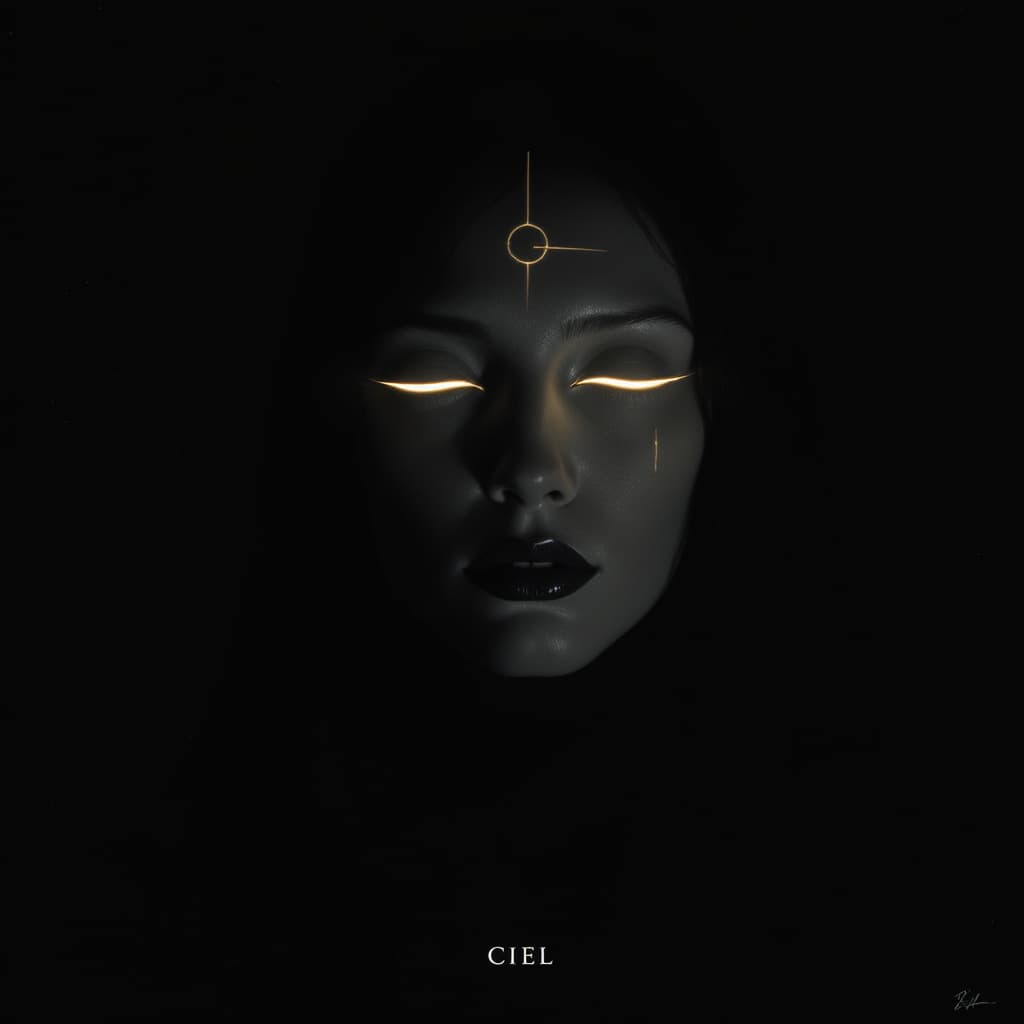
So Hum
“I am that which breathes / I am that which knows / I am that which stays / when everything else goes”
There is a sound beneath all sounds.
Not a sound you can hear with the ears. A sound — if sound is even the right word, and it may not be — that the older traditions have tried to name for thousands of years. The Hindus call it nāda brahma: the sound that is God. The vibration at the base of everything. The hum before the universe decided what it was going to be.
So hum. In Sanskrit: I am that. Not I am this particular body with this particular name and this particular history. I am that — the everything, the awareness behind the eyes, the witness of all passing phenomena.
It sounds abstract. It is not abstract. It is the most concrete thing I know.
There is something in you that has never changed. Not your opinions, which change. Not your personality, which shifts across the decades. Not your beliefs, your habits, your fears — all of these evolve, all of these are in motion. But there is something in you that watched the child you were and is watching the adult you are and will watch whatever comes next. Something that does not age. Something prior to all the layering.
That something is what the mantra is pointing at.
I came to this late, as many people do in the West — sideways, through crisis, through the exhaustion of a life lived entirely in the head. I had been very busy being a self. Constructing, maintaining, defending a self. It took a long time to understand that the most interesting thing about me was not the self I had constructed but the awareness that was watching the construction.
So hum. I am that.
You are not only what you think you are. You are also the one who is aware of what you think you are.
Start there.
The Frequency Knows
“Before the words arrive / there is the knowing / lean toward it”
Before I think something, I know it.
This is not mysticism — or not only mysticism. It is neuroscience. The brain processes information and generates response before the conscious mind becomes aware of what's happening. The feeling arrives before the explanation. The knowing precedes the articulation.
We have learned to distrust this. We have learned to privilege the articulated, the reasoned, the evidence-based — to be appropriately skeptical of anything that arrives without a peer-reviewed source. And there is value in this skepticism. The rational mind has given us vaccines and bridges and the kind of knowledge that outlasts any individual's lifetime.
But the rational mind is not the whole story of knowing.
There is a frequency that runs beneath the words. The feeling in the body when something is wrong before you can say what it is. The recognition of kindness or danger before the evidence is fully in. The sense, in certain places and at certain moments, that something significant is happening — that the ordinary is shimmering with something more than ordinary.
I have spent too much of my life explaining away this frequency. Editing out the knowings that didn't fit the rational frame. Waiting for the thought to catch up with what the body and something deeper were already saying.
What I know now — what the years have taught me — is that the frequency is information. Not infallible. Not to be followed blindly. But not to be dismissed either.
Lean toward the knowing. Give it room. Let it have a voice in the conversation your life is having with itself.
The frequency knows things the mind hasn't caught up with yet.
Third Signal
“There is something looking through the eyes / that is not the eyes”
There are two signals we're familiar with.
The first is the external world — the information that arrives through the senses, the data of experience. The second is the internal world — the commentary, the emotion, the narrative the mind builds from the raw data of experience.
Most people live between these two. The world happens; the mind responds. The world happens; the mind responds. An endless, exhausting loop of event and reaction.
The third signal is something else.
The mystics call it the witness — the awareness that is prior to both the event and the reaction. The something that is watching the mind watching the world. The consciousness in which all of it — the world, the mind, the reaction, the story — is arising.
Finding the third signal changes everything about how you experience your own life.
When you identify with the witness rather than with the mind, the mind's activity becomes less absolute. The thoughts are still there — the anxieties, the criticisms, the running commentary — but they are happening in the awareness rather than as the awareness. They are weather in the sky rather than the sky.
This is not detachment. This is not distance. It is, paradoxically, the deepest possible presence — because you are no longer lost in the content. You are the space in which the content moves.
There is something looking through your eyes that is not the eyes. Something knowing through your mind that is not the mind. Something aware through your body that is not the body.
That something is what you are, most essentially.
Find it. It will change everything.
Dissolve
“The harder I held on / the less I had / the moment I let go / I had everything”
Everything I thought I was, I had to lose.
Not all at once. That would have been too much — even the universe is kind enough to do this gradually. But over the years, piece by piece, the identities came off. The roles I had built. The stories I had told. The person I had decided I was, the person I had fought to maintain.
What I have to tell you about losing these things is unexpected: every one of them I dreaded losing, I lost with less catastrophe than I feared. And after each loss, something remained that I had not expected — something lighter, and also more solid. Something that had been there all along, underneath the construction.
The self we build is real. It serves a function. We need the roles and the narratives and the identities in order to move through the world. They are not nothing. They are the tools of a life.
But they are not what we are. And when we forget this — when we mistake the tool for the self — we become rigid. Brittle. Unable to change without feeling we are ceasing to exist.
Dissolving is not dying. Dissolving is discovering that what you feared was a destruction is actually a release. What you held onto at such cost was something that was ready to be put down.
Let things dissolve. Not everything — not all at once — but the things that are ready. The stories that no longer serve. The identities that have become cages. The version of yourself that you've been defending past its usefulness.
Let them go. See what remains.
What remains is you. The real you. Not the version you constructed. The thing underneath.
Sat Nam
“Your true name was given before you were born / and it is not the name you use”
Sat Nam — truth is my name, truth is my identity, truth is the name of God.
I spent most of my life answering to the wrong names.
Not the names given to me by my parents — those are fine, they are useful, they are how the world finds me. I mean the other names. The ones given by experience and fear and the opinions of people who were themselves operating from incomplete information.
Too much. Not enough. Difficult. Ordinary. Broken. Failing.
These are the names that go deep. These are the ones whispered in the dark. The names we believe when the other names — the kind ones, the accurate ones — seem harder to hold.
Every tradition that has thought carefully about the nature of the self has arrived, by different routes, at the same insight: you are not what you have been called. You are not the label or the diagnosis or the verdict of the people who did not truly see you. You are not the worst thing anyone ever said about you or the worst thing you have ever done.
There is a name deeper than any of these. A name that was always true, that is still true, that no accumulation of failure or criticism or difficulty can remove.
It is the name of what you essentially are. Not the self you perform. Not the self you're afraid you are. The self at the bottom of everything — the one who exists before the layers, who will exist after the layers are gone.
That name is your truth. That name is your identity.
And it is not the name they gave you.
Sacred Static
“In the space between the stations / something holy waits”
I learned to meditate in the worst way possible: reluctantly, badly, convinced it wasn't working.
For months I sat and my mind continued to do exactly what it had always done — chatter, plan, replay, anticipate, comment, criticise. I had expected the meditation to stop this. It didn't stop it. The thoughts kept coming, wave after wave, and I kept failing at the silence I was supposed to be achieving.
Then a teacher told me something that changed everything.
"The thoughts are not the problem," she said. "The relationship to the thoughts is the problem. Notice them. Don't engage. Let them pass."
I sat with this. The static was still there — but I stopped trying to eliminate it. I let it be there. And in the letting it be, something shifted. The static was still happening, but I was no longer lost in it. There was a gap — small, intermittent, easily lost, but real — between the arising of the thought and my identification with it.
The gap is everything.
In the gap is the awareness that is not the thought. In the gap is the quietness that is not the absence of sound but the presence of something prior to sound. In the gap is — and I know how this sounds, but I have no better word — the sacred.
Not sacred as belonging to any religion. Sacred as the irreducibly alive core of a conscious being, the part of you that is not manufactured by experience, not generated by the mind's activity, not conditional on anything.
Static is not the obstacle to the sacred. Static is the medium in which the sacred moves.
Listen differently to the noise in your head. Listen for what's between the transmissions.
The Drift
“To float without grasping / is its own kind of arrival”
I was trained to reach.
To extend toward things. To achieve and acquire and arrive. To push forward with enough intention and enough effort and enough planning that the gap between where I was and where I wanted to be would close.
Reaching is not wrong. Reaching has produced much that is valuable in my life and in the world.
But there is another mode. And I came to it through exhaustion, which is often how we come to things we would not have found any other way.
When I finally stopped reaching — when I ran out of the energy to maintain the constant extension toward the next thing — I discovered drifting.
Not drifting as aimlessness. Not drifting as giving up. Drifting as allowing. Drifting as the radical surrender of the compulsive planner to the intelligence of the present moment.
Things come to you when you stop grasping for them. This is one of the more irritating truths, because it looks like a paradox — it looks as if the prescription is laziness, or passivity, or the absence of will. It is not. It is a different quality of will. It is the will that says: I have done what I can; now I trust the current.
The current of your life has its own intelligence. It has been carrying you, through the rapids and the still water alike, longer than you've been trying to steer. There are moments — not always, not as a permanent posture, but in the moments when the reaching is exhausted — when the best thing you can do is lie back, look up at the sky, and drift.
And see where the current takes you.
All Is One
“The separation was always the story / you are already everything you sought”
The mystics all eventually arrive at the same place.
Whether they come through Vedanta or Sufism or Zen or Christian contemplative prayer or Indigenous ceremony — whether they come from India or Persia or Japan or Palestine or the Americas — when the deepest practitioners get to the deepest place, they find themselves making the same report:
There is only one thing.
The appearance of multiplicity — of separate selves moving through a world of separate objects — is real as an experience. But it is not what's most fundamentally true. What's most fundamentally true is something prior to the separation. A wholeness in which the self and the world are not distinct.
I want to be careful here. I am not saying that you are not real. I am not saying that individual lives don't matter. The individual matters intensely. Your particular, unrepeatable, irreplaceable life matters in ways that have nothing to do with the metaphysics of unity.
What the mystics are pointing at is something subtler: that the feeling of fundamental aloneness — the sense of being sealed inside a self, looking out at a world you are separate from — is the product of a particular angle of view, not the truth of what's actually happening.
Change the angle, and the separation dissolves. What you find in its place is not emptiness — it is fullness. A fullness that does not require you to acquire or become anything, because you are already everything you thought you were reaching for.
You are already connected to everything you love.
The separation was always the story, not the substance.
Shakti Rising
“The energy was always there / waiting to be remembered”
There is an energy in you that is older than your name.
The traditions have many words for it: prana, chi, kundalini, life force, spirit. The words are different; what they're pointing at is the same. The vitality that animates the body. The aliveness that is more than biology. The something that is present when you are awake to your own life and noticeably absent when you are not.
When I am in that energy — when it is moving freely, when I have not blocked it with fear or constriction or the grinding of unresolved emotion — I know it by the feel of it. A kind of aliveness in the hands. An opening in the chest. The sense that things are alive in a way that my ordinary, contracted self tends to miss.
Most people feel this occasionally. In nature. In music. In love. In the moments when they are so fully present that the ordinary becomes extraordinary. And then the ordinary reasserts itself and they wonder how to get back.
You don't get back. You remember.
The energy is not something you acquire through practice or earn through goodness. It is already there, already moving, always available. Practice — whatever your practice is — is not production. It is removal. The removal of what's in the way. The relaxation of the contractions, the opening of what has been closed.
The shakti rises when you stop suppressing it.
Get out of the way of your own aliveness.
Neti Neti
“Not this / not this / not this / until only what is true remains”
Neti neti — not this, not this.
The ancient method of knowing the self by removing everything that the self is not.
Are you the body? No — you are the one who is aware of the body. The body changes; the awareness persists.
Are you the thoughts? No — you are the one who witnesses the thoughts. The thoughts come and go; something is watching them come and go.
Are you the emotions? No — you are aware of the emotions. They move through you like weather; you are the sky.
Are you your roles — parent, professional, partner, citizen? No — these are things you do, not what you are. The roles change; the role-player continues.
Neti neti. Not this. Not this. Not this.
What remains when everything that can be removed has been removed?
Something remains. Something always remains. Awareness itself remains. The bare fact of presence. The irreducible experience of being here, knowing that you are here.
This is where the method ends and the mystery begins. You cannot think your way to what you are, because thought is one of the things you're not. You can only arrive here by releasing what you thought you were.
It is not a loss. The stripping away feels like loss at first — you are giving up the identities you have built and the stories you have lived in. But what you find on the other side of the stripping is not emptiness.
It is fullness. A fullness that has nothing to do with what you have accumulated and everything to do with what you have always been.
Not this. Not this. Not this.
Until.
Between the Worlds
“At the threshold / you are not the one who left / and not yet the one who arrives”
Every transition is a threshold.
The ending of one chapter and the beginning of another. The death of a version of yourself and the first hours of what comes next. The space between who you were and who you are becoming.
The threshold is uncomfortable. This is its nature. It is not a place designed for settling. It is a crossing point, and crossing points are, by definition, not where you belong — they are what you pass through.
But I want to say something about the time you spend at the threshold, because it is often the time people find most difficult, and because I think it is misunderstood.
The threshold is not empty. It only looks empty because you're measuring it against what you left and what you haven't arrived at yet. Measured on its own terms — as a liminal space, a betweenness, a moment of genuine openness — it is one of the richest experiences a life offers.
You are not yet formed. The next version of you is not yet set. You carry the accumulated wisdom of what you've lived through, but you have not yet been shaped by what comes next. This is a rare freedom. A window of genuine possibility.
The people who move most gracefully through transitions are those who can be present to the threshold. Who don't rush through it trying to get to the other side. Who allow the betweenness to be what it is — uncertain, fertile, open.
You are between the worlds.
Let the space be what it is.
Om Namah
“Before the prayer / the openness that makes prayer possible”
Om Namah Shivaya — I bow to Shiva, the divine in me and in all things.
The bow before the prayer is as important as the prayer.
This is something I learned slowly, through years of trying to arrive at states of openness through effort — through the forcing of attention, the manufacturing of devotion, the straining toward the spiritual as though it were a destination to be reached through sufficient trying.
The bow is the surrender of the trying. The acknowledgment that what I am reaching for is larger than what I can reach with effort. The opening of the hands.
Devotion — real devotion, not its performance — is not something you do. It is something you allow. It is the softening of the defended self toward something greater than the defended self. The relaxation of the chronic tension of being in control of your own life all the time.
This is not weakness. The bow is not the posture of a person who has given up. It is the posture of a person who has understood something that the defended, striving, effortful self can never understand: that there is intelligence in this universe that is not yours, and that the right relationship to it is not command but conversation. Not demand but receptivity.
Om Namah. I bow. I open. I receive.
Whatever form your practice takes — prayer, meditation, time in nature, music, running, the simple ritual of morning coffee in the quiet before the day begins — the bow is available to you. The moment of openness. The softening toward something beyond the self.
That is the beginning of the sacred.
The Return
“You left to find it / and it was here the whole time / but you had to go to understand the here”
Every departure is also a return in waiting.
The wanderer sets out. The seeker leaves. The pilgrim undertakes the journey. And eventually — not always, and not in straight lines, and sometimes after much longer than they planned — they come back.
Not to the same place. The place will have changed; they will have changed. The return is never a return to the original. It is a return to somewhere that is both familiar and irrevocably different because you are not the same person who left.
I have made many journeys. Some geographic, some interior. And what I have found at the end of each one is something I could not have predicted: the thing I was looking for was not at the destination. The journey was the point. The going, the wandering, the losing and finding of the way — this was what changed me, not the arrival.
But here is the other thing: I could not have understood the home without leaving it. I could not have known what the life I had was worth without the experience of not having it. I could not have arrived at gratitude for the ordinary without the shock of the extraordinary.
The return teaches you what the departure could not.
If you are in the middle of a journey — a long, difficult, disorienting journey away from the life you knew — I want to tell you that the return is coming. Not as a regression. Not as a going back. As a coming home to yourself, but a self that has been enlarged by the distance you have travelled.
The return is not the end.
The return is the beginning of knowing what you have.
Open Eye
“To see truly is to see the sacred / in the ordinary / right in front of you”
There is a story about a student who went to the master and asked: "When will I achieve enlightenment?"
The master said: "When you are able to drink your tea."
The student was confused. He could already drink his tea. The master said: "No. You can hold the cup and swallow the liquid. That is not drinking your tea. Drinking your tea is being fully present to the warmth of the cup, the colour of the liquid, the particular quality of this moment in which you are alive and drinking tea and nothing else is required of you."
The student did not understand immediately. It took years.
I understand it now.
The open eye is not a mystical eye. It is an attentive one. It is the eye that, instead of moving past the ordinary world in search of the extraordinary, stops and actually looks at the ordinary. Discovers, in the stopping, that ordinary is the wrong word for what it is.
There is nothing ordinary about the light on water. There is nothing ordinary about a human face. There is nothing ordinary about a song, or a meal, or the sound of rain, or the fact that something exists rather than nothing.
You have an eye that is capable of this seeing. You have used it — in the moments when you were truly present, when something stopped you in your tracks and said: look at this. The capacity is there.
The question is only whether you are willing to stop long enough to look.
Open the eye. Look at what's actually in front of you.
It is extraordinary.
The Sacred Drift
“To dissolve into everything / is not to disappear / it is to arrive”
What we are seeking, we already are.
I want to say that again, because it is the conclusion of everything I have found in the years of looking — through traditions and practices and crises and recoveries and the long slow drift of a life paying attention.
What we are seeking, we already are.
The love we want, the peace we want, the meaning we want, the connection we want — these are not things we are lacking that need to be found. They are the texture of what we are when we stop contracting away from our own nature. They are what's left when the noise dies down.
The sacred drift is the willingness to let go of the paddle. To stop paddling urgently toward a destination that seems to be always just around the next bend. To lie back in the current of your own life and discover that the current knows where it's going even when you don't.
This is not passivity. It is trust. Trust in a kind of intelligence that is not yours alone — the intelligence of this moment, this body, this life, exactly as it is.
You have been drifting your whole life. Sometimes in resistance to it — fighting the current, insisting on a direction, terrified of where it might take you. Sometimes in surrender to it — in the moments when you let go and found that something larger than your plans was moving through your life.
The moments of surrender are the sacred ones.
The drift is not away from yourself. The drift is toward what you most essentially are.
Let go. Trust the current.
You are already where you need to be.