Chapter 10 · 2 min 44 sec
Stand Up Straight
The family home as a living thing — how spaces hold the memory of those who loved them.
Lyric Video
Lyric Video
Lyrics· 266 words
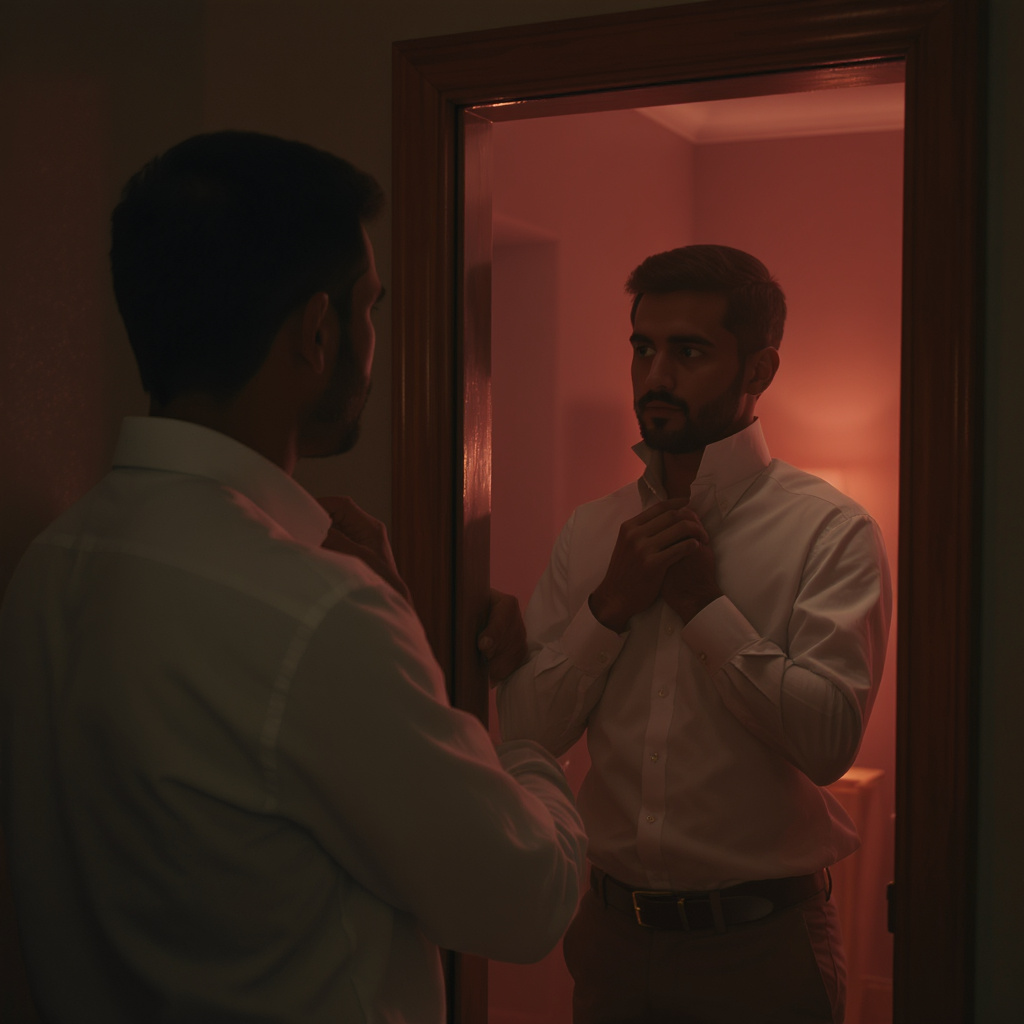
[Verse 1] Fix your collar, son, look me in the eye Don't you shrink for nobody, don't you wonder why They gon' look you up and down before you say a word Make sure what they see is exactly what's deserved
[Call/Response] What if they say no? (Then you stood up anyway) What if they look down? (Then you look back, don't sway) What do I owe them? (Nothing but your honest name) What do I owe myself? (Everything — don't ever feel shame)
[Chorus] Stand up straight, stand up straight Don't let the room decide your weight Your grandfather walked in with his head held high With nothing but his hands and a reason why
[Verse 2] I know the suit's not new, I know the shoes have seen better days But dignity don't come folded up in what your wallet pays It's in the way you shake a hand, the way you hold a pause The way you never let a closed door make you doubt the cause
[Bridge] They built this world to make you feel small in the door That's the whole game, son, that's the only score they're keeping score Don't play it — walk in like the room already knows your name Whether they hire you or not, you walk out the same
[Chorus] Stand up straight, stand up straight Don't let the room decide your weight No crown but the one your spine remembers how to wear Walk in like you already belong there
[Outro] Go on now — go on now Stand up straight, and show 'em how
Short Story
*A story for curious minds*
In a town with one good tailor and several bad ones, there was an old man named Faustino who measured every customer the same exact way, rich or poor, and who taught his trade to a long line of apprentices over the years.
His final apprentice was a quiet boy named Win, who came to the shop in clothes that were clean but clearly borrowed, hand-me-downs from an older cousin, sleeves a little long, shoulders a little wrong.
On Win's first day, Faustino didn't hand him a needle. He stood him in front of the tall mirror at the back of the shop and said, "Before I teach you to make clothes fit other people, I need to teach you something about how you stand in your own."
"My clothes don't fit," Win said, embarrassed. "There's nothing to be done about it. They're not mine."
"That's not what I asked you to fix," said Faustino. "Look at your shoulders. They're apologizing for the sleeves. Pull them back."
Win straightened, awkwardly at first, the way anyone does when asked to occupy more space than they're used to claiming.
"Better," Faustino said. "Now — the cloth doesn't know whether it's expensive or borrowed. It only knows how it's worn. A king in a sack looks like a beggar if he stands like one apologizes for the sack. A beggar in the same sack, standing like he owns the room, looks like he's merely between fortunes."
Win practiced this every day after that, alongside learning to thread a needle and cut a true line, and Faustino never once mentioned it again, trusting that the lesson, once given properly, didn't need repeating.
Years later, long after Faustino had retired and Win had taken over the shop, a boy came in wearing his older brother's coat, sleeves too long, shoulders all wrong, asking timidly whether the tailor could maybe take it in a little, if it wasn't too much trouble, if there was time.
Win didn't reach for a needle either. He walked the boy to the same tall mirror at the back of the shop, the glass a little more spotted with age now, and said, "Before we fix the coat, let's fix how you're standing in it." And the boy straightened, slowly, the way Win once had, and for a moment looked exactly like someone who simply hadn't gotten the news yet that he was supposed to feel small.
More From This Album