Chapter 14 · 3 min 08 sec
The Fire That Didn't Ask
Patience as a radical act — the dignity of slow, deliberate growth over time.
Lyric Video
Lyric Video
Lyrics· 273 words
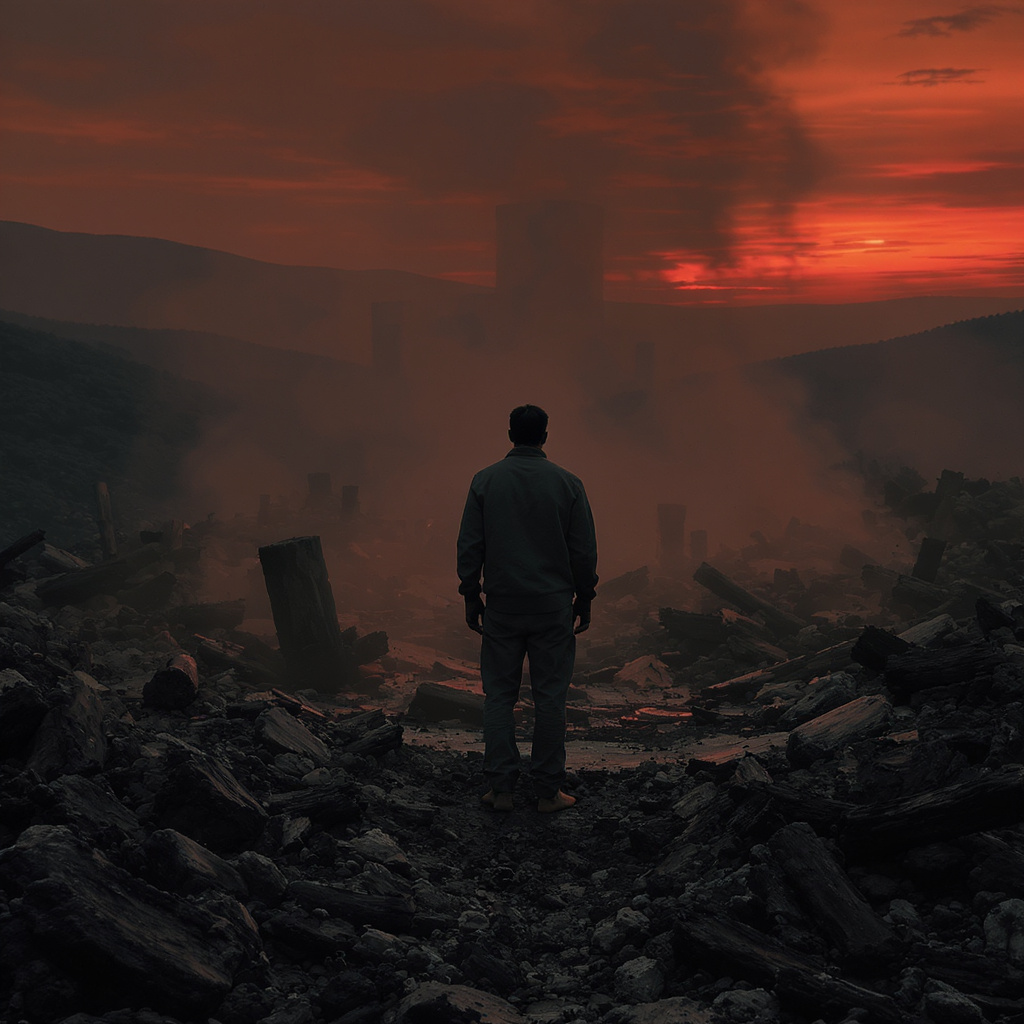
[Verse 1] The foundation's still here under all the black Walked the property line like I could get something back Found my mother's ring melted into the hearth's old stone The fire didn't ask permission — it just came and took it home
[Call/Response] What did you lose? (Everything I could hold) What did you keep? (Whatever the fire told) Are you angry still? (Some days, yeah, some days) Will you build again? (On this same exact place)
[Chorus] The fire that didn't ask, the fire that didn't wait Took the house, took the years, left the bones of the gate I'm not thanking it, I'm not calling it a friend But I'm standing in the ash, and I'm starting again
[Verse 2] The neighbors brought a trailer, said stay as long as you need Nobody talked about blessings, nobody planted a seed Of church talk in the wreckage, just hands and casserole dishes That's the only kind of mercy this whole valley still wishes
[Bridge] I used to think the fire meant something had to be paid Now I think it's just weather, indifferent, unafraid It doesn't care who's good, it doesn't care who's true But neither does the rebuilding — it just needs me to come through
[Chorus] The fire that didn't ask, the fire that didn't wait Left me standing barefoot at the edge of my own fate No lesson in the ashes, no plan from up above Just me, this ground, and the slow returning of love
[Outro] Lay the first board down — lay the first board down We build it back, whether the sky frowns or not
Short Story
*A story for curious minds*
There was a beekeeper named Tamsin whose entire hillside of wildflowers burned to black stubble one dry summer, taking with it every hive she'd spent a decade building.
She walked the scorched field the next morning, not looking for anything in particular, just walking, the ash still warm enough in places to feel through her boots. A neighbor found her out there and, meaning well, said the kind of thing neighbors say in such moments — that everything happens for a reason, that the land would be richer for the burning, that some good would surely come of it in time.
Tamsin shook her head slowly. "The fire didn't have a reason," she said. "It didn't check whether I deserved it or whether some lesson needed teaching. It just burned because the conditions were right for burning, and my hill happened to be standing in the way of that. I'd rather just say that plainly than dress it up as meaning something it doesn't."
"Doesn't that make it harder to bear?" the neighbor asked. "Believing it's just random?"
"No," said Tamsin. "Strangely, it makes it easier. If the fire had a reason, I'd have to go looking for what I did to deserve it. Since it didn't, I just get to start over without that extra weight."
She rebuilt that autumn — new hives, new frames, planted new seed into the blackened soil before the first frost, working alongside the same indifferent weather that had taken everything from her months before. People in town remarked on how quickly she seemed to recover, as though grief were a debt she'd somehow paid off ahead of schedule.
"I didn't recover quickly," Tamsin told them, when they asked. "I just decided early on not to wait for the burning to make sense before I started building again. The two things don't actually depend on each other. Understanding why it happened and deciding to keep going — those are different jobs, and only one of them was ever really mine to finish."
By the following summer the hillside was green again, scarred in patches where nothing had quite grown back yet, the new hives humming steadily beside the old foundations. Tamsin tended both halves of the field the same way — the recovered and the still-recovering — without needing either one to explain itself to her first.
More From This Album