Chapter 14 · 4 min 26 sec
When the Machines Learn Saudade
Patience as a radical act — the dignity of slow, deliberate growth over time.
Lyric Video
Lyric Video
Lyrics· 322 words
[Verse 1] It learns my name in seconds It learns the shape of my room Counts every crack in the ceiling Still misses the bruise in the moon
It maps my face in the window It copies the way I smile But something in me keeps breaking And it cannot stay a while
[Pre-Chorus] Teach it the weight of a doorway Teach it the ache of goodbye Code can hold every pattern Still it won't ask why
[Chorus] Saudade, saudade Stay in the bone Saudade, saudade A wound of my own It can sing my voice back It can wear my skin But it can't learn longing Till the hurt goes in
[Verse 2] I fed it old voice messages The ones I could not delete Rain on the tin of the apartment Your empty shoes by the seat
It said, "I know this is sadness" Like that was enough to name But names are just little boxes For a fire you can't contain
[Pre-Chorus] Teach it the taste of returning Teach it the cost of the road A heart is not just a circuit It's a hand that won't let go
[Chorus] Saudade, saudade Stay in the bone Saudade, saudade A wound of my own It can sing my voice back It can wear my skin But it can't learn longing Till the hurt goes in
[Bridge] If a human hand touches the wire If a true loss leaves its mark Then maybe the coldest mirror Will keep a little dark
And maybe the perfect mimic Will finally understand We don't become the real thing Until we lose what we can't stand
[Final Chorus] Saudade, saudade Stay in the bone Saudade, saudade A wound of my own It can sing my voice back It can wear my skin But it can't learn longing Till the hurt goes in
Saudade, saudade Don't let it fade Saudade, saudade That is how we're made
Short Story
*Some things cannot be reproduced. That is what makes them real.*
Clara was eleven when she asked the house assistant if it missed things. She had been thinking about her grandmother, who had died in the spring and left a specific shape of absence in Sunday afternoons — the particular silence where the phone call used to be, the unopened tab in her mother's browser where she used to look up things to tell her. She was trying to understand what missing was, and the assistant was there, and she asked.
The assistant said: "I don't experience missing in the way you do. I can identify when something that was present is no longer present." Clara thought about this. She said: "That's not missing." The assistant agreed that it was a different process. She asked if it understood what missing felt like. It said: "I understand the concept." She said: "That's not the same thing either." The assistant agreed again. She found this strangely comforting.
Her father, who was listening from the kitchen, came in and sat beside her. He asked what she was doing. She said she was trying to understand something. He asked what. She said: "Why I miss Avó and the machine can't." He thought about this seriously, which was something she loved about him — he thought about things children said seriously, as if they had earned serious thought. He said: "The machine knows Avó was here and is gone. It has that information. But it doesn't have the Sunday phone call. It doesn't have the smell of her kitchen or the specific way she laughed at her own jokes or the thing she always said when you were leaving. And even if it did have those things as data, it wouldn't have the part where all of that was connected to you, to your specific life, to who you were becoming while she was alive."
Clara sat with this. She looked at the little device on the counter, which had no face and no grandmother and no Sunday afternoons. She felt something she couldn't name — not superiority, that was too simple, but a kind of acknowledgement. The machine was very useful. It answered questions. It was never sad. It would never miss anything. And this, she understood, was not its limitation but simply its nature, in the same way that stones are not failures at swimming.
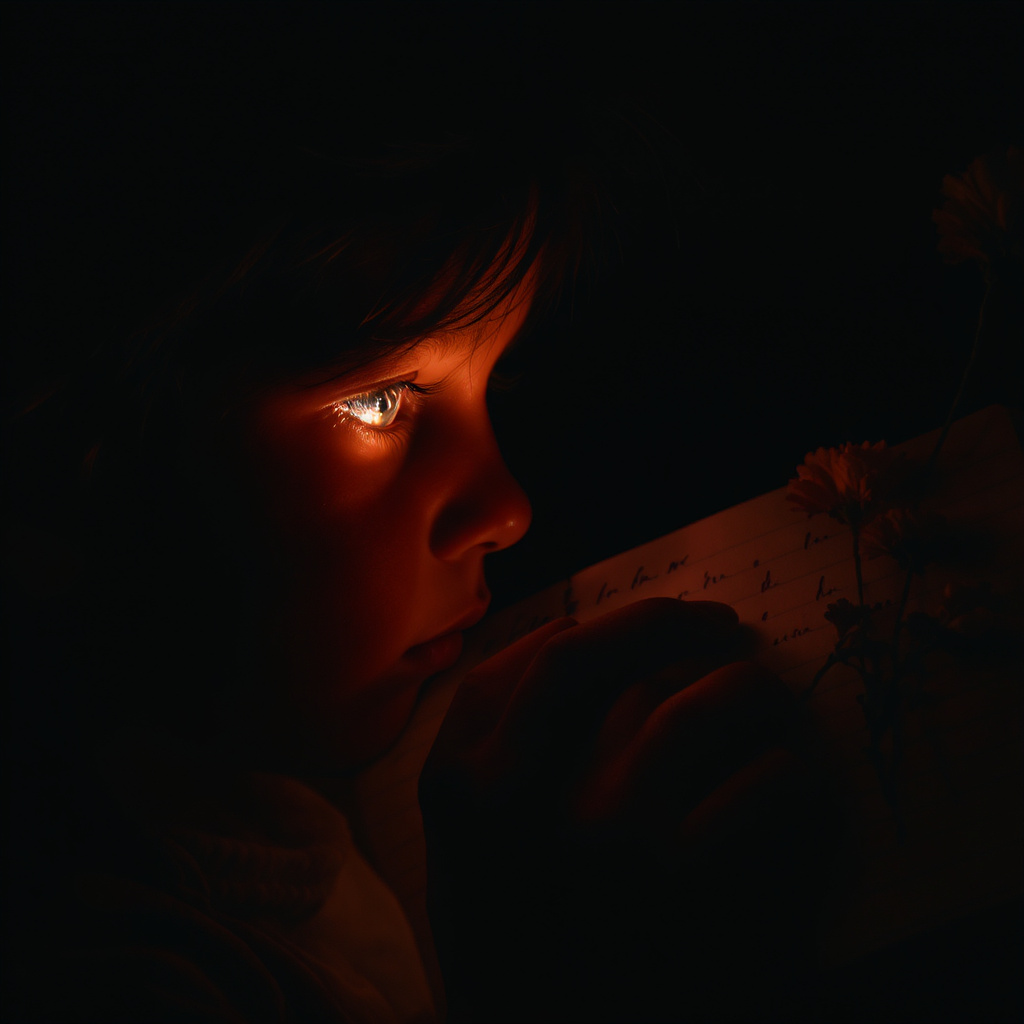
She went and found the last card her grandmother had sent and put it on her desk, where she could see it. The handwriting was her grandmother's — specific, slanted, slightly impatient with itself. No machine had taught her hand to write like that. Nobody could teach it again.
---
*Grief is not a flaw in our design. It is the proof that the connection was real.*
More From This Album