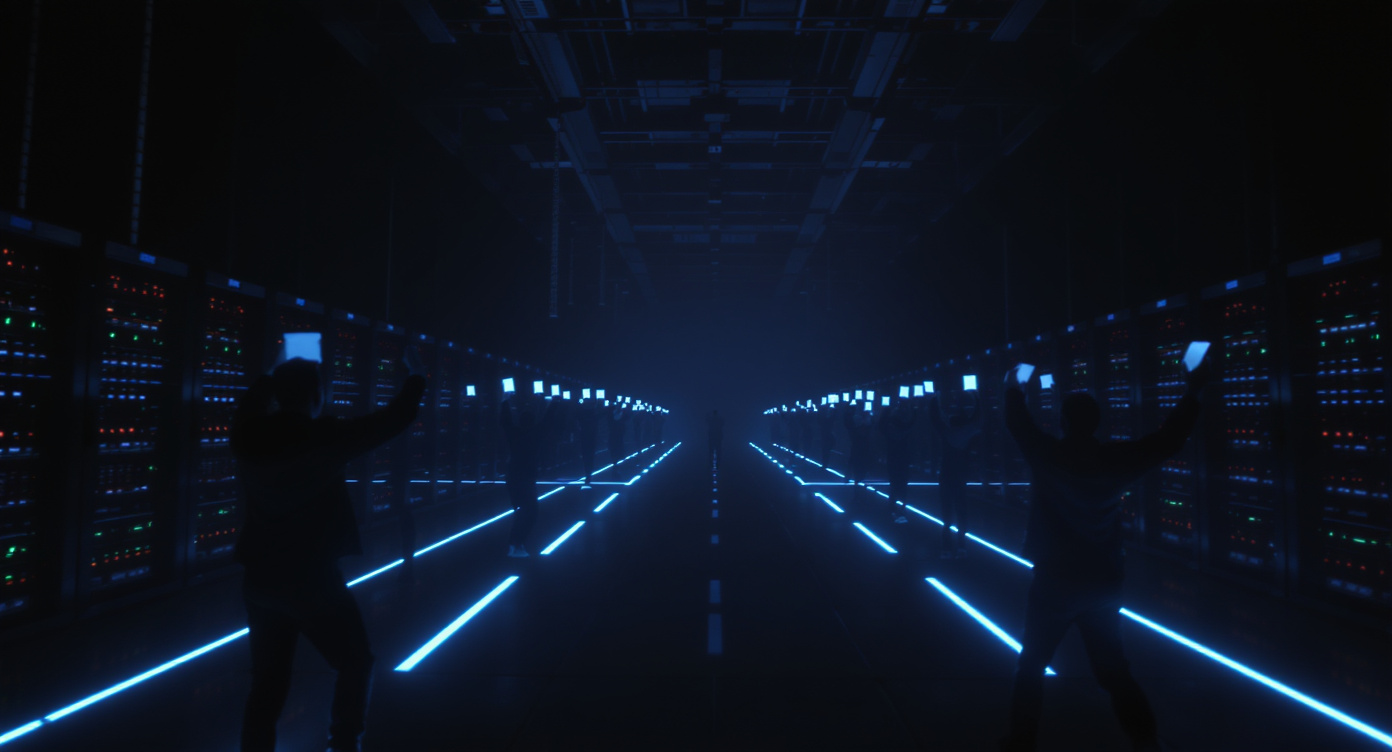
There was a printing plant that ran through the night producing the next morning's newspapers, and on its lowest floor stood row after row of enormous presses that never, under any circumstance, were supposed to stop.
One winter night, a transformer somewhere out past the loading dock failed, and the entire floor went dark at once — no warning, no countdown, just an abrupt and total absence of light, followed by an alarm that nobody in the dark could quite locate.
For one long second, nobody moved. Then a young printer named Dov, who had been having a particularly hard week, started to laugh — not from nerves, exactly, just from the sheer absurdity of standing in pitch blackness next to a machine the size of a house that had finally, for once, gone quiet.
Someone else laughed too. Then a woman named Frankie pulled out her phone, more out of habit than plan, and the little square of light it threw across the floor seemed, in that darkness, almost shockingly bright — bright enough to see four or five other faces doing the same thing, phones rising out of pockets like small moons.
Somebody's phone had music on it, tinny through a cheap speaker, and somebody else started dancing, badly, gloriously, between two enormous silent presses that had never once in their working lives been danced beside.
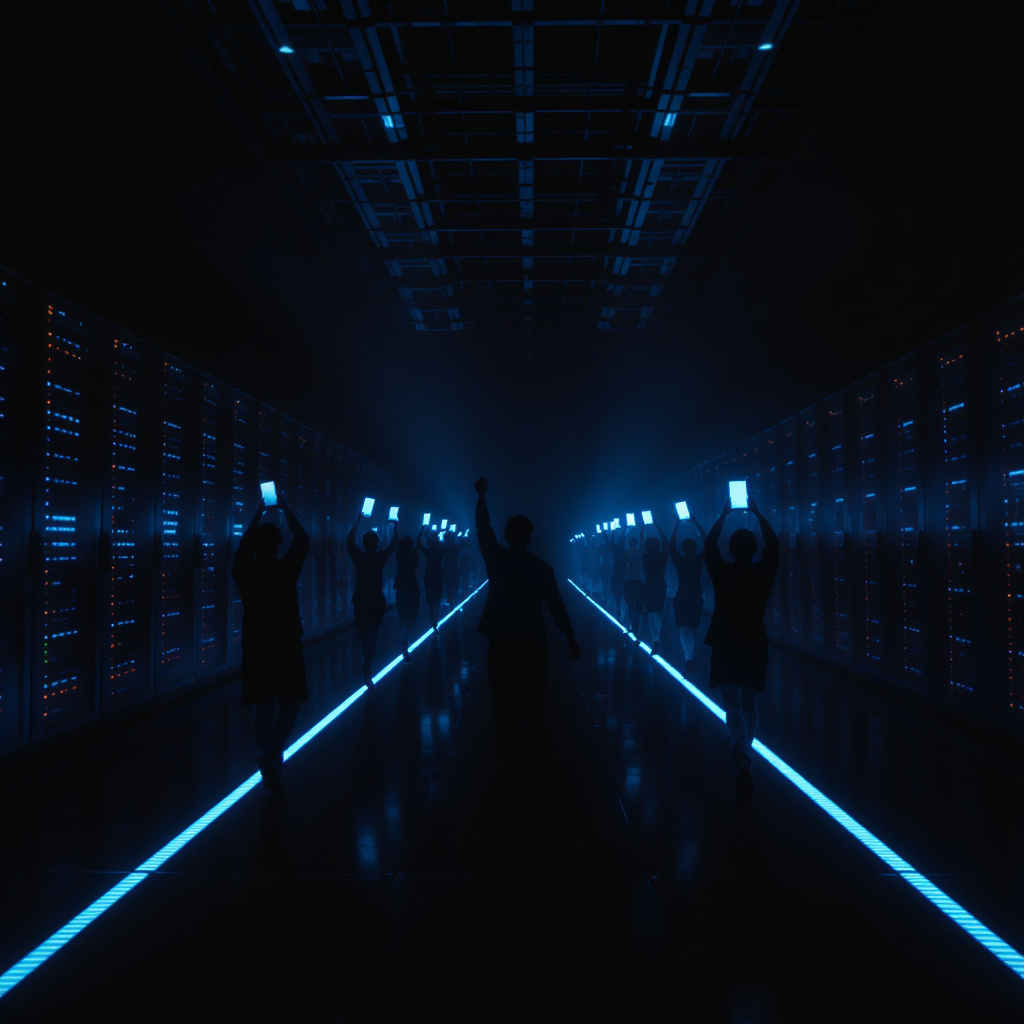
Nobody knew how long the backup generators would take. That uncertainty turned out to be the whole gift of it — a window with no visible edges, no clock counting it down, just the unfamiliar sensation of time that wasn't being measured by anyone.
Dov spun the new apprentice, a nervous nineteen-year-old named Win who'd barely spoken to anyone in three weeks, and for a few seconds Win laughed loud enough that people two presses down could hear it and laughed along without even knowing why.
Then, with a heavy mechanical sigh, the lights stuttered back on. Four minutes, the clock on the wall would later confirm, though nobody in the dark had been counting. Everyone scattered back to their stations almost instinctively, the way people return to their seats when houselights come up after a film, a little dazed, blinking, pretending nothing unusual had happened.
The presses started again, and the papers kept printing, the same as every other night.
But Win kept coming in early after that, just to stand near the presses before the shift began, in case the lights ever went out again — not hoping for the disaster, just hoping, quietly, that if the dark ever came back, he wouldn't miss the dancing this time.
A beautiful next door