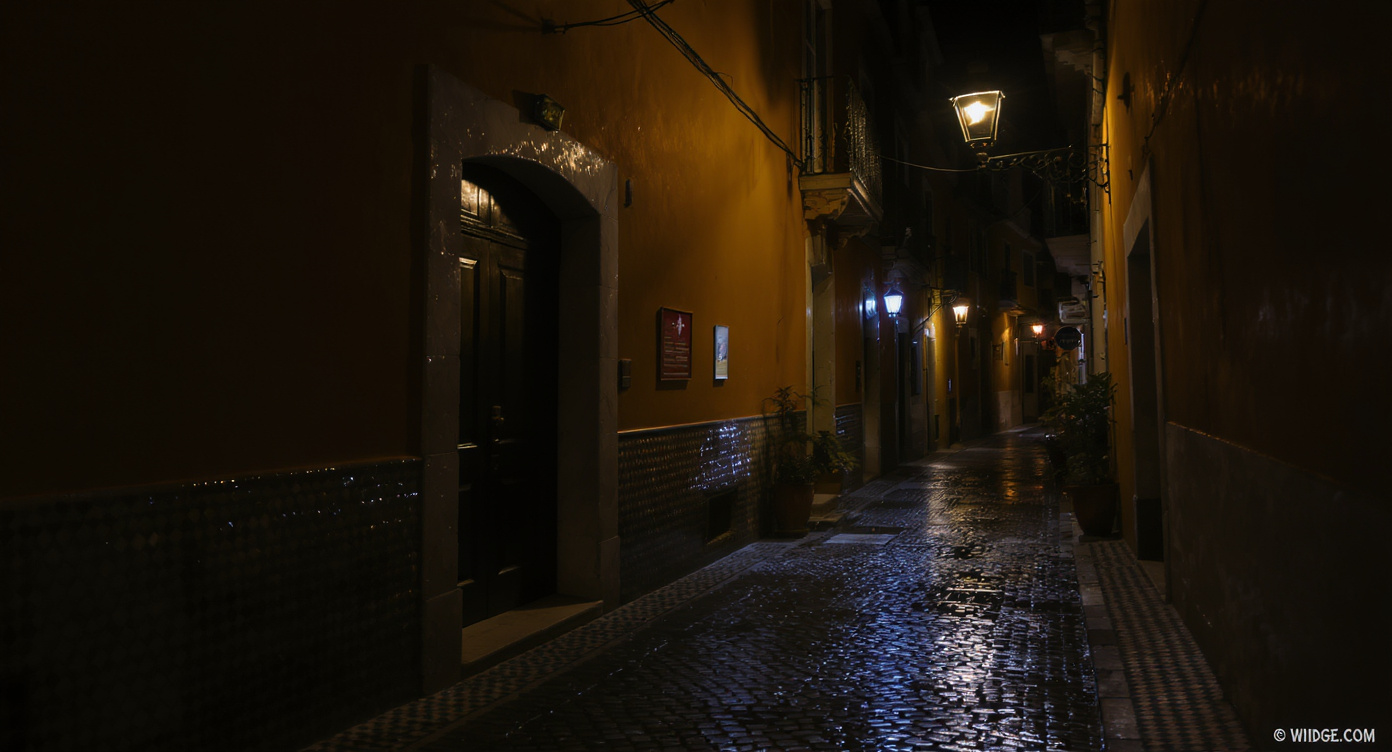
The boxes arrived on a Friday, which Tomás would always remember because the school week ended on Fridays and so did everything else that week. His parents had explained the move three times, once calmly, once with more detail, once with the particular gentleness they used when something was final. He had understood each time and said nothing. He was ten, and he had learned that understanding something did not mean it stopped being true.
His grandmother had lived in Lisbon for sixty-two years. She had died the previous autumn, in the house on Rua dos Remedios where the tiles were blue and the staircase smelled of damp wood and something like lavender. Tomás had spent every summer there. He knew which step creaked, which window faced the river, which drawer she kept the chocolate in behind the good tablecloths. After she died, the house was sold. After the house was sold, there was no reason to stay in Portugal, and so they were not staying.
The morning of the move, Tomás walked to the miradouro above the old neighbourhood and sat on the wall and looked at the city. He had expected to feel sad. Instead he felt something stranger — as if the buildings themselves were looking back at him, holding something he couldn't take with him, the way a person holds a secret. He understood, sitting there, that the city had been his grandmother all along. Not just where she lived. Her. The morning light on the river was her patience. The trams were her way of arriving slowly and without apology. The tile patterns were her handwriting. He had never noticed this while she was alive because she had been sitting in the house, separate from the city, herself. Now she was in all of it, which was too large to carry and impossible to leave.
He did not tell his parents this. He was not sure he had the words for it yet. In the car to the airport he watched Lisbon through the window until the road curved and it disappeared, and he pressed his hand flat against the glass for a moment the way you press a hand against a window when someone is leaving, though he wasn't sure which of them was the one leaving.
Two years later, in the new country, he found a photograph of his grandmother standing in front of the blue tiles. He put it on his desk. Some days it was just a photograph. Other days, if the light was right, the city leaned forward from the image and he could almost smell the damp wood and the lavender, and he understood that she had not stayed behind in Lisbon. She had come with him. She was smaller now, compressed into the photo, into his memory, into the particular angle at which he would always look for a river when he arrived somewhere new. But she was there.
The places that hold our grief are not prisons. They are the shape grief takes when it loves us back.
A beautiful next door