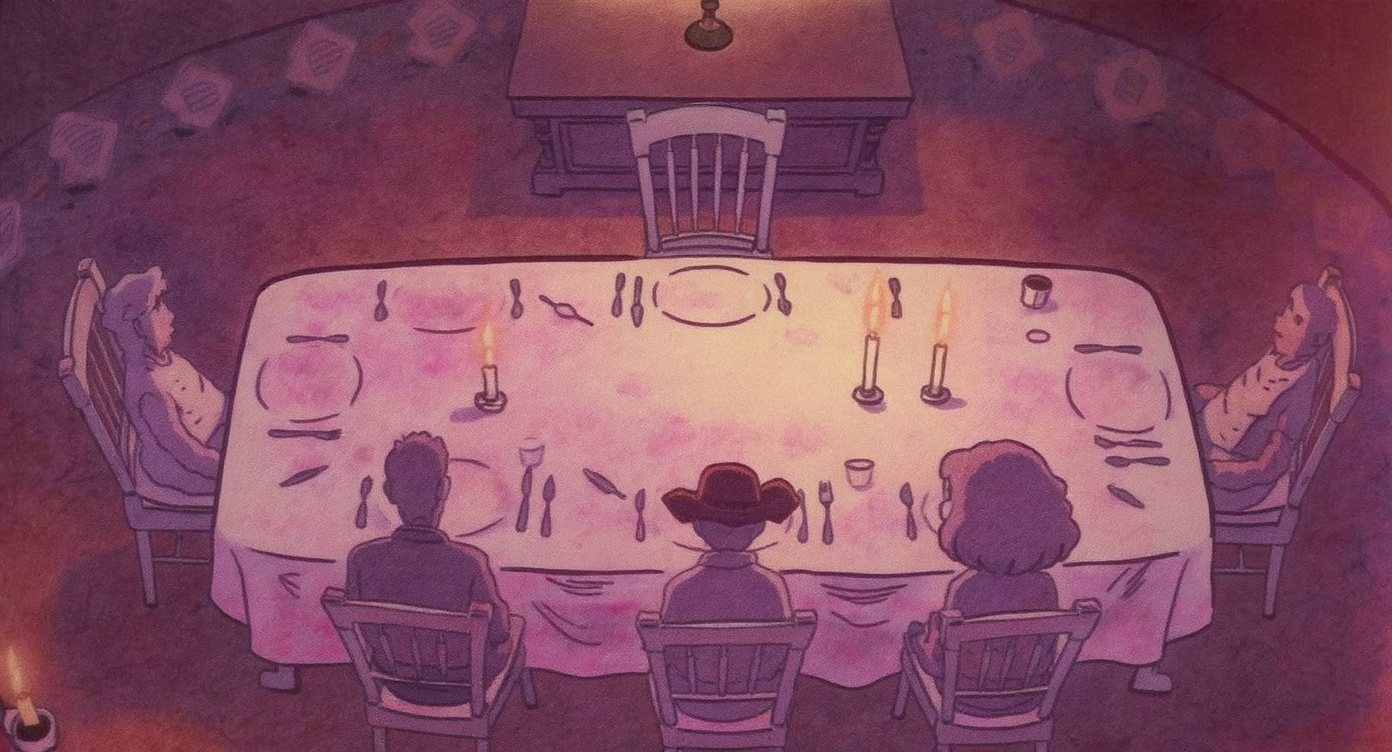
At a small inn on the edge of a fishing village, the innkeeper had a habit her guests found endearing and a little odd: every night, no matter how many people had booked the dining table, she set one extra place. Plate, glass, folded napkin, never filled.
A traveler staying there for a week finally asked her about it.
"Are you expecting someone?"
"I was," the innkeeper said, "for a long time. Now I think I just like the gesture more than I miss the reason for it."
She told him, because he asked kindly and didn't push, that the habit had started with her own mother, years after her grandmother died, when the family kept setting a place at the head of the table without discussing why, for almost a year, until one day the chair simply vanished from the dining room and nobody ever mentioned it again.
"That sounds sad," the traveler said.
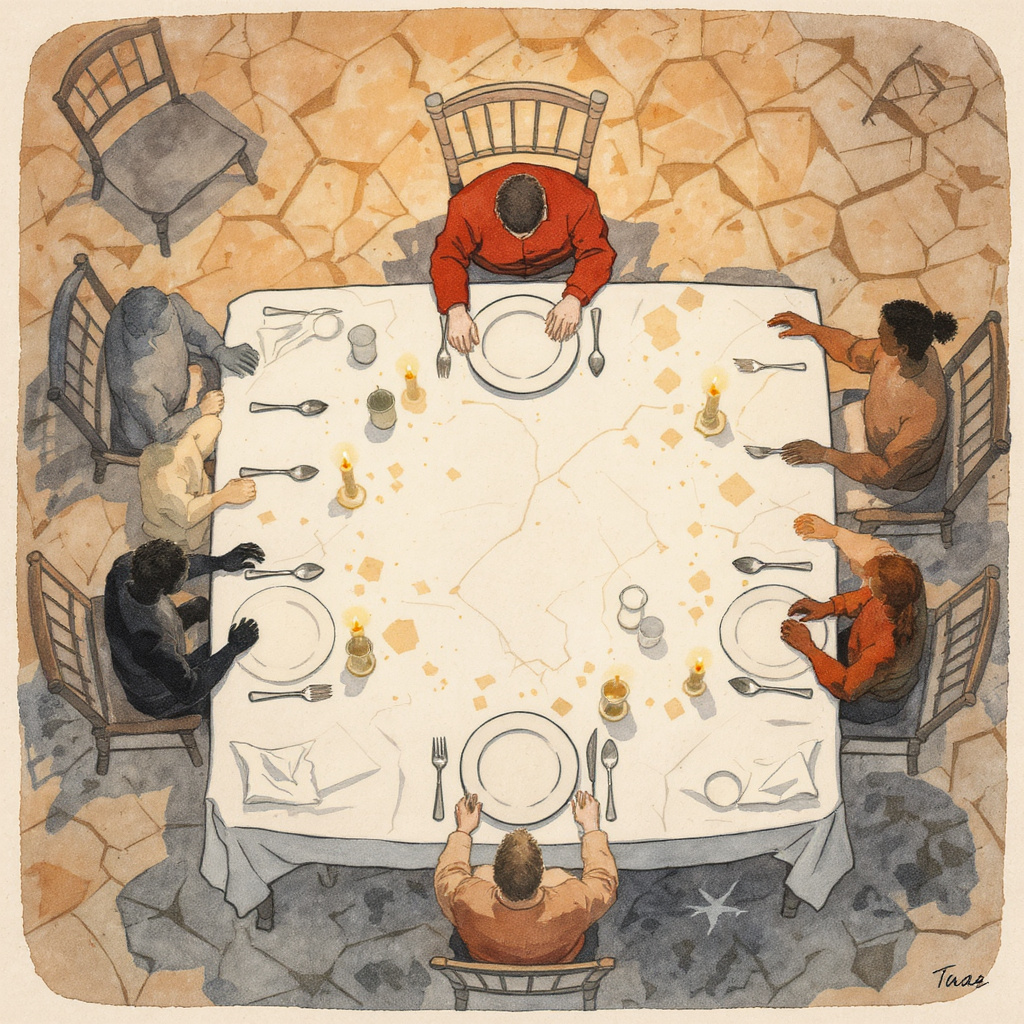
"It was. But it taught me something I didn't understand until much later — that the empty place wasn't really about denial. We weren't pretending she was coming back. We were giving her absence somewhere to sit, instead of leaving it to wander the whole house unwelcomed. A grief without a chair just stands in every doorway. A grief with a chair, even an empty one, knows where it belongs at six o'clock."
The traveler looked at the extra setting on his own table, untouched, glinting faintly in the candlelight.
"So who's this one for?"
"Nobody specific anymore," the innkeeper admitted. "Maybe it's for whoever in this room is missing someone tonight and didn't say so when they checked in. People don't always know to ask for that. But the chair doesn't need to know their name to hold the space."
The traveler ate slowly that evening, glancing now and then at the empty place beside him, and found that he was thinking, without quite meaning to, of someone he hadn't let himself think about in a long time — and that thinking of them there, in that small lit room, at a table that had room reserved for exactly this, felt less like grief and more like company.
A beautiful next door