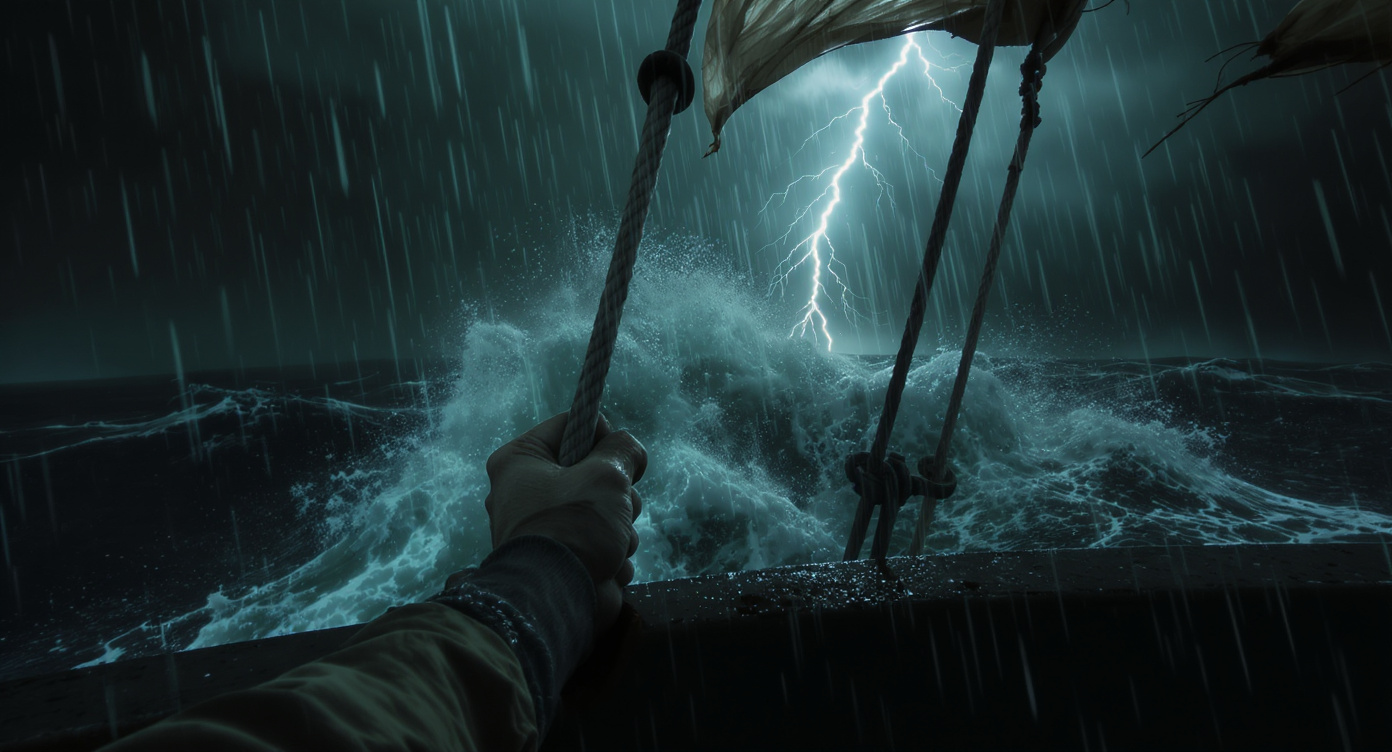
There was once a merchant named Fadil who sailed often and believed, the way sailors sometimes do, that the sea kept ledgers the way he kept his own — debts owed, debts paid, nothing forgotten.
One voyage, a storm caught his ship so completely that the mast groaned like something alive being bent the wrong way, and Fadil, gripping the rail with both hands, did something he had never done before. He spoke to the storm directly, as though it were a creditor standing right in front of him.
"Take what you're owed," he shouted into the wind. "Just leave the rest of us be."
He didn't plan what came next. He simply began offering things — not gold, since gold meant nothing to a storm, but the only currency he suspected it might actually want: his old lies, his unspoken cruelties, a debt of kindness he'd never repaid to a brother he hadn't spoken to in a decade.
He didn't know if the storm was listening. He only knew that saying the debts out loud, finally, felt like setting down something heavy he'd been carrying without admitting its weight.
By morning the sea lay flat as a table, almost insultingly calm, as if nothing had happened at all.
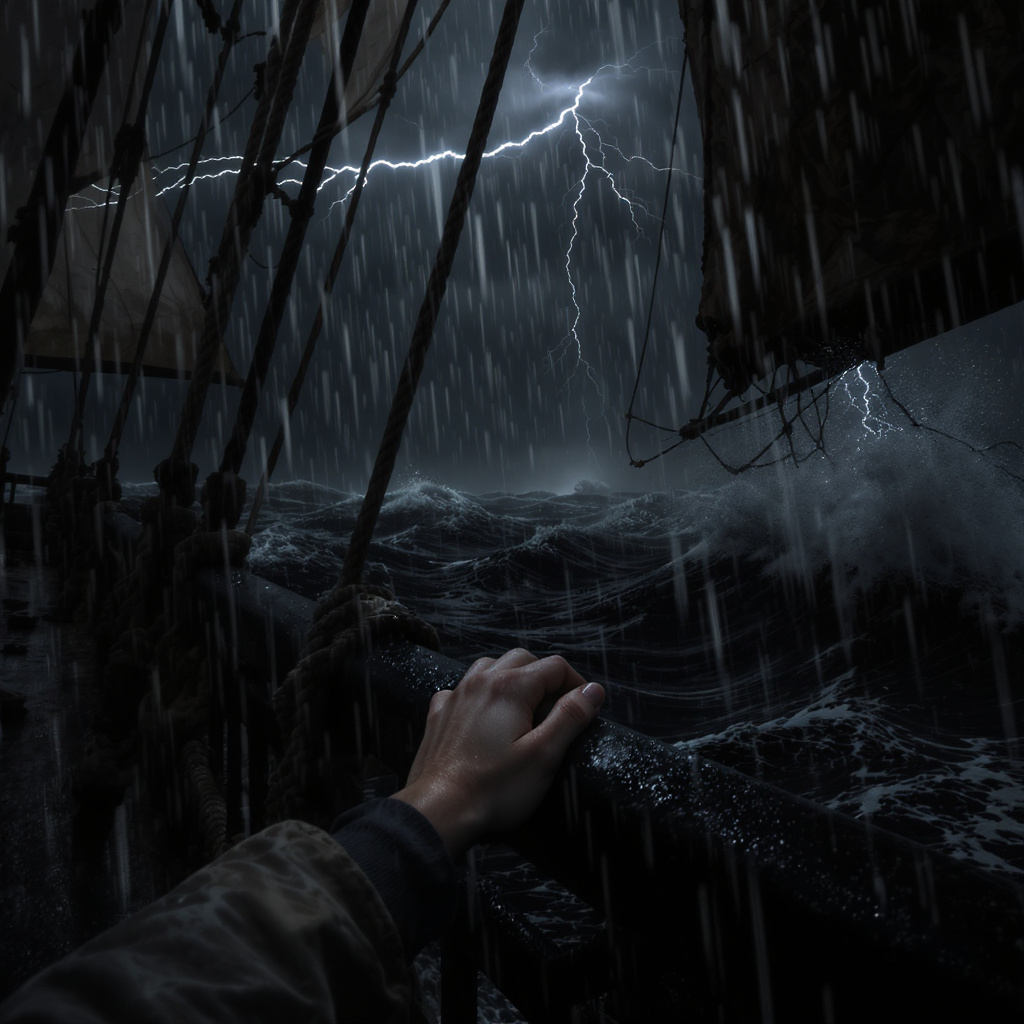
Fadil told no one what he'd shouted into the wind. But he noticed, in the weeks after, that he slept more easily, that he wrote to his brother for the first time in years, that small kindnesses came more naturally to him than they had before the storm.
A younger sailor asked him once if he really believed the sea had heard him, had actually taken something in trade.
Fadil considered this carefully before answering.
"I'm not sure the sea was listening," he said. "But I spoke as if it was, and that changed me whether or not it changed anything out there in the water. Maybe that's the only kind of bargain that's ever real — not the one where something answers back, but the one where you finally say the true price of your own guilt out loud, to anyone, even the wind, and find you're willing to pay it."
He never bargained with a storm again. He didn't need to. He'd learned what he needed from the first and only trade he ever made, and he carried the lesson lighter than he'd carried the guilt.
A beautiful next door