Chapter 06 · 3 min 34 sec
Sabotage in 3/4
The grace of companionship — walking the same road without needing to speak.
Lyric Video
Lyric Video
Lyrics· 263 words
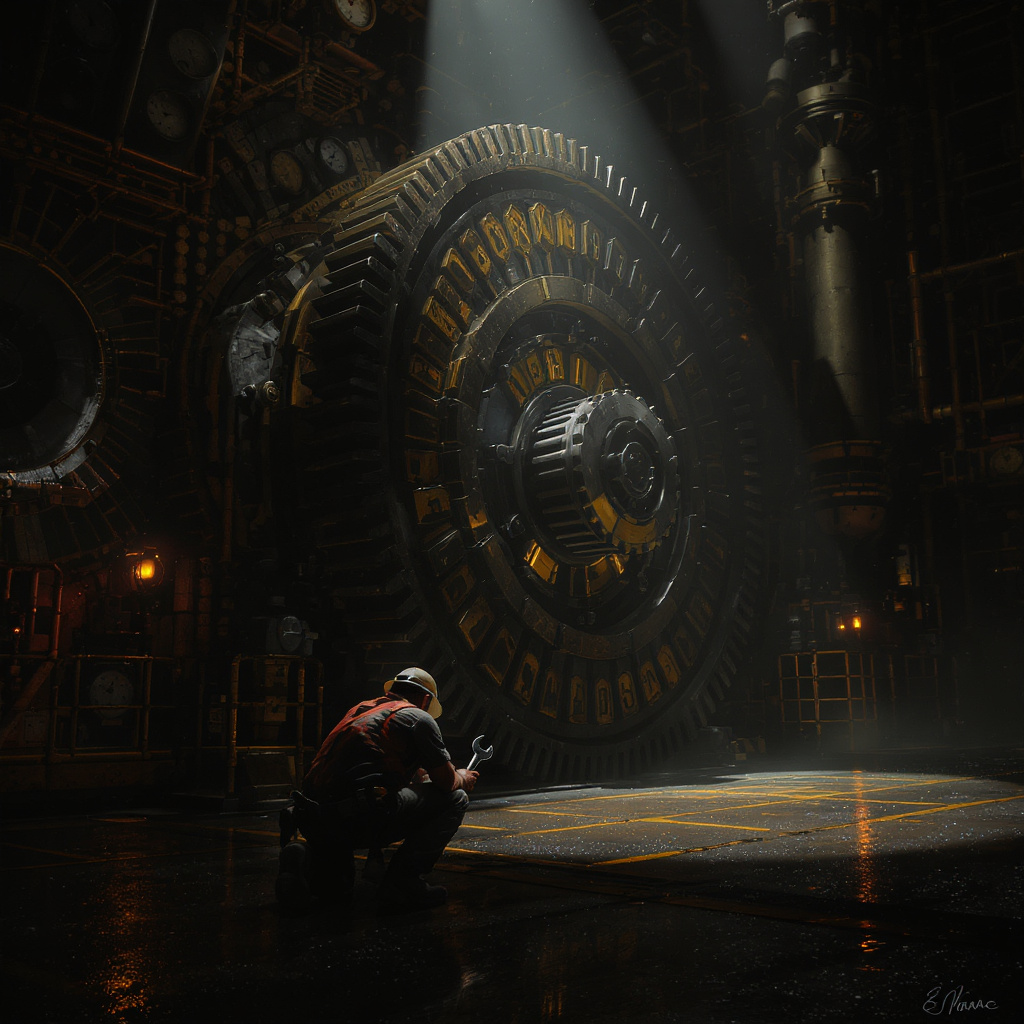
[Verse 1] They gave me the wrench and the calibration sheet Told me to tighten the line till the numbers run sweet But I turned it a hair past the mark on the gauge Just enough to slow the count, not enough for rage
[Verse 2] Three percent slower, nobody will ever trace It'll look like wear and tear, like a natural case I signed my name on the form like a good employee should Then I walked to the next line and did the same for good
[Chorus] One, two, three, I'm dancing with the machine One, two, three, slower than they've ever seen They built this floor to a four-beat march I'm gonna waltz it down till the whole thing starts to arch
[Verse 3] The foreman says output's down, says something's off tonight I shrug and say machines get old, say it isn't right But something in his face says he might already know He loosened a bolt himself about three weeks ago
[Chorus] One, two, three, I'm dancing with the machine One, two, three, slower than they've ever seen They built this floor to a four-beat march I'm gonna waltz it down till the whole thing starts to arch
[Bridge - whispered, conspiratorial] They can audit the metal, they can't audit the hand They can't put a number on what a tired man Decides to give back, one degree, one turn The machine doesn't know it. That's the whole concern
[Outro] One, two, three, swaying when they say to march One, two, three, that's the secret in my heart
Short Story
*A story for curious minds*
In a small town there lived a clockmaker named Henrik, who had been hired by the mayor to keep the great clock in the square running with perfect precision, because the mayor believed that a town which kept perfect time would naturally become a perfect town.
Every chime had to land exactly on the second. Every worker in the square below was expected to move to it — shopkeepers raising their shutters on the eighth chime, the baker pulling his first loaves on the twelfth. The mayor had even installed a small plaque: TIME WASTED IS PROSPERITY LOST.
Henrik climbed the tower every week to oil the gears, and every week he noticed the same thing: the townspeople below moved a little faster, a little more clipped, a little more like the clock itself, as if the gears upstairs were quietly rearranging the gears in everyone's chest.
One gray Tuesday, while adjusting the escapement, Henrik did something he never fully explained to anyone, including himself. He turned one small brass gear a fraction past where the calibration mark told him to stop. Not enough to break anything. Not enough for anyone to prove. Just enough that the clock now ran four seconds slower every hour than it had the week before.
Nobody noticed at first. Clocks drift. It happens.
But over the following months, the square below seemed, very faintly, to exhale. The baker's loaves came out a touch later and somehow better. A flower seller began pausing to actually talk to her customers instead of just naming prices. Nobody could have said why. Nobody thought to blame the clock, because clocks, after all, are simply clocks — they do not lie, and they certainly do not rebel.
The mayor, inspecting the tower one autumn afternoon, frowned at the timepiece and asked Henrik if something was wrong with it.
"Old gears," Henrik said, shrugging. "They wear. It happens to everything, given enough turning."
The mayor nodded, satisfied with an explanation that asked nothing further of him, and went back down the tower stairs.
Henrik stayed a moment longer at the top, looking down at the square, at the baker laughing with a customer, at the flower seller in no apparent hurry. He didn't smile, exactly. He simply closed the small access panel, latched it quietly, and began the long walk back down, four seconds slower than he used to.
More From This Album