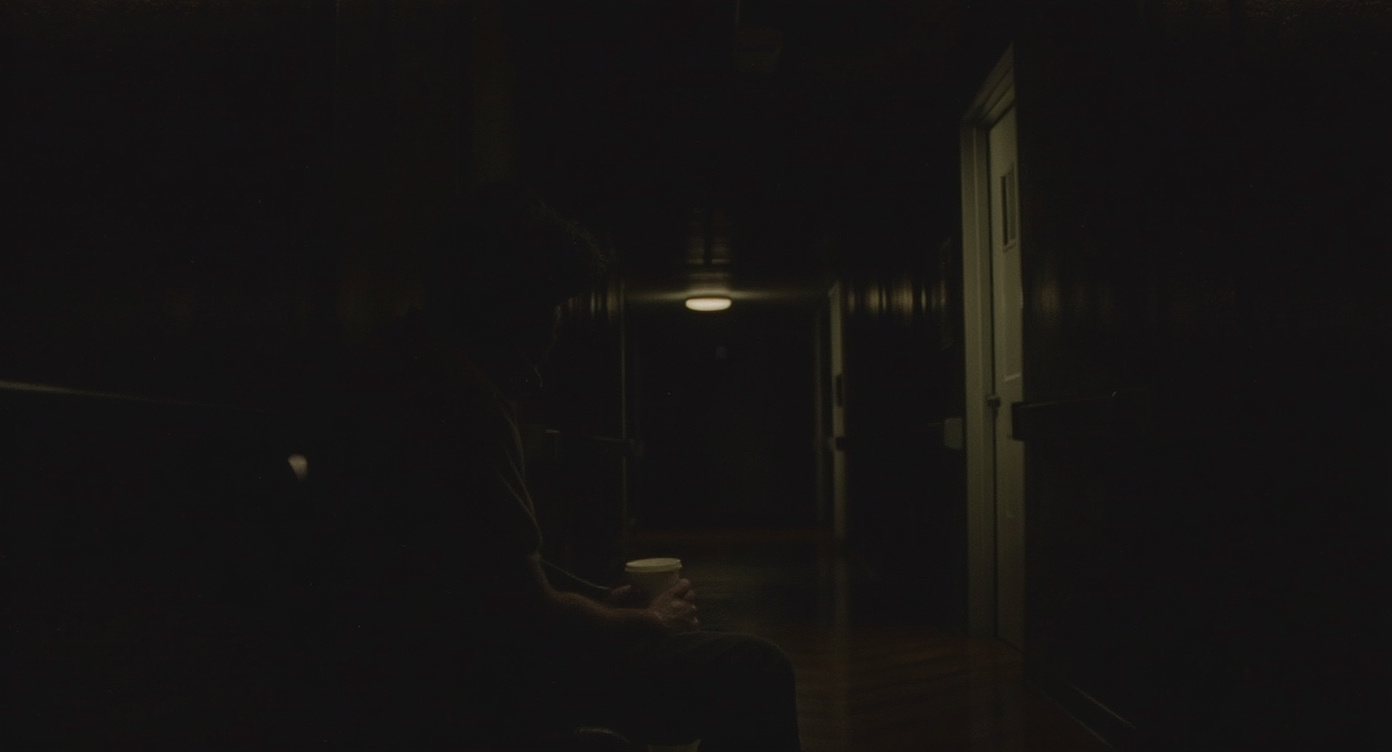
He sat with her through the night.
There was nothing medical he could do — the nurses did the medical things. There was nothing practical. He had already made the calls, had already sat with the paperwork and the waiting and the conversation with the doctor who had said what doctors say when things are certain.
He sat because sitting was what there was.
He held her hand when she was awake enough to know he was holding it. When she slept, he watched her breathe. In and out. In and out. The reliable mechanism of it. He counted sometimes, without meaning to.
People had told him to rest. To take a break. To go eat something. He went briefly and came back. The room was small and the light was low and the monitors made their quiet sounds and he sat.
At four in the morning she was awake for a few minutes and she looked at him and he saw that she knew he was there.
He said: I'm here.

She said nothing. She didn't need to.
He held her hand.
She died at six-fifteen, in the ordinary way, while he was holding her hand. He had been there for nine hours. He had not slept. He was not sorry for any of it.
Later people would say: you were so strong.
He hadn't been strong. He'd just been there.
Sometimes being there is the whole thing. Sometimes being there is the strongest thing you can do.
Sometimes the only thing you can do is stay. Sometimes that is everything.
A beautiful next door