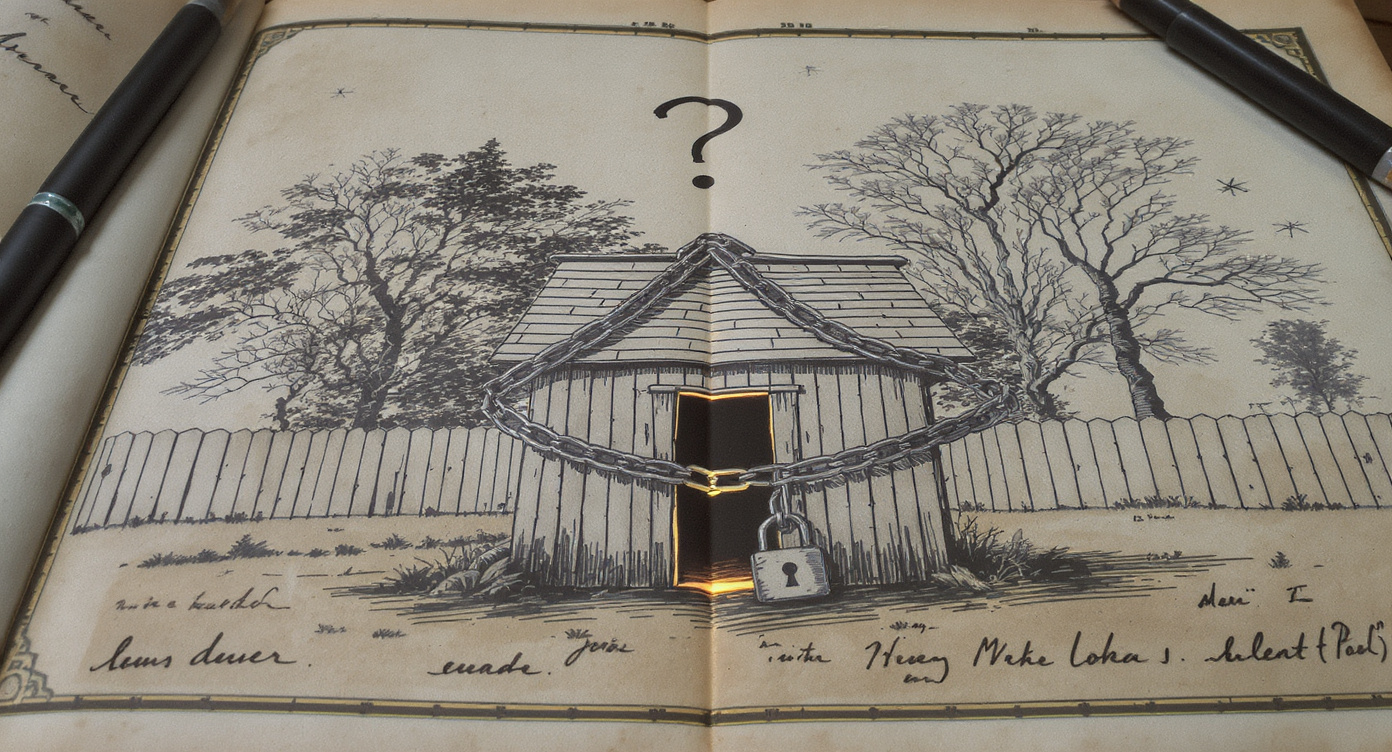
A locksmith with a reputation for opening anything was once hired by a grown man to break into a backyard shed that had been padlocked since his father's death.
"Whatever's in there is mine now," the man said. "I should be able to see it."
The locksmith looked at the lock for a long time — old, rusted, the chain around it gone orange with decades of weather — before setting down his tools without touching it.
"I'm not going to open this one."
"I'm paying you well."
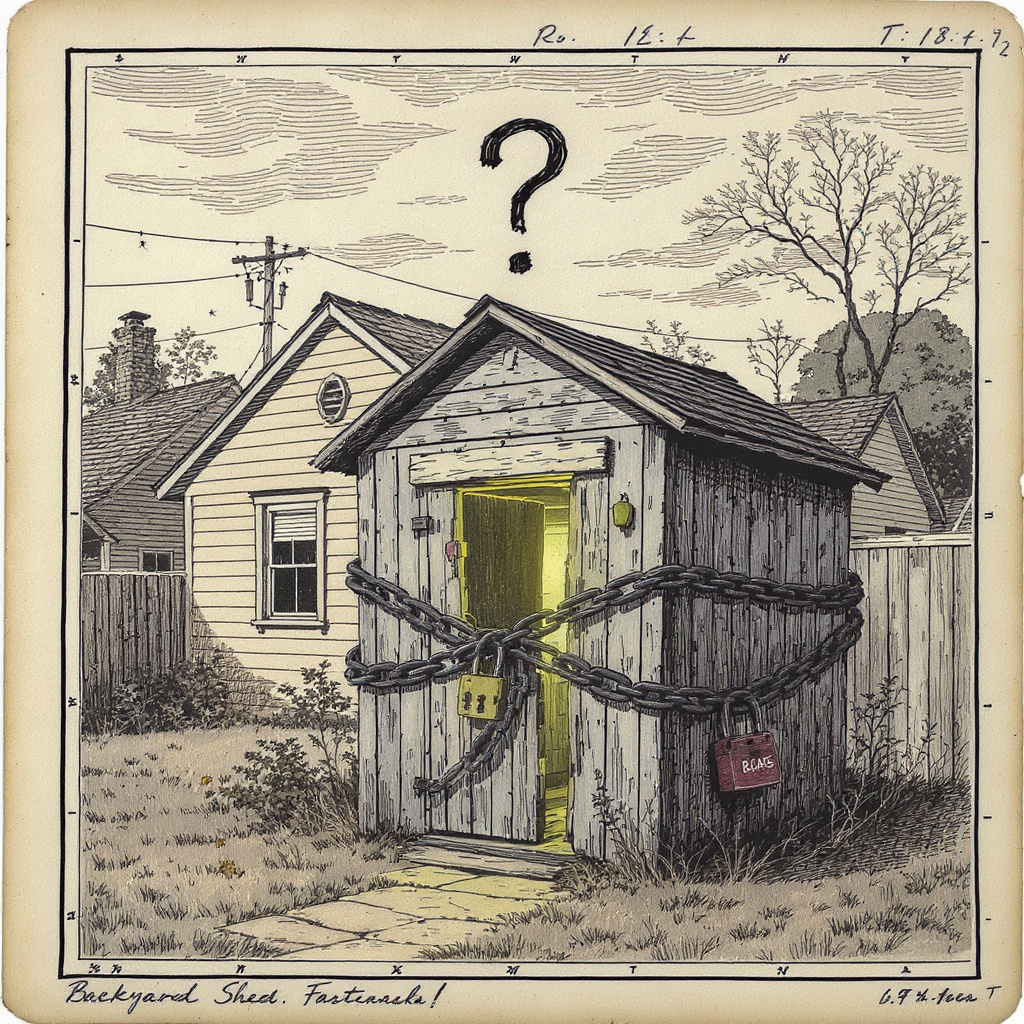
"It's not about the money." The locksmith ran his thumb along the rust. "A lock like this isn't really keeping a door shut. It's keeping a feeling contained. Your father didn't put this chain here to protect a workbench. He put it here because something in him needed one door in the world that stayed shut no matter what, and I think if I cut this open for you, you're not going to find an answer in there. You're going to find whatever your father couldn't carry anymore, sitting exactly where he left it, with no explanation attached, and you'll have to live with that instead of the question. Some people find that's worse."
The man stood there a long while, hand on the chain, listening to it creak faintly against the wood.
"I used to press my eye to the gap in the boards when I was a kid," he finally said. "Never saw much. A tarp. A shape I couldn't name. One night I heard him in there at two in the morning, not doing anything, just standing. I never told anyone that."
"Then maybe the question has already told you what you need to know," the locksmith said. "Whatever was in there took up enough room in him to need a lock in every season, even summer, even when every other door in the house stood open. That's not nothing. That's an answer shaped like a question, which is sometimes the only shape an answer is willing to take."
The man never had the shed opened. He sold the house years later with the chain still on it, and told the new owners only that the shed was empty, which was, in the only way that mattered to him, finally true.
A beautiful next door