NoiraCiel · Knowledge Path · Level 2 of 7
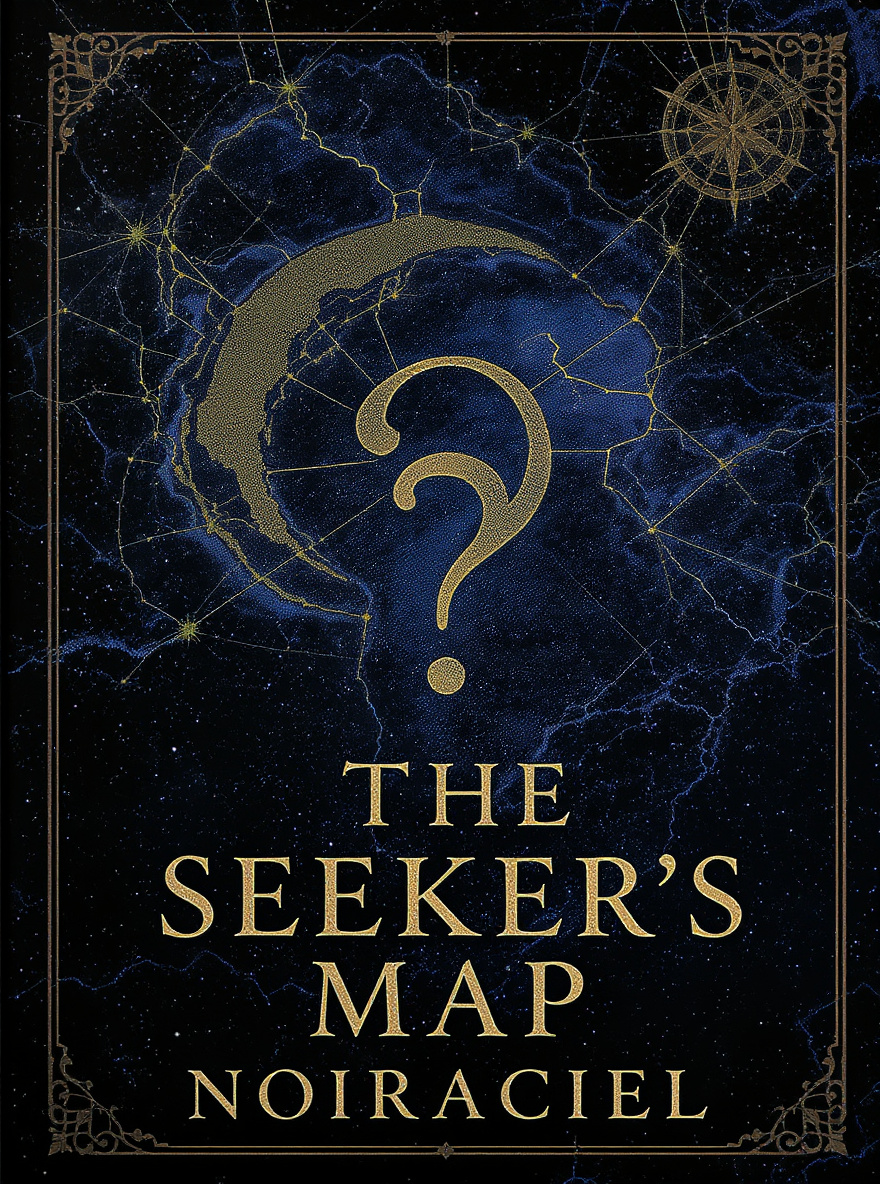
The Seeker’s Map
Better questions draw better maps.
Digital edition
Free PDF
Physical edition
Coming soon
Softcover: coming soon
The second book teaches the art of the question. A Seeker is not someone with answers but someone who has learned to ask in ways that open doors. Using NoiraCiel’s own design questions as cases, it covers framing, research, taste, and the discipline of not grabbing the first answer.
Emotional theme
Inquiry, discernment, the patience to keep asking.
Symbolic theme
The map, vision, the reed of integrity (Men, Ben).
Reader path
Read after The Beginner’s Door, when you have started and now feel lost.
Reading experience
Keep a running list of questions while reading. Refine them as you go.
Physical Edition
Softcover Edition
Format
6×9 in
Binding
Softcover, perfect-bound
Paper
Cream uncoated
Cover finish
Premium matte
Pages
~100 pages
Collection
Knowledge Path · Level 2 of 7 · Seeker
The digital edition is free. The physical edition is a softcover object from the NoiraCiel library — cream pages, matte cover, perfect-bound. The PDF is open. The object is printed.
Physical Softcover Edition
Coming soon
The softcover edition is not yet available. No pre-orders or payments are accepted at this time.
The digital PDF edition is always free — no registration required.
Digital Edition
Free PDF
The PDF edition is always free. No account. No registration. No paygate. Download it and read it on any device. The PDF is being prepared and will be available here soon.
PDF Coming SoonThe Outline
Ten chapters
The Question Is the Tool
How you ask determines what you can find. We sharpen the question itself.
"What question are you asking, and is it the real one?"♪ why◇ the-memory-atlas~10 ppFraming Changes Everything
The frame around a problem decides its solutions. We practise reframing.
"How else could you frame the thing you are stuck on?"♪ maybe-i-was-wrong◇ the-memory-atlas~10 ppMapping the Unknown
You can chart territory you have not yet visited. Provisional maps as tools.
"What rough map could you draw of something you do not yet understand?"♪ the-port-we-cannot-find◇ the-memory-atlas~10 ppResearch as Listening
Good seeking is mostly listening — to people, sources, and the work itself.
"Who or what have you not yet truly listened to on this?"♪ when-it-gets-quiet◇ the-memory-atlas~10 ppHolding the Answer Loosely
The first answer is rarely the best. We resist grabbing it.
"What first answer are you clinging to that you could hold more loosely?"♪ between-the-worlds◇ the-memory-atlas~10 ppTaste Is Trained Judgement
Discernment can be developed. We build the Seeker’s eye for quality.
"Whose taste do you admire, and what specifically makes it good?"♪ the-girl-with-the-cello-scar◇ the-memory-atlas~10 ppNavigating by Constellations
When the map fails, navigate by fixed values. Principles as stars.
"What fixed values could you steer by when the map runs out?"♪ free-men-tell-the-truth◇ the-memory-atlas~10 ppThe Map Is Not the Territory
Models are useful and always incomplete. We hold them humbly.
"Where are you mistaking your model for the real thing?"♪ the-globe-with-the-worn-pacific◇ the-memory-atlas~10 ppSeeking With Others
The best maps are drawn together. Collaboration in inquiry.
"Who could you map this unknown with instead of alone?"♪ side-by-side◇ the-memory-atlas~10 ppFrom Map to Making
Closing: a seeker becomes a builder when the map is good enough to act on.
"Which map of yours is now ready to be built from?"♪ chase-your-dreams◇ the-memory-atlas~10 pp
Begin reading, or ask the Speaker to read it through your path.
Entangled with
Knowledge Path
Worlds
The Field
The Speaker knows this book. Ask it anything.
Open the Speaker →Full text in progress — outline complete.