Chapter 10 · 3 min 59 sec
The Empty Pedestal
The family home as a living thing — how spaces hold the memory of those who loved them.
Lyric Video
Lyric Video
Lyrics· 255 words
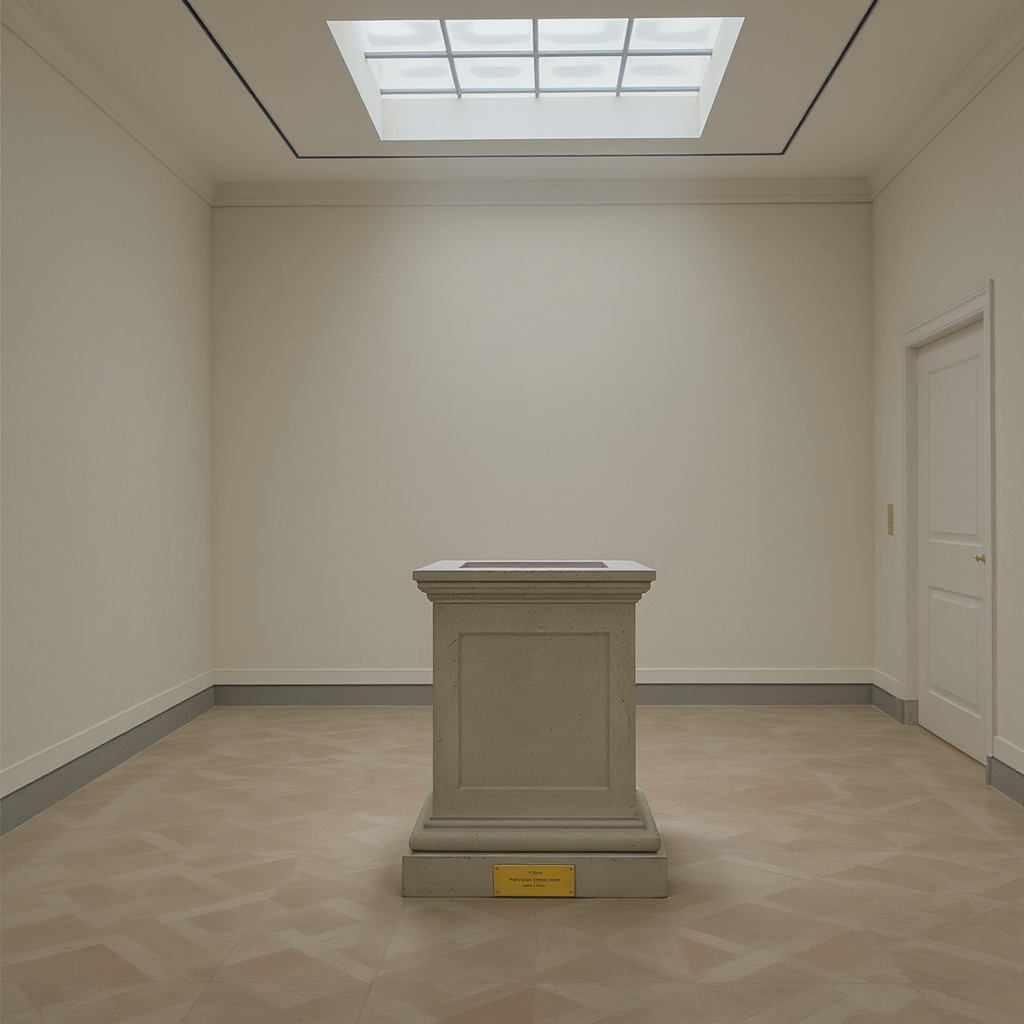
[Verse 1] There's a pedestal in the center room Empty since the year I turned nineteen The plaque just has a date on it, no title I never could decide what to call her She used to stand right there under the skylight Arms open, no idea what was coming I took her down myself, nobody made me I just couldn't keep dusting something that trusting
[Verse 2] I told visitors it was being restored For longer than restoration should take The truth is I don't know where I put her Somewhere in a box, somewhere I stopped looking She believed people meant exactly what they said She believed a room could love her without an audience I don't know if I removed her to protect her Or because I couldn't stand what she still believed
[Verse 3] Some nights I stand where the pedestal is empty And try to remember the exact shape of her Not the photographs, not the story I tell now Just her, before she learned the word performance I'm not asking for her back exactly I don't think she'd survive the rooms I built since I just want somewhere to put the grief down Now that I've finally said her name out loud
[Bridge] I'm sorry I put you in a box I'm sorry I called it restoration You didn't need fixing I just couldn't watch you find that out the hard way
[Outro] The pedestal stays empty That's not neglect anymore That's a kind of grave I finally visit
Short Story
*A story for curious minds*
There was a gardener named Wilhelmina who, at nineteen, planted a rosebush in the center of her garden, in the sunniest spot, where it could be seen from every window of the house. It bloomed wildly that first summer, open and unguarded, the kind of rose that didn't seem to know roses were supposed to be careful about who saw them.
By autumn, a hard frost came that the rosebush wasn't prepared for, and though it didn't die, it came back the next spring strange and tender, blooming at the wrong times, drooping if anyone so much as looked at it too long. Wilhelmina, frightened by how easily it bruised, dug it up herself one quiet afternoon and moved it to a shed at the back of the property, in a pot, out of every window's view.
She told visitors, for years afterward, that the center bed was being "rested" before something new went in. She said this so many seasons in a row that even she nearly believed it.
The truth, which she only admitted to herself slowly, over a very long time, was that she didn't know where she'd put the original rosebush at all — not really. Somewhere in the shed, behind other pots, untended, possibly already gone to dust. She had stopped checking on it years before she stopped lying about why the bed was empty.
One spring, an old friend visited and stood at the empty bed a long while without saying anything clever about it. "What was here?" she finally asked.
Wilhelmina almost said nothing was here, the practiced answer. Instead, surprising herself, she said, "Something that bloomed before it learned to be afraid of frost. I couldn't watch it find out the hard way what frost does, so I moved it somewhere I wouldn't have to watch."
She never did find that original rosebush. She suspected it was long gone, returned to soil years before, unremarkable, the way most things eventually are.
But she stopped saying the bed was being rested. She put a small unmarked stone there instead, the kind you might use to mark a grave if you didn't know the name of the person buried beneath it, and let the bed stay empty, openly, without the cover story. Visitors sometimes asked about the stone. Wilhelmina would only say, "That's where something honest used to grow," and let them wonder the rest themselves, the way she had wondered for years before she'd found even that much to say.
More From This Album